World Thalassaemia Day 2026: Bone Marrow Transplant Cure Available in India

Priya Sharma
Oncology & Cancer Care Writer
World Thalassaemia Day 2026: Bone Marrow Transplant Now Offers a Cure in India
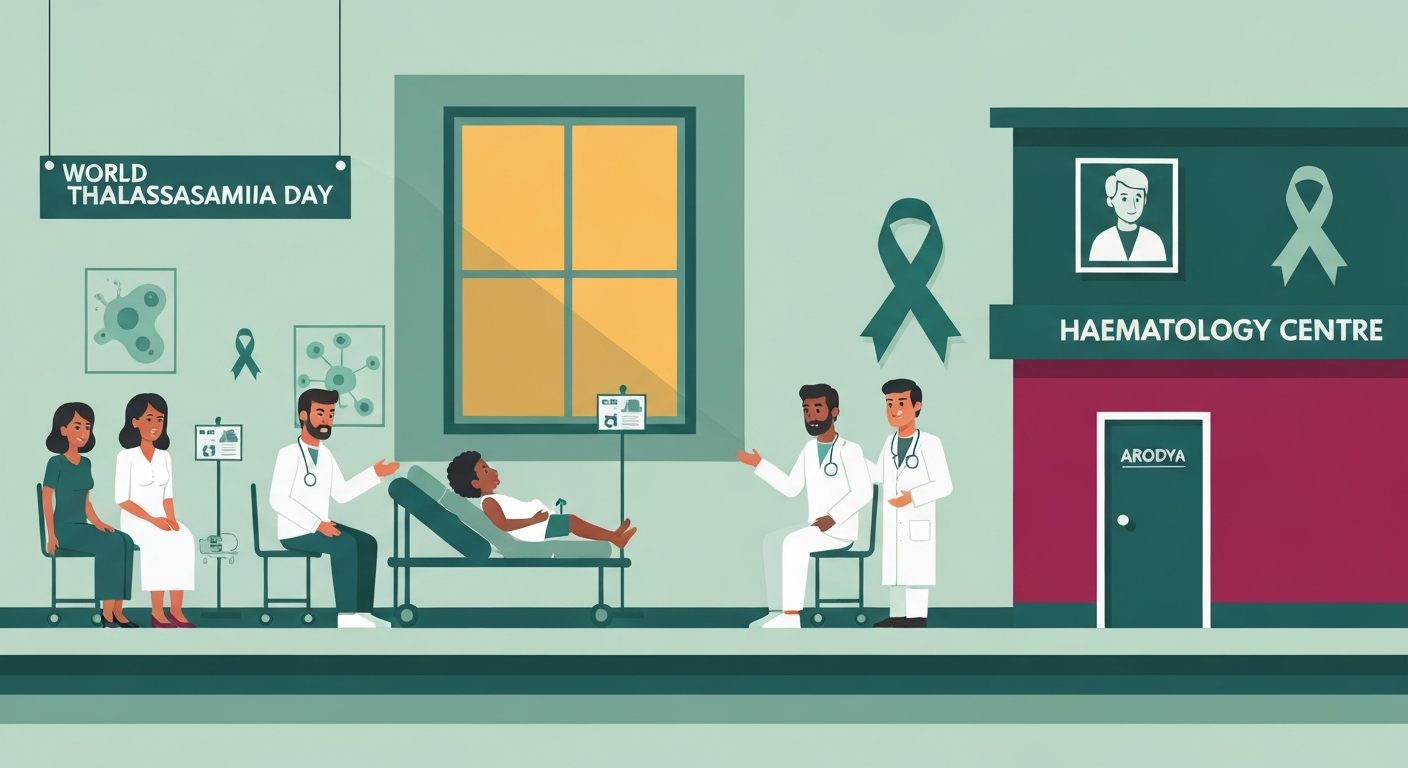
Every year on 8 May, World Thalassaemia Day reminds the global medical community — and the families who live with this condition daily — that thalassaemia is not a manageable inconvenience. Thalassaemia major is a life-altering, resource-intensive disease that, without definitive treatment, demands monthly blood transfusions, daily chelation therapy, and the progressive accumulation of iron in organs. Its burden falls disproportionately on families in sub-Saharan Africa, the Mediterranean, and South Asia.
This World Thalassaemia Day carries genuinely hopeful news: bone marrow transplant (BMT) is now an established cure for thalassaemia major, and India's BMT centres are among the most experienced and most accessible in the world. For African families whose children carry this diagnosis, the cure exists — and it is reachable.
Key facts: BMT for thalassaemia in India costs $20,000–35,000 — compared with $200,000–400,000 in the USA. Success rates at India's top centres are 85–90% for well-prepared young patients with a matched sibling donor. The cure eliminates transfusion dependency permanently.
What Is Thalassaemia?
Thalassaemia is an inherited blood disorder caused by mutations in the genes that produce haemoglobin — the protein in red blood cells that carries oxygen. The mutations reduce or eliminate normal haemoglobin production, resulting in fragile, short-lived red blood cells.
Thalassaemia major (also called beta-thalassaemia major or Cooley's anaemia) is the severe form, in which both copies of the relevant gene are affected. Without treatment, affected children develop profound anaemia in infancy. With standard treatment, they survive — but require lifelong monthly or bi-monthly blood transfusions and iron chelation therapy to prevent organ damage from transfusional iron overload.
Thalassaemia intermedia is a milder form in which some normal haemoglobin production occurs. Patients may not require regular transfusions but face other complications including anaemia, splenomegaly, and bone disease.
Sickle-beta thalassaemia is a compound heterozygous condition combining a sickle haemoglobin mutation with a beta-thalassaemia mutation, common in West and East Africa.
Thalassaemia trait (carrier state) causes no clinical illness but is important for genetic counselling — two carriers have a 25% chance with each pregnancy of having a child with thalassaemia major.
Thalassaemia in Africa: The Hidden Burden
While thalassaemia is often associated with the Mediterranean, Middle East, and South Asia, it is significantly present in sub-Saharan Africa, particularly beta-thalassaemia and its interaction with sickle cell disease. Nigeria, Ghana, Cameroon, and Kenya have meaningful numbers of thalassaemia-affected families, many of whom go undiagnosed or under-treated due to limited haematology specialist capacity.
The diagnosis is made through haemoglobin electrophoresis (or HPLC), which identifies abnormal haemoglobin patterns. Once thalassaemia major is confirmed, the management decision tree has essentially two branches: lifelong transfusion-chelation therapy, or bone marrow transplant with curative intent.
Bone Marrow Transplant: The Only Established Cure
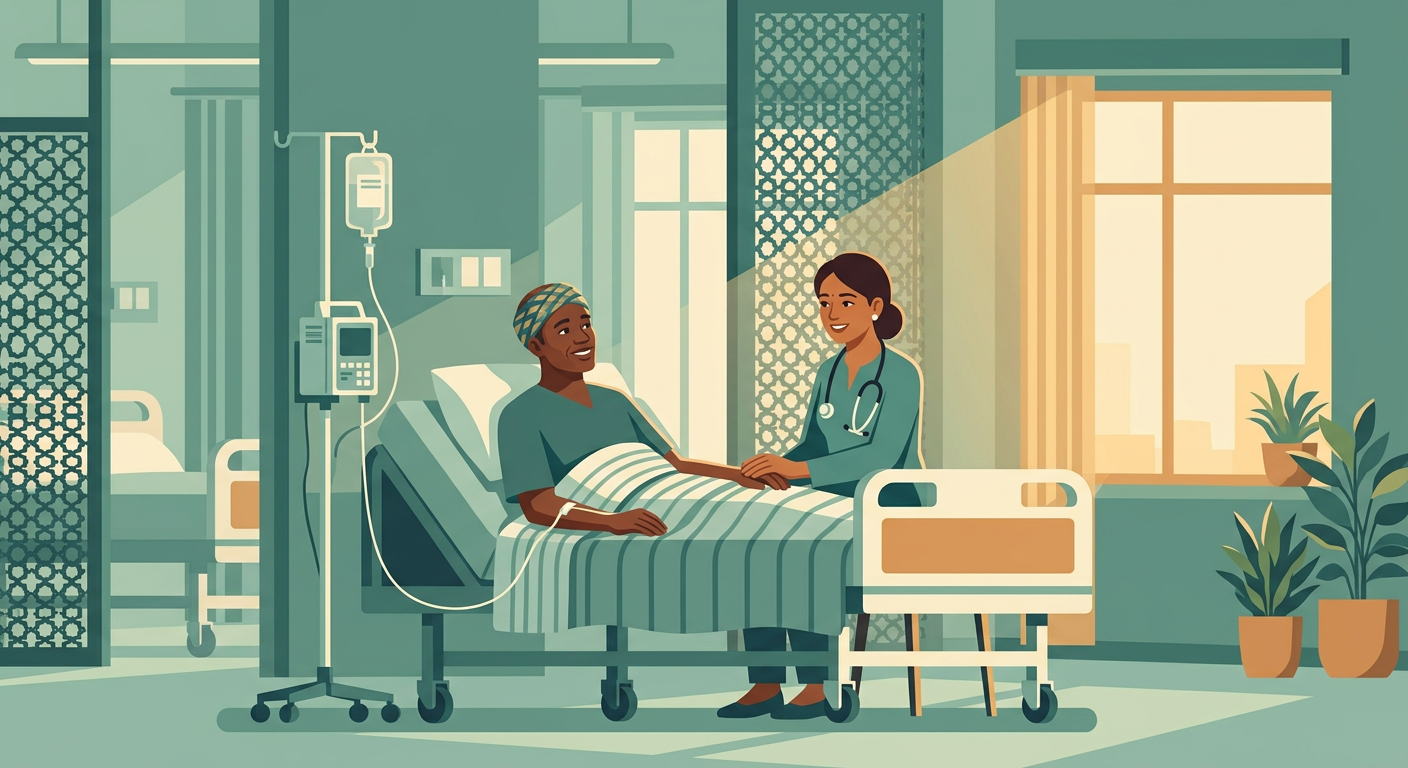
BMT cures thalassaemia major by replacing the patient's dysfunctional blood-forming cells with healthy stem cells from a matched donor. Once the transplant engrafts successfully, the donor's stem cells produce normal haemoglobin permanently — and the patient no longer requires blood transfusions or chelation therapy.
This is not a partial improvement or a remission. It is a cure. Patients cured by BMT go on to lead normal lives without the shadow of monthly hospital visits, iron accumulation, and progressive organ damage.
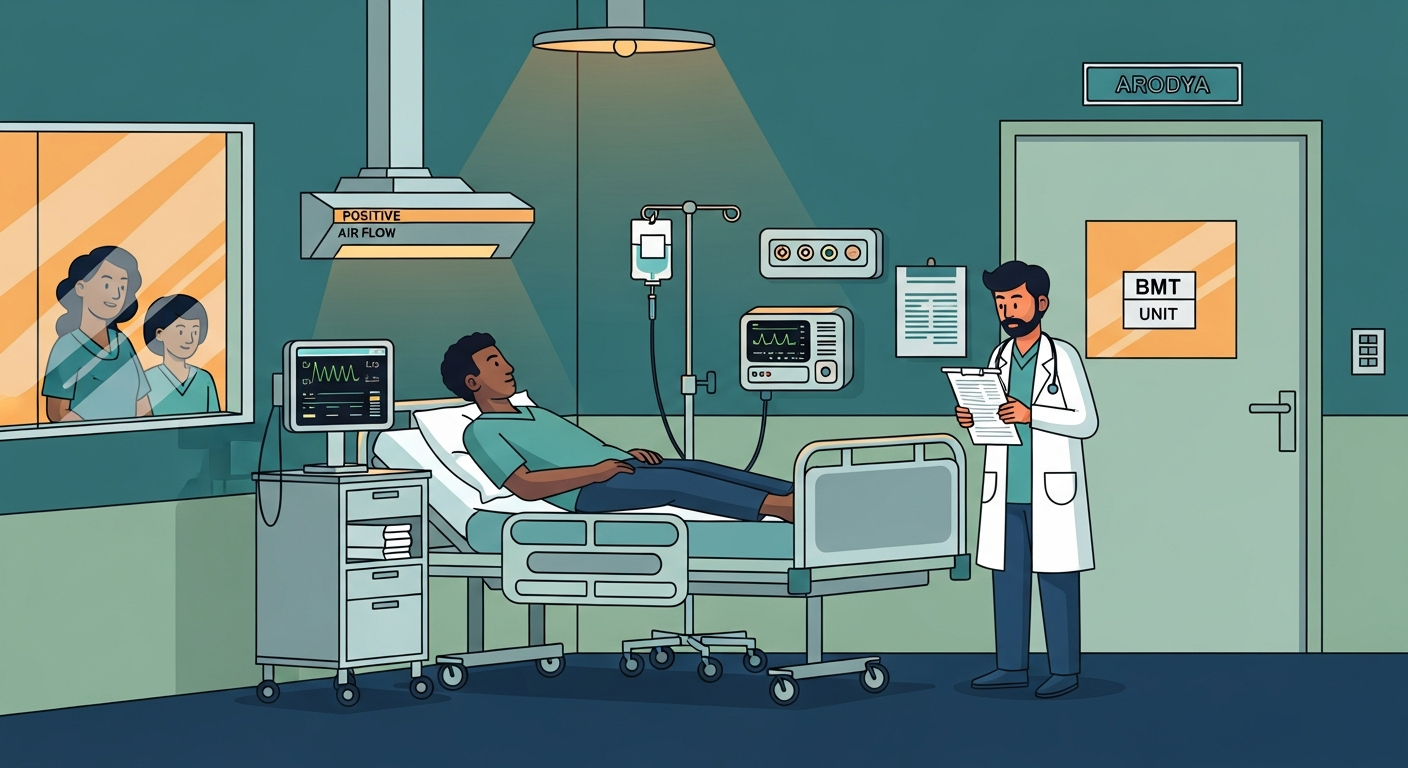
Why does India have particular strength in thalassaemia BMT? Two reasons. First, India itself has a significant thalassaemia burden — over 10,000 children with thalassaemia major are born annually in India — giving Indian BMT centres high case volume and deep experience with this specific diagnosis. Second, the infrastructure of India's major BMT units (HEPA-filtered isolation rooms, expert blood bank support, experienced haematology nursing) provides the environment that successful thalassaemia transplants require.
HLA Matching: Finding the Right Donor
The central question in BMT planning is: who will the donor be?
Matched sibling donor (MSD) is the gold standard for thalassaemia BMT. A fully HLA-matched sibling provides the best combination of outcomes: 85–90% cure rates, lowest rejection risk, and lowest GvHD (graft-versus-host disease) risk. About 25–30% of thalassaemia patients have a matched sibling — the exact probability depends on family size.
HLA typing in India takes 2–3 weeks and costs $200–400 per person. Families should begin by typing all available siblings before travelling, to understand donor availability. Arodya can coordinate local HLA typing in some African countries through partner laboratories.
Matched unrelated donor (MUD) is the alternative when no sibling matches. India's IBMR (Indian Bone Marrow Registry) has over 500,000 registered donors. International registries connected through WMDA add millions more. Match probability for African or mixed-ancestry patients may be lower than for European patients; early registry searching is advisable.
Haploidentical donors — parents or half-matched siblings — are now a viable option at specialist centres including AIIMS Delhi and Apollo using post-transplant cyclophosphamide (PTCy) protocols. This approach has made BMT accessible to patients who lack a fully matched donor, though outcomes in thalassaemia are slightly less favourable than MSD transplants and the approach is still evolving.
The BMT Process: What Families Should Expect
Phase 1 — Pre-transplant evaluation (2–3 weeks). The haematology team assesses the severity of iron overload (ferritin levels, liver MRI for iron quantification), organ function (cardiac echo, liver function, kidney function), and infectious disease status. Iron overload is the key modifiable risk factor for transplant outcomes — patients with high ferritin levels or established organ damage from iron may require intensive chelation before transplant. The Pesaro classification system (Class I, II, III) stratifies thalassaemia patients by iron overload and liver disease severity, with Class I achieving the best transplant outcomes.
Phase 2 — Conditioning chemotherapy (1–2 weeks). A myeloablative conditioning regimen — typically busulfan and cyclophosphamide (Bu/Cy) — destroys the patient's diseased bone marrow and suppresses the immune system sufficiently to allow donor engraftment. The conditioning phase is the most physically demanding part of the process: nausea, mouth sores, and profound fatigue are expected and managed with supportive care in the isolation unit.
Phase 3 — The transplant (Day 0). Donor stem cells — either harvested via G-CSF-stimulated peripheral blood collection or bone marrow harvest — are infused intravenously. The procedure takes a few hours. The stem cells migrate to the bone marrow spaces and begin engraftment.
Phase 4 — Engraftment (weeks 2–4 post-transplant). The new donor stem cells establish themselves and begin producing blood cells. This is the highest-risk period: the patient has virtually no immune function. Daily blood counts monitor engraftment progress. Full engraftment is confirmed when neutrophil and platelet counts recover — typically 2–3 weeks post-transplant.
Phase 5 — Post-engraftment monitoring (weeks 4–12). Once engrafted, patients transition from the isolation ward to monitored outpatient follow-up. The team monitors for GvHD, graft failure, and infectious complications. Most patients are cleared to fly home 8–12 weeks post-transplant.
Success Rates and Long-Term Outcomes
India's top thalassaemia BMT centres report:
- 85–90% cure rate (transfusion-free survival) in Class I–II patients with a matched sibling donor
- 70–80% cure rate in Class III patients (those with significant pre-existing iron overload or liver damage)
- 5–10% graft failure rate (requiring a second transplant attempt or return to transfusion therapy)
- GvHD (severe) rate: less than 10% for matched sibling transplants at experienced centres
CMC Vellore, which has conducted thalassaemia BMT since the early 1990s, has published long-term follow-up data showing that successfully cured patients have normal growth, fertility, and life expectancy.
While Awaiting BMT: Managing Thalassaemia Effectively
For patients who are on the path to BMT but not yet ready — perhaps awaiting HLA results, completing pre-transplant chelation, or still searching for a donor — optimal ongoing management is essential.
Regular blood transfusions should maintain pre-transfusion haemoglobin above 9–10 g/dL to suppress ineffective erythropoiesis and prevent bone changes.
Chelation therapy using deferasirox (Exjade), desferrioxamine, or deferiprone reduces iron accumulation. Generic deferasirox is available in India at $80–200/month, versus $1,500–3,000/month branded in the USA.
Splenectomy may reduce transfusion requirements in some patients with massive splenomegaly, but should be discussed with the transplant team before BMT planning.
Top Hospitals for Thalassaemia BMT in India
CMC Vellore (Christian Medical College) has the longest-running and most published thalassaemia BMT programme in India, with outcome data spanning three decades. It is the benchmark centre for this specific indication.
AIIMS Delhi has a haematology and BMT department with extensive thalassaemia experience and the lowest costs of any major Indian BMT centre.
Apollo Hospitals, Chennai offers JCI-accredited BMT with strong international patient support and thalassaemia-specific expertise.
Narayana Hrudayalaya, Bangalore has a paediatric BMT programme with thalassaemia capability in a high-volume cardiac and oncology hospital environment.
How to Get Started with Arodya
Submit haemoglobin electrophoresis results, recent ferritin levels, and sibling HLA typing results (if done) through our intake form. Arodya's haematology team will review the case, recommend the appropriate centre based on the specific situation, and provide a complete cost estimate.
On this World Thalassaemia Day, the message for African families is simple: the cure exists, it is accessible, and India's BMT centres are experienced in delivering it. Explore the bone marrow transplant India guide for a broader overview of BMT across conditions — thalassaemia shares infrastructure with leukaemia and aplastic anaemia transplants and benefits from the same high-volume expertise.
A child with thalassaemia major born today does not have to face a lifetime of transfusions. The cure is within reach.