Bone Marrow Transplant in India for International Patients: Complete Guide 2026

Priya Sharma
Oncology & Cancer Care Writer
Bone Marrow Transplant in India for International Patients: The Complete 2026 Guide
India performs over 4,000 bone marrow transplant procedures each year — a volume that places its specialist centres on par with the most experienced BMT programmes anywhere in the world. For international patients from Nigeria, Kenya, Ghana, Uganda, and beyond, this means access to cutting-edge haematology care at a fraction of what the same treatment costs in the United States or United Kingdom.
TL;DR: Autologous BMT in India costs $18,000–28,000; allogeneic BMT costs $25,000–45,000 — 60–75% less than USA prices. Leading centres report 70–85% five-year survival for leukaemia. Typical stay: 8–12 weeks. Matched sibling donors give the best outcomes; haploidentical and registry donors are alternatives when no sibling matches.
This guide covers everything an international patient needs to know: what BMT is, which type you may need, how much it costs, which hospitals lead, what the process looks like week by week, and how to get started.
Why India for Bone Marrow Transplant?
The case begins with volume. High-volume centres have better outcomes — this is one of the most replicated findings in transplant medicine. Tata Memorial Hospital in Mumbai runs one of Asia's largest BMT programmes, with decades of experience treating leukaemia, lymphoma, aplastic anaemia, and thalassaemia. Apollo, Fortis, Max, and AIIMS collectively add thousands more procedures per year. The teams are not learning on your case — they have seen your diagnosis many times before.
Cost is equally compelling. In the United States, an autologous (own-cell) transplant runs $150,000–300,000. An allogeneic (donor) transplant can reach $250,000–400,000 before complications, follow-up, or outpatient medications. The same procedures in India cost $18,000–28,000 and $25,000–45,000 respectively. That is not a rounding difference — it is the difference between treatment and no treatment for most families.
Outcomes are the question international patients rightly ask first. Major Indian BMT centres publish their data. Five-year survival for allogeneic leukaemia transplants runs 70–85% depending on disease stage and donor match — figures consistent with published results from US and European centres. Graft-versus-host disease (GvHD) rates in matched sibling transplants are below 30% at specialist institutions, in line with international benchmarks. For autologous transplants in multiple myeloma, India's largest centres report outcomes matching international registry data.
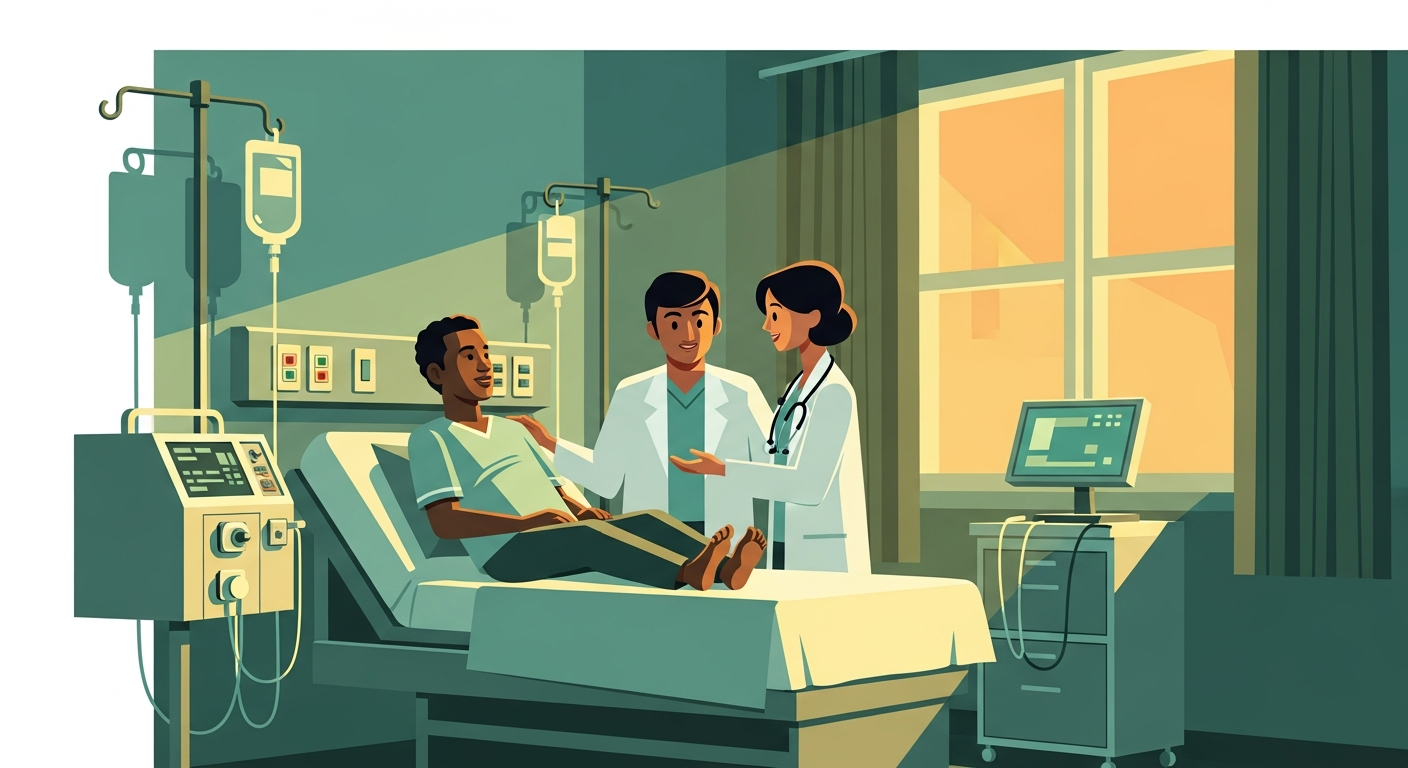
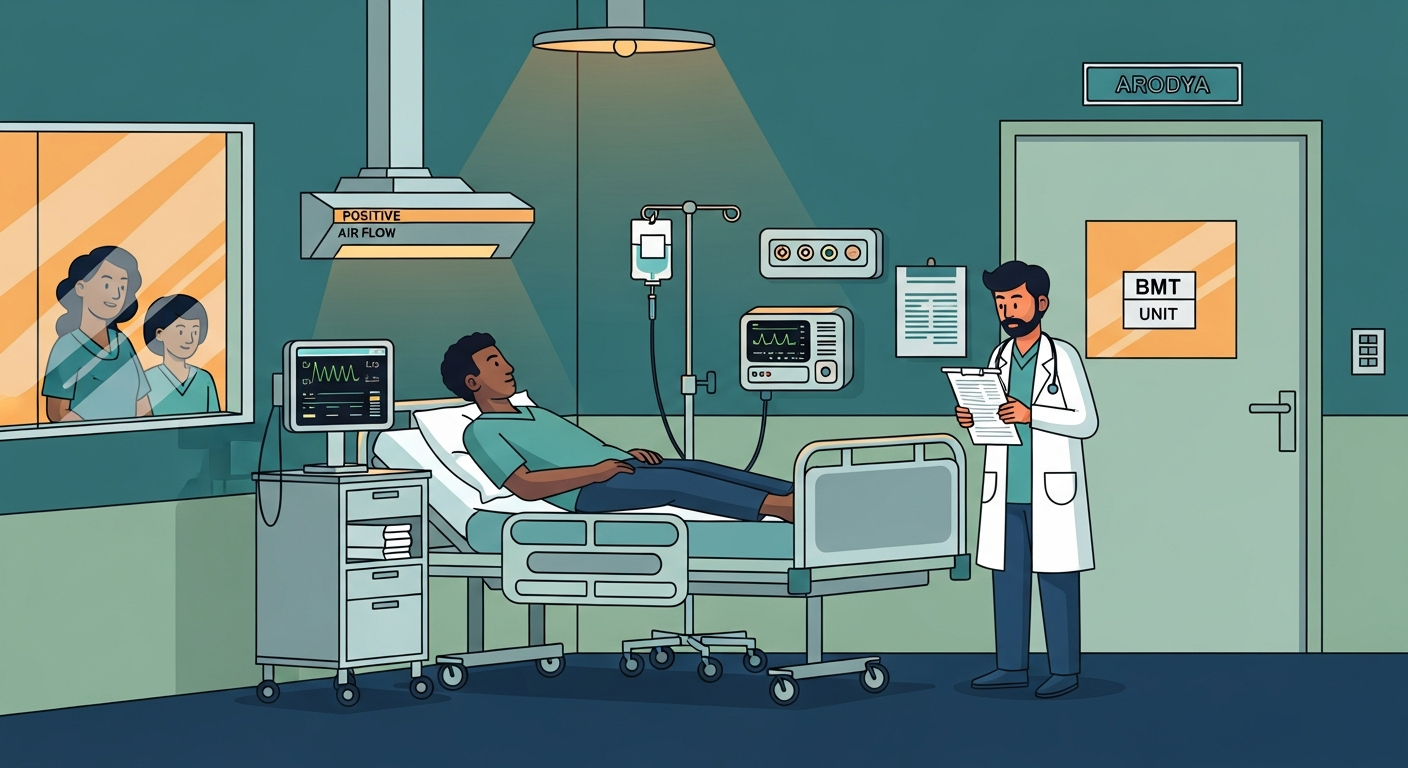
The infrastructure matters too. Leading Indian BMT units operate HEPA-filtered positive-pressure isolation rooms as standard — the same infection-control architecture used at transplant centres in the UK and USA. Blood bank support, ICU-level monitoring, and 24/7 haematologist coverage are built into the system, not bolt-ons.
Types of Bone Marrow Transplant: Which One Do You Need?
Understanding the three main types helps you ask the right questions before you travel.
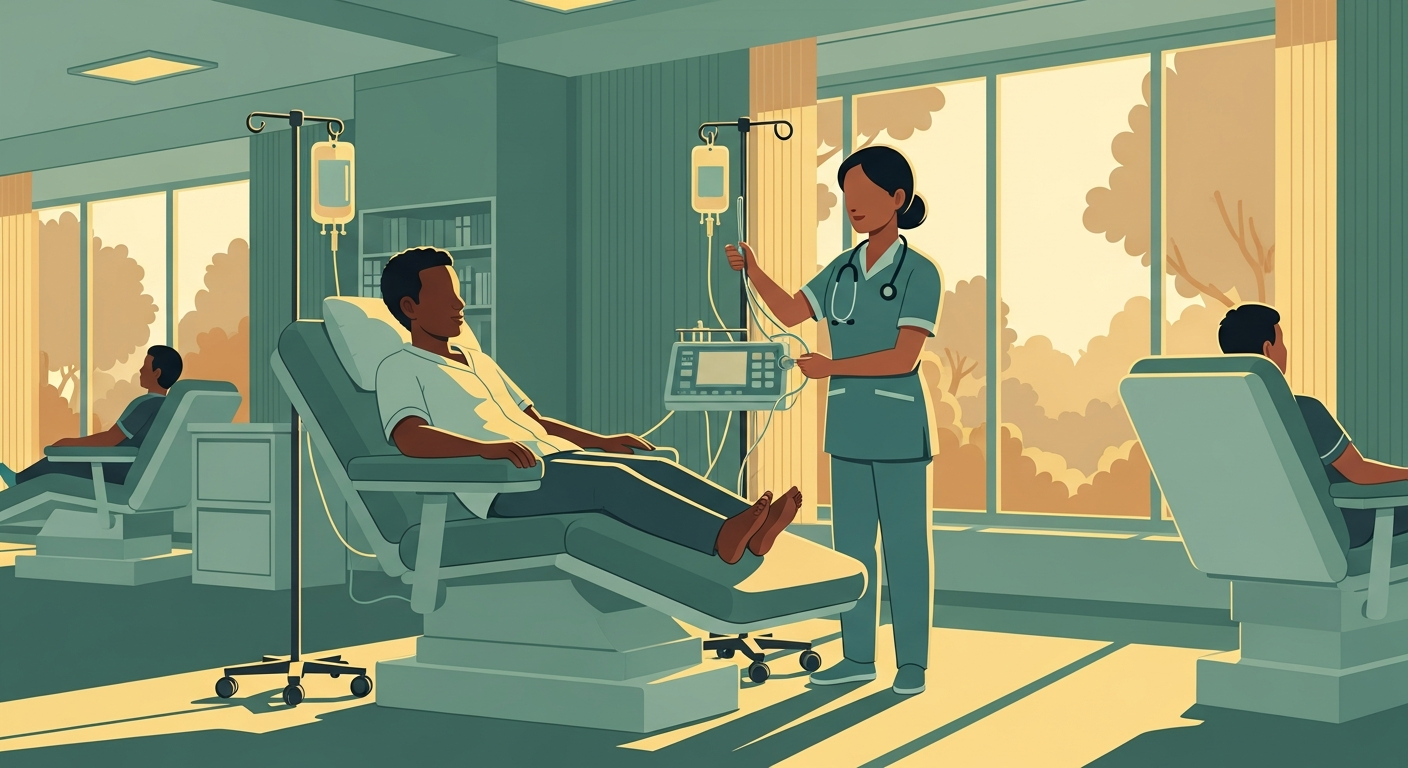
Autologous transplant uses the patient's own stem cells. Before high-dose chemotherapy is given to destroy the disease, doctors harvest and freeze stem cells from the patient's blood or bone marrow. Once the chemotherapy is complete, the stored cells are reinfused to rebuild the blood system. Because the cells are the patient's own, there is no rejection risk and no GvHD. Autologous BMT is most commonly used for multiple myeloma, Hodgkin lymphoma, and certain non-Hodgkin lymphomas. Cost in India: $18,000–28,000.
Allogeneic transplant uses stem cells from a donor — ideally a fully HLA-matched sibling, but also an unrelated matched donor or a cord blood unit. The donor's immune cells provide a graft-versus-tumour effect that can eliminate residual disease, which is why allogeneic BMT offers potential cure in leukaemias where autologous cannot. The tradeoff is the risk of GvHD and a longer, more complex recovery. It is used for acute leukaemias (ALL, AML), chronic leukaemias, aplastic anaemia, thalassaemia, and sickle cell disease. Cost in India: $25,000–45,000.
Haploidentical transplant is a newer approach that allows transplant from a half-matched donor — typically a parent, child, or non-identical sibling. It has expanded access dramatically for patients who lack a fully matched sibling and cannot find a registry donor quickly. Major Indian centres including Apollo and AIIMS have dedicated haploidentical programmes using the post-transplant cyclophosphamide protocol (PTCy), which has substantially reduced GvHD rates in this group. Cost is similar to standard allogeneic BMT.
BMT Cost: India vs USA vs UK
The numbers in the table below use 2026 published and cited data. Indian figures are all-inclusive package costs covering conditioning chemotherapy, the transplant procedure, isolation ward stay, and initial medications. They do not include flights, accommodation outside hospital, or long-term outpatient drugs.
| Procedure | India | USA | UK (NHS private) |
|---|---|---|---|
| Autologous BMT (myeloma, lymphoma) | $18,000–28,000 | $150,000–300,000 | £80,000–200,000 |
| Allogeneic BMT (matched sibling) | $25,000–40,000 | $250,000–350,000 | £120,000–250,000 |
| Allogeneic BMT (unrelated donor) | $30,000–45,000 | $300,000–400,000 | £150,000–300,000 |
| Haploidentical BMT | $28,000–42,000 | $280,000–380,000 | £130,000–270,000 |
| Conditioning chemotherapy (included) | Included | $30,000–80,000 | £15,000–40,000 |
| Isolation ward (4–6 weeks, included) | Included | $50,000–120,000 | £25,000–60,000 |
The savings are largest for allogeneic and haploidentical procedures — 70–80% compared with USA costs, 60–70% compared with UK private costs. Even accounting for flights and 10–12 weeks of accommodation, the total outlay for a family travelling from Nigeria or Kenya to Mumbai or Delhi is a fraction of what treatment would cost elsewhere.
For more on cancer treatment costs generally, see our complete cost comparison: India vs USA vs UK. For chemotherapy costs specifically, our chemotherapy cost guide for India in 2026 breaks down individual drug and cycle pricing.
Leading Hospitals for BMT in India
Not every Indian hospital is equipped for BMT — it requires a highly specialised unit, a blood bank capable of processing stem cell products, and a team experienced in managing the profound immunosuppression that follows transplant. These are the centres that international patients should know.
Tata Memorial Hospital, Mumbai is the flagship of Indian cancer care, operated by the Government of India. Its BMT programme is one of the largest in Asia by case volume, with deep expertise in haematologic malignancies, aplastic anaemia, and thalassaemia. The centre accepts international patients through a formal referral process. Because it is a government institution, costs are the lowest of any major Indian BMT centre — an important consideration for families under financial strain.
Apollo Hospitals, Delhi and Chennai offer JCI-accredited BMT programmes with dedicated international patient coordinators, English-language records, and a track record of managing complex allogeneic and haploidentical cases. Apollo's haematology team includes consultants trained at US and European transplant centres. For international patients who prioritise language support and administrative ease alongside clinical quality, Apollo is a strong choice.
Fortis Memorial Research Institute, Gurugram is one of North India's leading private tertiary centres. Its BMT unit handles autologous, allogeneic, and haploidentical procedures, with a particular focus on multiple myeloma and lymphoma in adults.
AIIMS (All India Institute of Medical Sciences), Delhi is India's premier public academic medical centre. Its haematology and BMT department trains the next generation of Indian haematologists and handles complex cases, including rare haematological conditions. Costs are significantly lower than private hospitals; waiting times can be longer for elective admissions.
Max Super Speciality Hospital, Saket, Delhi offers a modern BMT unit in a private hospital environment, with strong nursing staff ratios and a haematology team with international training. It is a good alternative to Apollo for patients based in Delhi.
For a broader overview of how haematology care in India is organised across centres, our haematology and BMT in India overview covers the full specialty landscape.
Step-by-Step: The BMT Process in India
The transplant journey has distinct phases. Knowing what each phase involves reduces uncertainty and helps families plan time and finances.
Phase 1 — Pre-transplant evaluation (weeks 1–2). On arrival, the BMT team reviews all prior records and repeats key investigations: bone marrow biopsy, HLA typing of patient and potential donors, cardiac echo, lung function tests, liver and kidney function, and infectious disease screening (including CMV, EBV, hepatitis, HIV). This phase establishes transplant eligibility and the condition of critical organs that must withstand conditioning chemotherapy.
Phase 2 — Donor workup (concurrent with Phase 1). If an allogeneic transplant is planned, sibling donors are HLA-typed simultaneously. Full matching takes 1–2 weeks. If no sibling matches, the Indian Bone Marrow Registry and international registries (NMDP, WMDA-connected registries) are searched. Registry searches typically take 4–8 weeks, so patients who know they need an unrelated donor transplant should begin this search before travelling.
Phase 3 — Conditioning chemotherapy (weeks 2–3). The patient receives a course of high-dose chemotherapy (myeloablative or reduced-intensity, depending on age and fitness) designed to destroy the diseased marrow and suppress the immune system. This phase is the most physically challenging — nausea, mouth sores, and profound fatigue are common. The patient is already in the isolation ward at this point.
Phase 4 — The transplant (day 0). The stem cells — either thawed from the patient's own stored product (autologous) or freshly harvested from the donor (allogeneic) — are infused via a central line. The procedure itself takes a few hours. This is day zero in the transplant calendar.
Phase 5 — Engraftment (weeks 3–6). The new stem cells travel to the bone marrow and begin producing blood cells. This is the most vulnerable period: the patient has virtually no immune function for 2–4 weeks. HEPA-filtered positive-pressure isolation rooms prevent environmental infection during this window. Blood counts are monitored daily. Engraftment is confirmed when the neutrophil count sustains above 0.5 × 10⁹/L on three consecutive days — typically 2–3 weeks post-transplant.
Phase 6 — Post-engraftment monitoring (weeks 6–10). Once engrafted, patients transition from the isolation ward to a monitored outpatient or step-down setting. The transplant team watches for early GvHD, infection, and organ complications. Immunosuppressive medications are tapered gradually. Patients are typically cleared to fly home after 8–12 weeks, when their counts are stable and no active complications are present.
Donor Matching: Sibling, Registry, and Haploidentical Options
The donor question is often the most stressful part of the transplant journey. Here is a realistic picture of each path.
A fully matched sibling (HLA-identical at 10 of 10 alleles) is the gold standard. Around 25–30% of patients will have a matched sibling — the probability depends on family size. When a matched sibling is available, outcomes are the best of any donor type, and the process is fastest. The donor undergoes GCSF injections for 5 days to mobilise stem cells into the blood, followed by a peripheral blood harvest via apheresis — no surgery, no general anaesthesia.
Unrelated matched donors are found through registries. The Indian Bone Marrow Registry (IBMR) has over 500,000 registered donors. International registries add millions more. The probability of finding a 10/10 match depends on ethnicity — patients of African or mixed ancestry historically face lower match rates in registries dominated by European donors. Indian registries are growing rapidly and may offer better matches for some South Asian patients.
Haploidentical donors — a parent, child, or half-matched sibling — are available to almost every patient. Modern protocols using post-transplant cyclophosphamide (PTCy) have transformed outcomes in haploidentical BMT, with GvHD rates approaching those seen in matched sibling transplants at experienced centres. For patients who cannot wait for a registry search or who lack a matched sibling, haploidentical BMT is often the fastest path to transplant.
Cord blood is occasionally used, particularly in children, when other donor sources are unavailable. India's network of public cord blood banks is expanding.
Recovery, GvHD, and Life After BMT
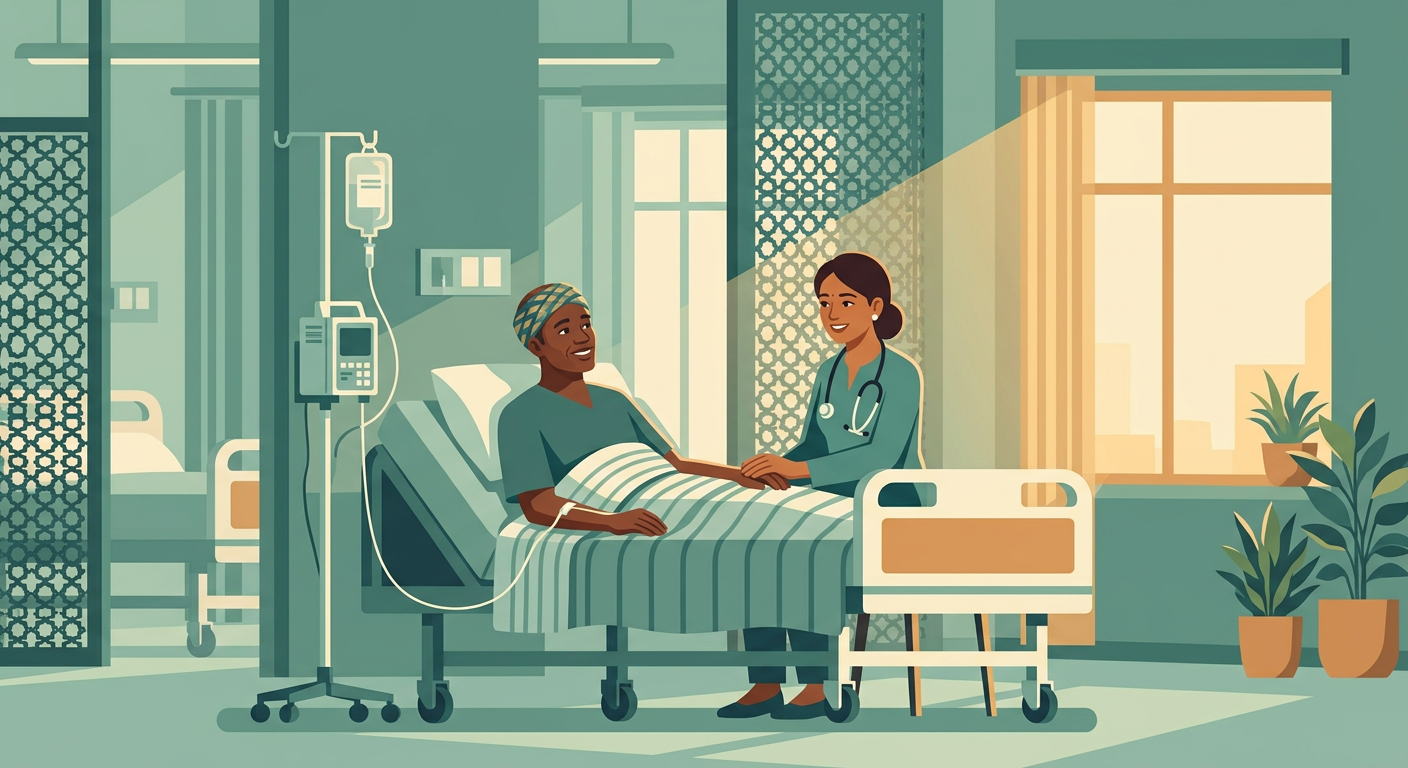
Recovery from BMT is measured in months, not days. The isolation ward stay is 4–6 weeks. Most patients are physically well enough to fly home 8–12 weeks after the transplant. But full immune reconstitution — the point at which the new immune system is genuinely protective — takes 12–24 months for allogeneic transplants.
During the first year, patients must avoid live vaccines, crowded environments, and certain foods. Regular blood monitoring is essential. For patients returning to Africa after an allogeneic transplant, Arodya connects families with local haematologists or internists who can monitor counts and adjust immunosuppression doses under guidance from the Indian BMT team via telemedicine.
GvHD — graft-versus-host disease — occurs when donor immune cells recognise the patient's tissues as foreign. Acute GvHD typically presents in the first 100 days; chronic GvHD can develop months to years later. At India's leading centres, acute GvHD grades III–IV occur in fewer than 15% of matched sibling transplants. Moderate chronic GvHD is managed with steroids and additional immunosuppression. The Indian BMT team provides detailed GvHD management protocols for local follow-up physicians.
For patients who receive autologous BMT — particularly for multiple myeloma — maintenance therapy (lenalidomide, bortezomib) is typically continued after transplant. Indian pharmacies stock generic versions of these drugs at dramatically lower prices than the USA or Europe.
How to Start with Arodya
The first step is a case review — not a commitment, not a payment, just an honest assessment. Send your diagnosis, recent reports (bone marrow biopsy, blood counts, imaging), and any prior treatment history to Arodya. Our oncology team reviews the case, identifies which hospitals and BMT approach best fit your situation, and provides a written estimate within 3–5 days.
From there, Arodya coordinates the consultation letter, visa documentation, travel logistics, and on-ground support throughout the transplant stay. There is no charge to the patient for coordination — Arodya is compensated by its hospital partners.
Submit your case through our intake form to get started. If you have questions about the process, about costs, or about which hospital fits your situation, our team is available seven days a week.
BMT is a demanding treatment. The outcome can be a cure. Getting to the right centre, with the right support, makes a material difference — and India's BMT programme has the experience, infrastructure, and price point to make that possible for patients who could not access this treatment at home.