Retinal Surgery in India for African Diabetic Patients: 2026 Guide
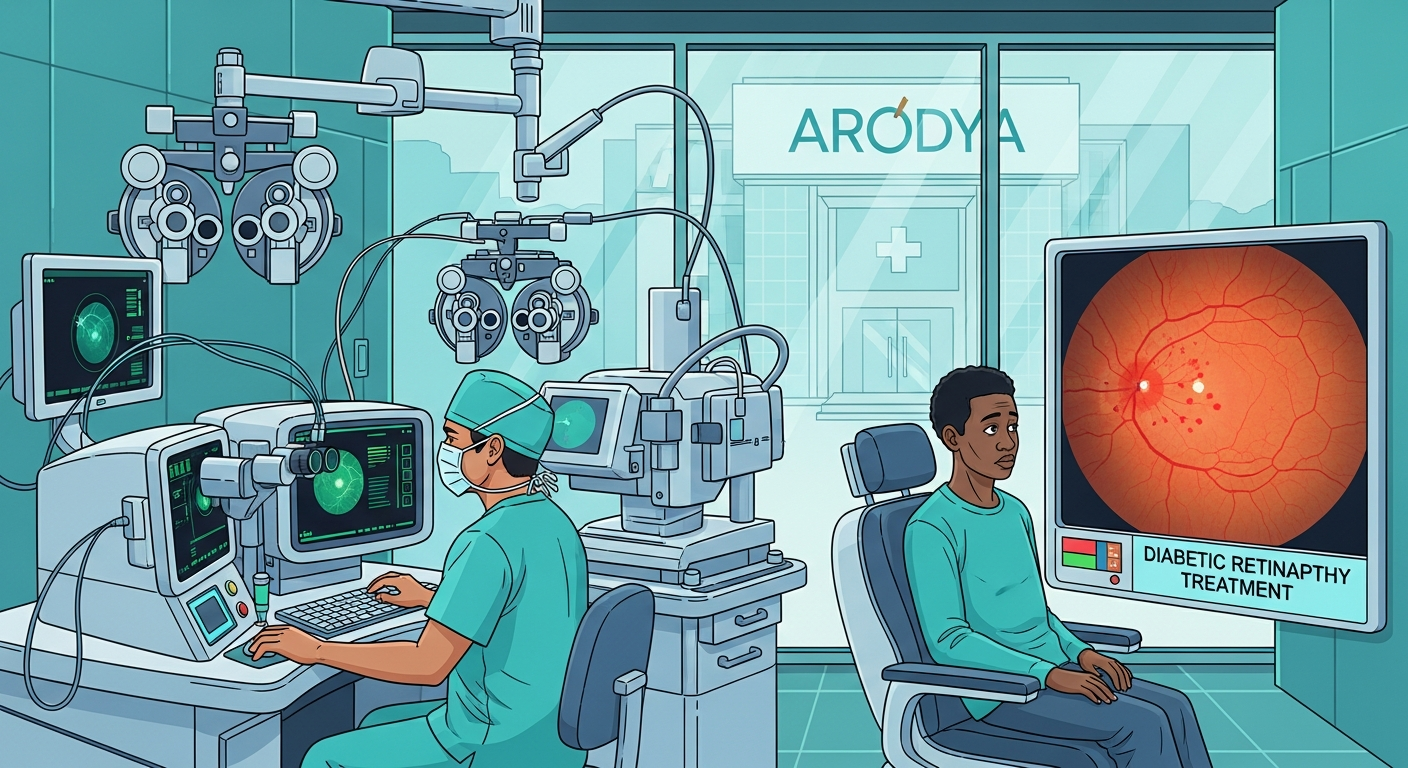

Retinal Surgery in India for African Diabetic Patients: 2026 Guide
Africa is in the midst of a diabetes epidemic. The International Diabetes Federation estimates that sub-Saharan Africa has over 24 million people living with diabetes, with that number projected to nearly double by 2045. Yet the devastating ocular complication of this epidemic — diabetic retinopathy — receives far less attention than it deserves. In many African countries, patients lose their sight from a condition that is treatable, simply because specialist vitreoretinal surgery is unavailable or unaffordable locally.
India has spent decades building the world's most advanced and accessible eye care infrastructure. Institutions like LV Prasad Eye Institute, Aravind Eye Care System, and Sankara Nethralaya have treated millions of patients, published landmark research, and trained entire generations of ophthalmologists across Asia and Africa. For African patients facing sight loss from diabetic retinopathy, India offers treatment that is not just affordable — it is genuinely world-class.
TL;DR: Laser photocoagulation for diabetic retinopathy costs USD 500–1,200 per session in India. Anti-VEGF injections run USD 300–700. Advanced vitrectomy for proliferative retinopathy or vitreous haemorrhage costs USD 4,000–8,000. Top centres include LV Prasad, Aravind Eye Care, and Sankara Nethralaya.
Understanding Diabetic Retinopathy: Stages and Risk
Diabetic retinopathy progresses in stages, and the urgency — and complexity — of treatment increases significantly at each stage.
Non-proliferative DR (NPDR) is the early phase. Microaneurysms, retinal haemorrhages, and hard exudates appear, but the patient may notice nothing or only mild blurring. NPDR is further divided into mild, moderate, and severe. Laser treatment and anti-VEGF injections at this stage protect vision effectively.
Proliferative DR (PDR) is the advanced phase. New abnormal blood vessels grow on the retinal surface and into the vitreous. These vessels are fragile and bleed easily. Vitreous haemorrhage — sudden dense bleeding into the eye — can cause dramatic vision loss. Tractional retinal detachment, where the new vessels pull the retina away from its base, can cause permanent blindness if not treated promptly.
Diabetic Macular Oedema (DMO) can occur at any stage. Fluid accumulates in the macula — the central retina — causing blurred central vision. It is the leading cause of visual impairment in diabetic patients, and anti-VEGF injections are the gold standard treatment.
Africa's diabetes epidemic means millions of people are moving through these stages, often unaware. Many present for ophthalmic care only when vision is already severely compromised.
Treatment Options Available in India
Laser Photocoagulation
For NPDR and PDR, pan-retinal photocoagulation (PRP) uses laser burns across the peripheral retina to destroy oxygen-deprived tissue, reducing the stimulus for abnormal vessel growth. Focal laser is used specifically for DMO when the leaking vessels are in defined locations.
India's major eye centres use the latest laser platforms — green and yellow wavelength lasers, navigated laser systems, and PASCAL pattern scanning laser that treats multiple spots simultaneously, reducing treatment time and patient discomfort. Cost per session: USD 500 to 1,200.
Anti-VEGF Injections
Vascular Endothelial Growth Factor (VEGF) drives both abnormal vessel growth and macular oedema. Anti-VEGF drugs — bevacizumab (Avastin), ranibizumab (Acucept/Lucentis), and aflibercept (Eylea) — are injected directly into the vitreous cavity and dramatically reduce leakage and abnormal vessel activity.
In India, bevacizumab is widely used off-label at USD 100 to 250 per injection — making it accessible compared to the USD 700 to 2,000 per injection charged in Western countries. Branded ranibizumab and aflibercept are also available. Most patients require an initial series of three injections monthly, followed by maintenance injections at intervals determined by their response.
Vitrectomy Surgery for Advanced Cases
When PDR has caused vitreous haemorrhage that does not clear spontaneously, or when tractional retinal detachment threatens the macula, vitrectomy surgery is required. The vitreoretinal surgeon removes the blood-filled vitreous, releases tractional membranes, repairs the retinal detachment, and applies laser during the procedure.
India's vitreoretinal surgeons are among the most experienced in the world. LV Prasad Eye Institute performs thousands of vitrectomies annually. Aravind Eye Care System's surgical volume gives its surgeons unparalleled technical proficiency. Total cost for vitrectomy: USD 4,000 to 8,000 including pre-operative assessment, surgery, anaesthesia, and follow-up.
Combined Screening and Treatment
One of India's unique advantages is the ability to arrive for comprehensive retinal screening and proceed to treatment in the same visit. For African patients who have not had detailed fundus imaging or fluorescein angiography locally, the diagnostic assessment itself is valuable. OCT imaging shows macular thickness with micrometer precision. Fundus fluorescein angiography maps every leaking blood vessel. Wide-field fundus photography documents the entire retinal extent of the disease.
India's Premier Retinal Surgery Centres
| Centre | Location | Speciality Strength |
|---|---|---|
| LV Prasad Eye Institute | Hyderabad | Vitreoretinal surgery, retinal imaging, research |
| Aravind Eye Care System | Chennai, Madurai, Coimbatore | Surgical volume, affordability, training |
| Sankara Nethralaya | Chennai | Uveitis, retinal disease, medical retina |
| Narayana Nethralaya | Bengaluru | Retinal microsurgery, LASIK, cataract |
| Dr. Shroff's Charity Eye Hospital | Delhi | Retinal services, affordable international care |
International patient departments at all these centres have experience with African patients. Teleconsultation is available to review your fundus photographs before travel.
The Cost of Retinal Treatment in India vs Alternative Destinations
| Treatment | India | South Africa | UK | USA |
|---|---|---|---|---|
| Laser photocoagulation | $500–1,200 | $1,500–2,500 | $2,000–4,000 | $2,500–5,000 |
| Anti-VEGF injection (bevacizumab) | $100–250 | $400–800 | $700–1,200 | $1,500–2,000 |
| Anti-VEGF injection (ranibizumab) | $300–600 | $1,000–1,800 | $1,500–2,500 | $2,000–3,500 |
| Vitrectomy surgery | $4,000–8,000 | $8,000–15,000 | $8,000–16,000 | $15,000–30,000 |
The Pre-Treatment Assessment Process in India
For international patients arriving at Indian eye centres, the initial assessment is comprehensive and is completed in one to two days before any treatment begins. Understanding what is involved prepares you for the process.
Visual acuity assessment: Corrected best visual acuity establishes the baseline for measuring treatment success.
Slit-lamp examination: The anterior segment (cornea, lens) is examined for diabetic cataract or glaucoma, which are common co-morbidities.
Intraocular pressure measurement: Diabetic patients are at increased risk of neovascular glaucoma; pressure assessment is essential.
Fundus examination: Indirect ophthalmoscopy and slit-lamp fundoscopy provide the initial retinal assessment.
Optical coherence tomography (OCT): OCT imaging measures macular thickness with micrometer precision. It quantifies diabetic macular oedema and guides treatment decisions for anti-VEGF injection.
Fundus fluorescein angiography (FFA): A dye is injected intravenously and retinal photographs are taken as the dye circulates. FFA maps every leaking microaneurysm, areas of non-perfusion, and neovascularisation. This defines the laser treatment pattern precisely.
Wide-field fundus photography: Documents the full retinal extent of the disease for comparison after treatment.
This assessment typically takes a full morning. Treatment — laser or injection — often begins the same afternoon or the following day. The efficiency of Indian eye centres means international patients rarely wait.
What to Bring to India for Retinal Treatment
To make your consultation and treatment as efficient as possible, bring:
- Recent fundus photographs if available
- Reports from any previous retinal examinations or fluorescein angiography
- Current diabetes medications and HbA1c test results (retinal treatment is most effective when blood sugar is controlled)
- Blood pressure records (hypertension accelerates retinopathy)
- Complete list of current medications including any blood thinners (important before injection procedures)
Indian retinal specialists will conduct their own comprehensive assessment, but prior imaging helps them understand your disease trajectory and treatment history.
Controlling Diabetes to Protect Your Retinal Treatment Outcomes
It cannot be overstated: the single most important factor in slowing diabetic retinopathy progression is blood glucose control. Retinal laser and anti-VEGF treatment stabilise existing damage, but continued poor glucose control accelerates new damage. Before travelling to India, work with your local diabetes team to optimise HbA1c, blood pressure, and lipid levels. Indian eye specialists will advise on this during your consultation.
After Treatment: Managing Diabetic Eye Disease Long-Term
Retinal treatment is not a cure — it is disease management. After laser photocoagulation or vitrectomy in India, patients return to Africa needing ongoing management of their diabetic eye disease. Planning this before leaving India is important.
Follow-up anti-VEGF injections: Diabetic macular oedema treated with anti-VEGF often requires ongoing injections every four to eight weeks in the first year. If local ophthalmologists in your home country can administer these injections (bevacizumab is widely available globally), Indian specialists provide the injection protocol and the OCT monitoring schedule. If local capacity is limited, Arodya plans periodic India return visits for injection series.
Monitoring frequency: After laser treatment, minimum follow-up intervals depend on disease stage — quarterly for moderate NPDR, monthly for treated PDR until stability is confirmed. Indian eye specialists provide a monitoring schedule and criteria for urgent return if new symptoms develop.
Red flag symptoms: Patients are counselled on symptoms requiring emergency attention — sudden vision loss, new floaters, photopsia (flashing lights), or a curtain of vision loss. These may indicate vitreous haemorrhage or retinal detachment requiring urgent review.
Glycaemic control at home: The single most impactful post-treatment action is optimising blood glucose control. Arodya coordinates telemedicine follow-up through the Indian retinal team and can facilitate connections with India-based diabetes specialists for glycaemic management advice.
Planning Your Retinal Treatment Trip with Arodya
Protecting your vision starts with understanding exactly where your retinopathy stands. Start with a free case evaluation — send your recent fundus photographs, diabetes records, and any previous eye reports. An Indian vitreoretinal specialist reviews your case and advises whether laser, anti-VEGF injections, or vitrectomy is the appropriate intervention.
Arodya then coordinates your appointment at the appropriate specialist centre, visa documentation, accommodation near the hospital, and airport transfers. For patients requiring a series of injections over several weeks, we help plan the India stay efficiently. For patients requiring vitrectomy, we arrange the full surgical pathway including the post-operative face-down positioning period.
Blindness from diabetic retinopathy is largely preventable. If you or a family member is living with diabetes and has not had a detailed retinal examination, do not wait. Learn more about preparing for your first medical visit to India and take the first step toward protecting your sight.