World Malaria Day 2026: Prevention Strategies and India's Role in Global Malaria Treatment

World Malaria Day 2026: Prevention Strategies and India's Role in Global Malaria Treatment
April 25 is World Malaria Day — the annual moment when the global health community refocuses attention on a disease that kills over 600,000 people annually, almost all of them in Africa. In 2026, the malaria situation is complex: Africa bears an increasing burden while facing emerging antimalarial drug resistance, and India is simultaneously one of the world's largest producers of malaria medicines and home to world-class treatment centres for severe malaria.
For African patients in India — whether for treatment, recovery, or waiting between procedures — malaria is relevant in multiple ways. This guide covers India's role in global antimalarial production, prevention strategies for African patients in India, and what Indian hospitals offer for malaria treatment.
India as the World's Antimalarial Pharmacy
India's pharmaceutical industry underpins the global malaria response in ways that are rarely acknowledged. Consider the numbers:
- India produces approximately 40 percent of global antimalarial drugs
- Several Indian manufacturers hold WHO prequalification for artemisinin combination therapies (ACTs), the backbone of modern malaria treatment
- Indian-made artesunate, artemether-lumefantrine, and dihydroartemisinin-piperaquine supply national malaria programmes across sub-Saharan Africa
- India is a major exporter of insecticide-treated bed nets and diagnostic rapid test kits
Key Indian manufacturers in the malaria space:
| Company | Products | WHO Prequalified |
|---|---|---|
| Ipca Laboratories | Artesunate, ACTs, chloroquine | Yes |
| Cipla | Artemether-lumefantrine, artesunate | Yes |
| Strides Shasun | Multiple ACT formulations | Yes |
| Sun Pharma | Antimalarial generics | Selected products |
| Guilin India | Artesunate | Collaboration |
The affordability of these Indian-manufactured medicines has been transformative for African health systems. Before generic ACT production scaled in India, artemisinin-based treatments were often too expensive for widespread deployment in high-burden countries.
Drug Resistance: The Growing Challenge
World Malaria Day 2026 occurs amid growing concern about artemisinin partial resistance (ART-R) — the most serious threat to malaria treatment in a generation. Originally documented in Southeast Asia, ART-R has now been confirmed in East Africa (Rwanda, Uganda, Tanzania, Eritrea) with isolated reports from West Africa.
What ART-R means: Parasites partially survive artemisinin exposure, requiring longer or higher-dose treatment courses, and may fail to clear with standard regimens.
India's response: Indian pharmaceutical research is active in the development of next-generation antimalarials. Pipeline candidates under evaluation include:
- Triple ACT combinations (adding a third drug to existing two-drug ACTs)
- Ganaplacide + lumefantrine: A non-artemisinin combination in late-stage trials
- Ferroquine: New class compound with activity against resistant strains
- Tafenoquine generics: Single-dose radical cure for P. vivax (preventing relapse)
For patients who have experienced treatment failure at home with standard ACTs, India's tropical medicine centres can access drugs from research programmes and government emergency stockpiles that are not available in standard clinical practice elsewhere.
Malaria Risk for African Patients in India
This surprises many African patients, but India itself is a malaria-endemic country — though urban risk is generally much lower than rural sub-Saharan Africa.
Risk levels by region and season:
| Area | Season | Risk Level |
|---|---|---|
| Urban Delhi | Year-round | Low |
| Urban Mumbai | Post-monsoon (Oct–Nov) | Low-moderate |
| Urban Chennai | Year-round | Low |
| Urban Bangalore | Year-round | Very low |
| Rural Odisha, Chhattisgarh | Monsoon (June–Oct) | High |
| Andaman Islands | Year-round | High |
| Northeast India | Year-round | Moderate-high |
For patients at major urban hospitals (Delhi, Mumbai, Chennai, Bangalore), malaria risk during treatment is low but not zero — particularly during and immediately after the monsoon months.
Dominant Plasmodium species in India: P. vivax (50–60%) and P. falciparum (40–50%). P. vivax causes less severe disease but requires radical cure with primaquine or tafenoquine to prevent relapse from liver dormant stages.
Prevention Strategies for African Patients in India
1. Mosquito repellent: DEET-based repellents (20–50% DEET) are available at Indian pharmacies and supermarkets. Apply to exposed skin at dusk and dawn when mosquitoes are most active. Odourless options are available.
2. Bed nets: If your accommodation is not air-conditioned or has open windows at night, sleep under an insecticide-treated net. Available at major Indian hospitals and pharmacies for approximately USD 5 to 15.
3. Clothing: Long sleeves and trousers during evening hours — particularly relevant for patients staying in accommodation without reliable air conditioning.
4. Window screens: Check that accommodation has window screens without holes. Request a change of room if screens are damaged.
5. Chemoprophylaxis: Some patients with very high personal risk (immunocompromised, post-transplant, or receiving treatment in rural or high-risk areas) may benefit from prophylaxis. Discuss with your treating doctor before travel — standard prophylaxis options include doxycycline and atovaquone-proguanil (Malarone). Note: anti-malarials are cheap in India and readily available at pharmacies.
6. Prompt reporting: Any fever, chills, headache, or muscle pains during your India stay should be reported to your treating team immediately. Do not assume a fever is a surgical complication or treatment side effect without malaria being ruled out — a rapid malaria test takes under 15 minutes.
Malaria Treatment at Indian Hospitals
Uncomplicated falciparum malaria: WHO-recommended ACT (typically artemether-lumefantrine for 3 days). Available at all Indian hospitals and most pharmacies. Full course costs under USD 10 for generic ACTs.
P. vivax malaria: Chloroquine or ACT for blood-stage parasites, followed by primaquine (14-day) or tafenoquine (single dose) for radical cure. Patients with G6PD deficiency must be screened before primaquine use — Indian hospitals routinely test for G6PD.
Severe malaria: IV artesunate, intensive monitoring, organ support as needed. Available at ICUs of major Indian hospitals.
Drug-resistant malaria (suspected or confirmed): Specialist infectious disease consultation. India's reference centres can perform molecular resistance testing and access alternative treatment regimens.
The India-Africa Malaria Link on World Malaria Day 2026
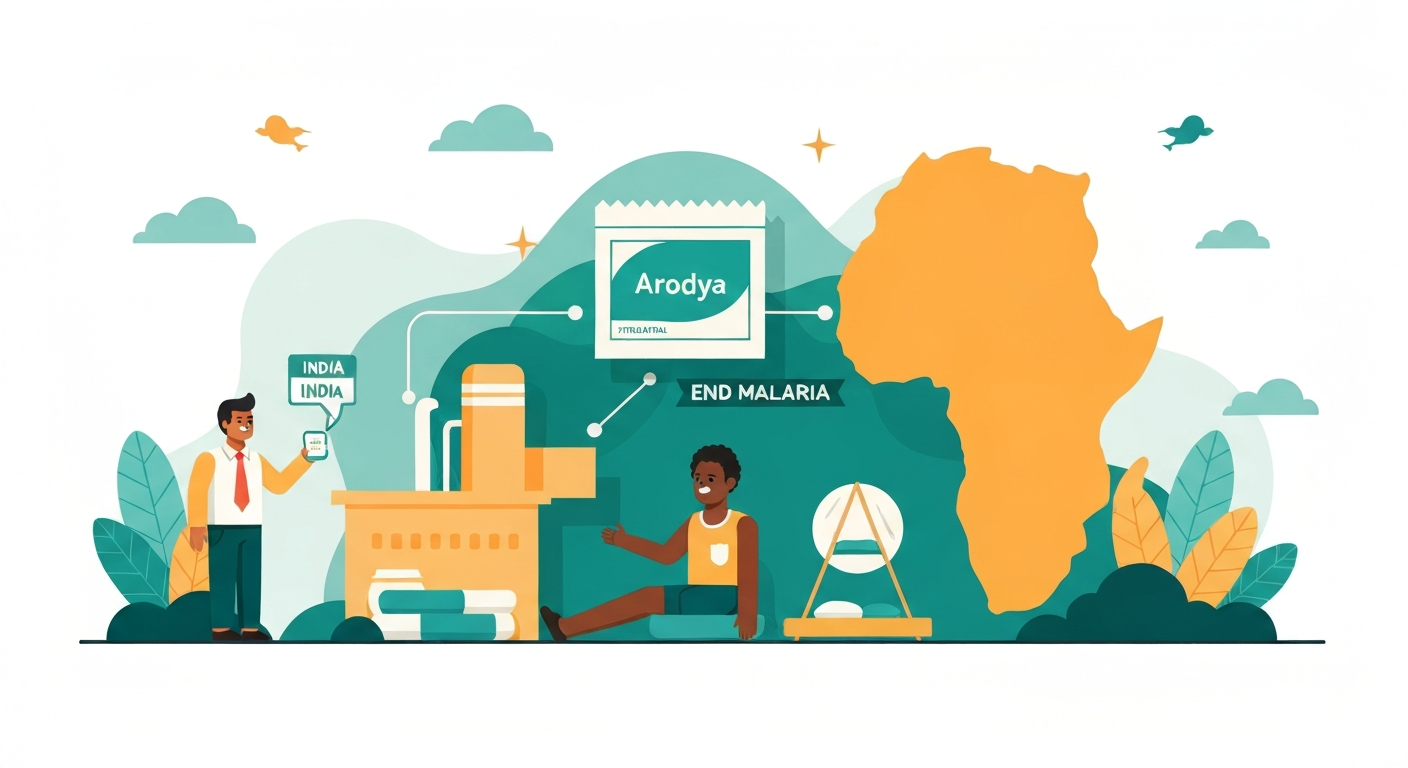
On this World Malaria Day, it is worth reflecting on a deeper connection: India's pharmaceutical industry is not just an economic actor in malaria medicines — it is a lifesaving infrastructure for African health systems. When African governments and the Global Fund negotiate prices for ACTs and diagnostics, the competitive manufacturing base in India directly determines whether those treatments reach patients.
For African patients who seek advanced malaria care in India, the irony is that the very medicines being used to treat them were likely manufactured in India for export to their home countries. India's malaria expertise and manufacturing capacity are intertwined with Africa's malaria burden in ways that World Malaria Day reminds us to acknowledge.
If you are planning a medical trip to India and want to understand what precautions to take, contact Arodya for pre-travel advice. We brief all patients on India-specific health precautions before they travel. For packing guidance including medical supplies and preventive items, see our India medical trip packing checklist.