What to Pack for a Medical Trip to India – Complete Checklist for International Patients
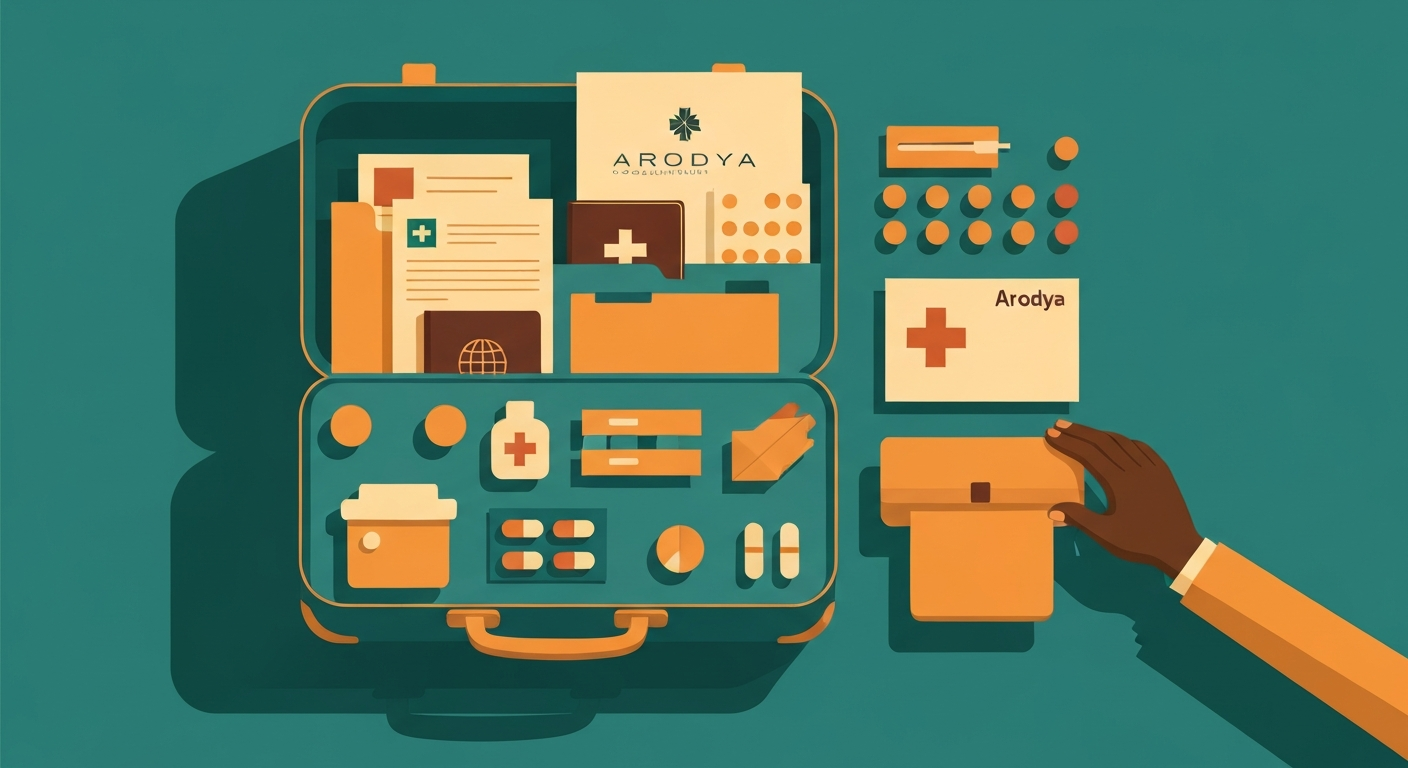

TL;DR: The three most important things to pack for a medical trip to India: (1) all original medical reports and imaging CDs — Indian hospitals re-scan if unavailable, adding USD 300–600 in costs; (2) a 90-day supply of existing medications, as some brands may not be available; (3) your insurance pre-authorisation letter if claiming treatment abroad. See the full checklist below.
Why Packing Right Matters for Your Medical Journey
Traveling to India for surgery is a big step. You're managing not just a medical procedure, but also travel, recovery, and staying comfortable in an unfamiliar country.
What you pack determines how smoothly your medical trip goes. The right documents, medicines, and comfort items can make recovery easier and stress-free. This checklist covers everything you need to bring so you can focus on healing.
Let's walk through exactly what to pack for your medical trip to India so nothing is forgotten.
Essential Medical Documents to Pack
Medical documents are your most important travel items. Keep them organized and easily accessible.
Bring these documents:
- Passport – Valid for at least 6 months beyond your travel dates
- Medical visa – If required for your treatment (many Indian hospitals help with this)
- Referral letter from your home doctor – Explains your condition and why you need surgery
- Previous medical reports – Any scans, X-rays, lab results from the past 2 years
- Imaging on CD or USB – CT scans, MRI, ultrasounds (doctors need these for surgical planning)
- List of current medicines – Include drug names, dosages, and frequency in English
- Prescription copies – From your home doctor for each medicine you take
- Health insurance documents – If you have international coverage that applies
- Vaccination records – Proof of vaccinations (COVID, measles, etc.)
Why this matters: Indian hospitals cannot proceed with surgery without complete medical history. Bringing organized documents speeds up your consultation and surgery scheduling.
Pro tip: Make digital copies of all documents and email them to yourself. Store backups in cloud storage (Google Drive, OneDrive) in case physical copies get lost.
Medicines & Health Essentials
Bring enough medicines for your entire trip plus some extra buffer time.
Pack these medicines:
- Current prescription medicines – Bring a 4–6 week supply (surgery, recovery, and buffer)
- Written prescriptions – Carry copies in case you need refills
- Over-the-counter medicines – Pain reliever, fever reducer, antacid, antihistamine, anti-diarrheal
- Medical devices – If you use a glucose monitor, blood pressure monitor, or inhaler, bring spares
- Extra eyeglasses or contacts – Plus solution supplies (Indian brands may differ from home)
- Allergy medications – If you have known allergies
- Sleep aids – If you use melatonin or other sleep supports (helpful for jet lag and post-surgery rest)
Important: Don't rely on finding your specific medicine brands in India. Pack everything from home.
Tip: Get a letter from your home doctor listing all medicines you take. This helps Indian doctors understand your health history and avoid drug interactions.
Clothing & Comfort Items for Recovery
Your clothing choices directly impact recovery comfort. Pack smart, loose-fitting options.
Clothing to bring:
- Loose, comfortable clothes – Button-up shirts or loose pants (avoid tight waistbands near surgical sites)
- Slip-on shoes – Avoid laces; easier to put on during recovery
- Socks – Plain, comfortable (hospitals are cold)
- Lightweight jacket or shawl – Hospital air conditioning is strong
- Undergarments – Easy to change, comfortable style
- Sleepwear – Soft, loose pajamas that open in front (easier for post-surgery bandage access)
- Light scarf – Useful for modest coverage and warmth
Comfort items:
- Neck pillow or small support pillow – Helps with sleep and recovery positioning
- Personal towel – Bring your own (softer than hospital towels)
- Personal hygiene items – Shampoo, face wash, toothbrush, toothpaste, deodorant
- Skincare products – Moisturizer, lip balm (climate is different than home)
- Toiletries – Whatever you need for daily comfort
- Slippers – Non-slip sole for safely walking around hospital
Financial & Travel Essentials
Money management is crucial for stress-free travel.
Bring:
- Local currency (small amount) – 2,000–5,000 Indian Rupees ($25–60) for immediate expenses
- International debit or credit card – Preferred way to withdraw cash at ATMs
- Multiple cards – Bring backup cards in case one is lost or blocked
- Travel insurance documents – Printed copies of policy details and emergency numbers
- Hospital contacts written down – Hospital name, phone, address in English and as you'll give it to taxi drivers
- Emergency contact list – Names and phone numbers of your family back home
- Flight booking confirmations – Printed copies
Money tip: Withdraw Indian Rupees at the airport ATM or use your card at ATMs in the city. Avoid exchanging large cash amounts.
Electronics & Communication
Stay connected and keep your important information backed up.
Electronics to pack:
- Mobile phone charger – Bring the one from home (same specifications)
- Universal power adapter – India uses 220V / Type D plugs (different from most countries)
- Power bank – Essential for keeping phone charged during travel days
- Laptop or tablet – For video consultations with your home doctor post-surgery
- Headphones – For calls and entertainment during recovery
Digital backup:
- Store all medical documents in cloud storage (accessible from anywhere)
- Email yourself important contact numbers
- Download offline maps of India on your phone
- Store hospital address and directions digitally
- Back up insurance documents to email
Special Items Based on Your Surgery Type
Different procedures need different support items.
For orthopedic surgery (knee, hip, spine):
- Extra support pillow for positioning
- Compression stockings (if doctor recommends)
- Walking aids will be provided by hospital
For cardiac surgery:
- Button-down shirts (hospital gown access and easy dressing)
- Extra loose t-shirts
- Comfortable, soft pants
- Avoid tight waistbands
For organ transplant patients:
- Medical mask (extra set)
- Hand sanitizer
- Wet wipes for hand cleaning
- Avoid crowded public transport
For general surgery:
- Loose, comfortable clothing
- Extra undergarments
- Soft towels
Ask your hospital which special items they recommend for your specific procedure.
What NOT to Pack
Avoid bringing these items to India.
Don't bring:
- Large amounts of cash – Risk of theft; use cards instead
- Expensive jewelry or watches – Unnecessary and risky during recovery
- Valuable electronics – Keep valuables minimal
- Medications not prescribed to you – Even if family offers, these are risky
- Restricted medications – Some drugs banned in India; check government lists
- Excessive luggage – One carry-on and one checked bag is ideal
- Perishable foods from home – Fresh food is available in India
- Heavy books or unnecessary items – Recovery requires rest and minimal movement
Keep your luggage light. You'll be resting during recovery, not sightseeing.
How Long Should You Plan to Stay?
Recovery timelines vary by procedure.
General recovery timeline:
- Minor surgery – 7–14 days in India, then travel home
- Moderate surgery – 14–21 days before flying home
- Major surgery (transplant, major reconstruction) – 21–30 days or longer
Your hospital will give you a specific post-surgery fitness-to-fly clearance. Don't leave India until your doctor confirms you're safe to fly.
Important: Plan at least 7–10 days in India even for minor procedures. Post-surgery complications can arise, and you need to be near your hospital.
Why Choose Arodya for Medical Travel Support
Packing your medical trip is just the first step. At Arodya, we support you throughout your entire journey.
We help with:
- Pre-travel guidance – Detailed checklists specific to your surgery
- Document verification – We review your medical records and ensure everything is ready
- Visa assistance – Help navigating medical visa requirements
- Airport coordination – Arrange pickup so you don't stress on arrival
- Hospital liaison – Direct communication between you and the hospital
- Post-treatment support – Follow-up care coordination and recovery guidance
You're not traveling alone. Arodya coordinates everything so you focus on healing.