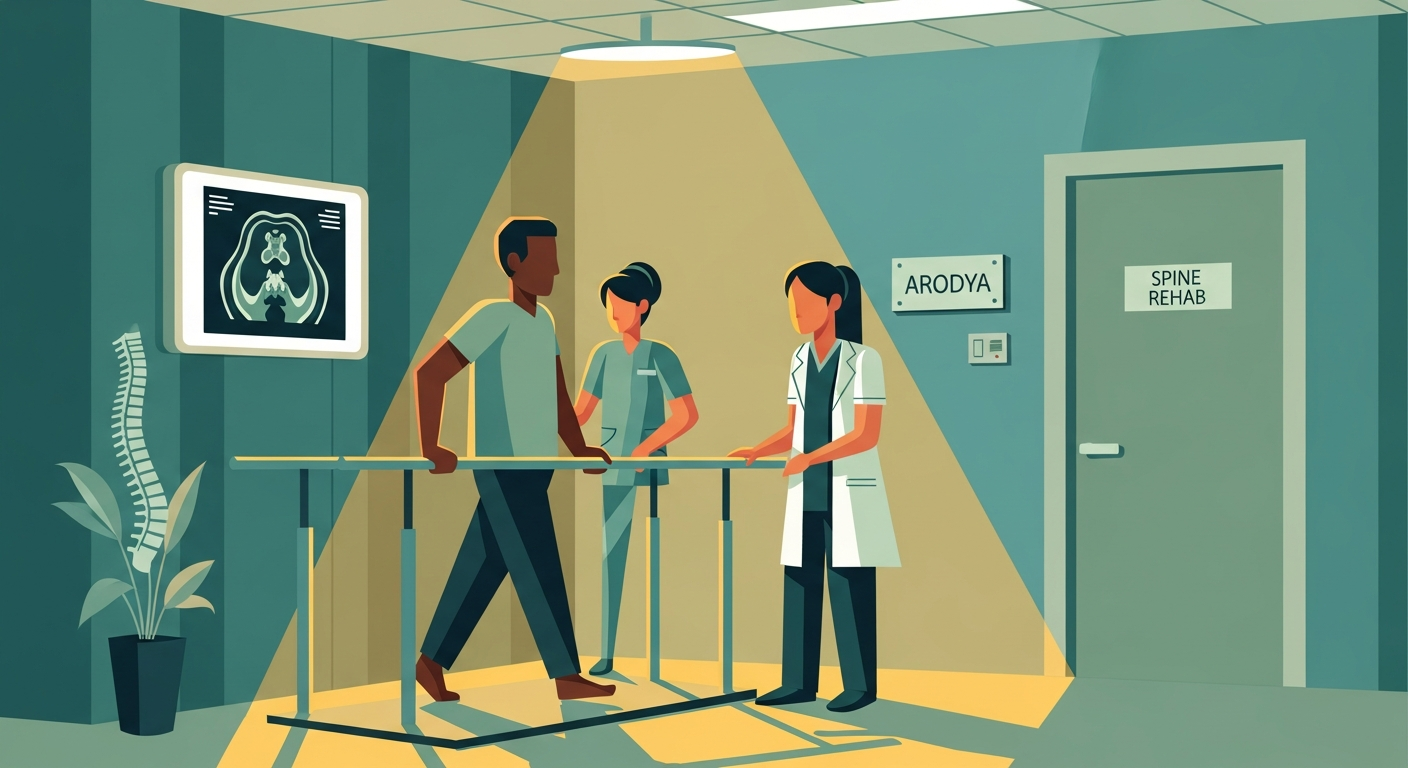
Spinal Cord Injury Rehabilitation in India: Recovery Guide for International Patients 2026

Cardiac & Major Surgery Correspondent

Spinal Cord Injury Rehabilitation in India: Recovery Guide for International Patients 2026
A spinal cord injury changes everything in an instant. The moment of a road traffic accident, a diving injury, a gunshot wound, or a fall - and in that moment, the body's most complex communication pathway is interrupted. What comes next is a journey of rehabilitation that is long, demanding, and uncertain - but also, increasingly, one in which remarkable recovery is possible.
Africa carries a disproportionate share of the global spinal cord injury burden. Road traffic accidents - the leading cause of spinal injury globally - kill and injure at rates in Africa that are among the highest in the world. Nigeria, Kenya, South Africa, Ethiopia, and Tanzania all have road accident statistics that are deeply concerning. The injuries that result from these accidents - including spinal cord injuries - often receive acute care but then face a rehabilitation system that is wholly inadequate to support recovery.
India's spinal cord injury rehabilitation centres offer what most of Africa cannot yet provide: comprehensive, technology-enhanced rehabilitation using exoskeleton gait training, functional electrical stimulation (FES), robotic therapy, and specialist SCI medicine - at costs that are 70-80% below equivalent Western programmes.
Understanding Spinal Cord Injury: Classification and Prognosis
Spinal cord injury is classified using the ASIA (American Spinal Injury Association) Impairment Scale:
| ASIA Grade | Definition | Recovery Potential |
|---|---|---|
| A (Complete) | No motor or sensory function below injury level | Limited; focus on functional independence |
| B (Sensory Incomplete) | Sensory but no motor function below injury level | Some motor recovery possible |
| C (Motor Incomplete) | Motor function present below injury, most key muscles grade <3 | Significant recovery possible |
| D (Motor Incomplete) | Most key muscles below injury grade ≥3 | Good recovery likely with intensive rehab |
| E (Normal) | Normal motor and sensory function | Full recovery |
ASIA grade at 72 hours after injury is the most important predictor of outcome. Patients with incomplete injuries (B, C, D) have the most to gain from intensive rehabilitation - and this is where India's technology-enhanced programmes make the most dramatic difference.
Injury level also matters critically. Cervical (neck) injuries affect all four limbs (tetraplegia/quadriplegia). Thoracic and lumbar injuries affect the legs (paraplegia). The level determines which functions are preserved and which rehabilitation goals are achievable.
India's SCI Rehabilitation Capabilities
India's leading spinal cord injury rehabilitation centres combine clinical excellence with technology that was considered experimental a decade ago.
Exoskeleton Gait Training
Powered exoskeletons - including Ekso Bionics EksoGT, ReWalk, and Indego - allow patients with incomplete spinal cord injuries to stand and walk with robotic assistance. The exoskeleton powers the patient's legs through a coordinated walking gait pattern, providing the repetitive locomotor input that drives neuroplasticity - the nervous system's ability to rewire and recover function.
The evidence for exoskeleton gait training in incomplete SCI is substantial and growing. Patients who have reached a plateau with conventional physiotherapy often show further recovery with exoskeleton training. Even for complete injuries where functional walking recovery is not the goal, exoskeleton standing and stepping provides cardiovascular fitness, bone density preservation, spasticity reduction, and profound psychological benefits.
India's leading SCI rehabilitation centres - AIIMS New Delhi, Manipal Hospital Bangalore, Medanta, and several dedicated rehabilitation hospitals - have invested in these exoskeleton systems and the trained physiotherapists required to use them effectively.
Functional Electrical Stimulation (FES)
FES uses controlled electrical currents delivered through surface electrodes or implanted leads to activate paralysed muscles. Applications include:
- FES cycling - lower limb cycling using electrically-stimulated muscles, improving cardiovascular fitness and muscle mass
- FES-assisted walking - coordinated stimulation of leg muscles during walking with support
- FES for hand function in cervical injuries - enabling grasping in patients with tetraplegia
- FES for respiratory function - in high cervical injuries affecting breathing
FES is available at major Indian SCI rehabilitation centres and represents technology that African facilities essentially never have.
Robotic Upper Limb Rehabilitation
For patients with cervical injuries affecting arm and hand function, robotic rehabilitation devices - Armeo, Pablo, Hand of Hope - provide high-repetition, task-specific training that drives neuroplastic recovery. These systems provide far more repetitions per therapy session than a human physiotherapist can deliver, and quantify progress objectively.
Aquatic Therapy
Hydrotherapy pools allow SCI patients to exercise in reduced-gravity conditions, enabling movements impossible on land. Aquatic therapy is a standard component of India's comprehensive SCI rehabilitation programmes and is effective for both incomplete and complete injuries.
Acute SCI Management and Rehabilitation: Two Distinct Phases
For patients who have suffered an acute spinal cord injury and need to travel to India, it is important to understand the distinction between acute management and rehabilitation.
Acute management (first days to weeks): The priority is spinal stabilisation, prevention of secondary injury, medical management of complications (respiratory, autonomic, urological), and surgical decompression if indicated. This phase is best managed at a centre with neurosurgical and orthopaedic spinal capability, ICU support, and respiratory management.
Rehabilitation (weeks to months): Once the patient is medically stable, rehabilitation begins. This is the long, active work of recovery - physiotherapy, occupational therapy, speech therapy (if needed), bowel and bladder rehabilitation, psychological support, and technology-enhanced therapies.
Arodya coordinates both phases for patients coming from Africa. For patients in the acute phase who need to travel, we arrange medical evacuation and admission to a hospital with both acute and rehabilitation capability. For patients who have completed acute care in Africa and are coming specifically for rehabilitation, we arrange direct admission to a rehabilitation centre.
Bowel and Bladder Management: Critical but Often Neglected
One of the dimensions of SCI care that is most frequently inadequate in Africa is bowel and bladder management. Neurogenic bladder and bowel dysfunction - the inability to voluntarily control bladder and bowel due to the spinal injury - affects virtually all SCI patients to some degree.
Inadequate management of neurogenic bladder leads to:
- Recurrent urinary tract infections (UTIs) - a leading cause of hospitalisation and death in SCI
- Hydronephrosis and renal damage from high bladder pressures
- Urinary incontinence - a major barrier to community reintegration
Inadequate management of neurogenic bowel leads to:
- Constipation and bowel obstruction
- Faecal incontinence - profoundly affecting dignity and social participation
- Autonomic dysreflexia - a dangerous spike in blood pressure triggered by bowel or bladder problems in high injuries
India's SCI rehabilitation programmes include comprehensive urodynamic assessment, optimal catheterisation programme (intermittent self-catheterisation where possible), anticholinergic and botulinum toxin treatment for bladder overactivity, and a structured bowel management programme.
These interventions significantly improve quality of life and prevent the complications that prematurely kill SCI patients who receive inadequate long-term care.
Pressure Sore Prevention: A Life or Death Issue
Pressure injuries (pressure sores/bedsores) are the most common preventable complication in SCI and a leading cause of hospitalisation and death in patients who survive the initial injury. A patient who cannot feel or move below their injury cannot detect the tissue damage accumulating from prolonged pressure.
India's SCI rehabilitation centres treat pressure sore prevention as a medical priority - not an afterthought. Education of patients and families in pressure relief techniques, skin inspection, appropriate seating and mattress systems, and early wound management is central to the rehabilitation programme.
For patients who arrive from Africa with established pressure sores, wound care, and if necessary surgical reconstruction, is available at Indian hospitals.
Rehabilitation Costs in India
| Programme | India (Monthly) | USA (Monthly) | UK (Monthly) |
|---|---|---|---|
| Comprehensive inpatient SCI rehab | $3,000–8,000 | $30,000–50,000 | £15,000–25,000 |
| Exoskeleton-intensive programme | $4,000–10,000 | $35,000–60,000 | £18,000–30,000 |
| Outpatient rehabilitation (intensive) | $1,500–4,000 | $10,000–20,000 | £5,000–12,000 |
A three-month comprehensive rehabilitation programme in India costs approximately $10,000-25,000. The same programme in the USA would cost $90,000-150,000.
Telemedicine Follow-Up After Rehabilitation
After discharge from India, SCI patients return home to an environment where specialist follow-up may be limited. Arodya coordinates telemedicine follow-up with the Indian rehabilitation team for ongoing management of complications, medication adjustments, rehabilitation programme progression, and early identification of problems like UTIs, pressure sores, or autonomic dysreflexia.
We also provide patients with detailed written management guides for bowel and bladder care, pressure sore prevention, and spasticity management that their local healthcare providers can reference.
Taking the Next Step
Spinal cord injury is not the end of a life - it is the beginning of a different one. The quality of that different life depends enormously on the quality of rehabilitation received in the months and years after injury.
India's rehabilitation centres are offering outcomes that were not possible even ten years ago. Exoskeleton-assisted walking for incomplete injuries. FES cycling that rebuilds fitness and muscle. Robotic hand therapy that restores function in cervical injuries. Stem cell trials at accredited centres that may offer further recovery for appropriate candidates.
Every patient's situation is different. Recovery depends on injury level, ASIA grade, time since injury, and the patient's health and commitment. What is certain is that better rehabilitation produces better outcomes - and India's programmes represent a significant step up from what most African patients can access at home.
Start your Arodya consultation today - share your medical records, imaging, and ASIA assessment, and let us build a rehabilitation plan that gives you the best possible path to recovery.