Pancreas Transplant Cost in India for International Patients: What You Need to Know 2026
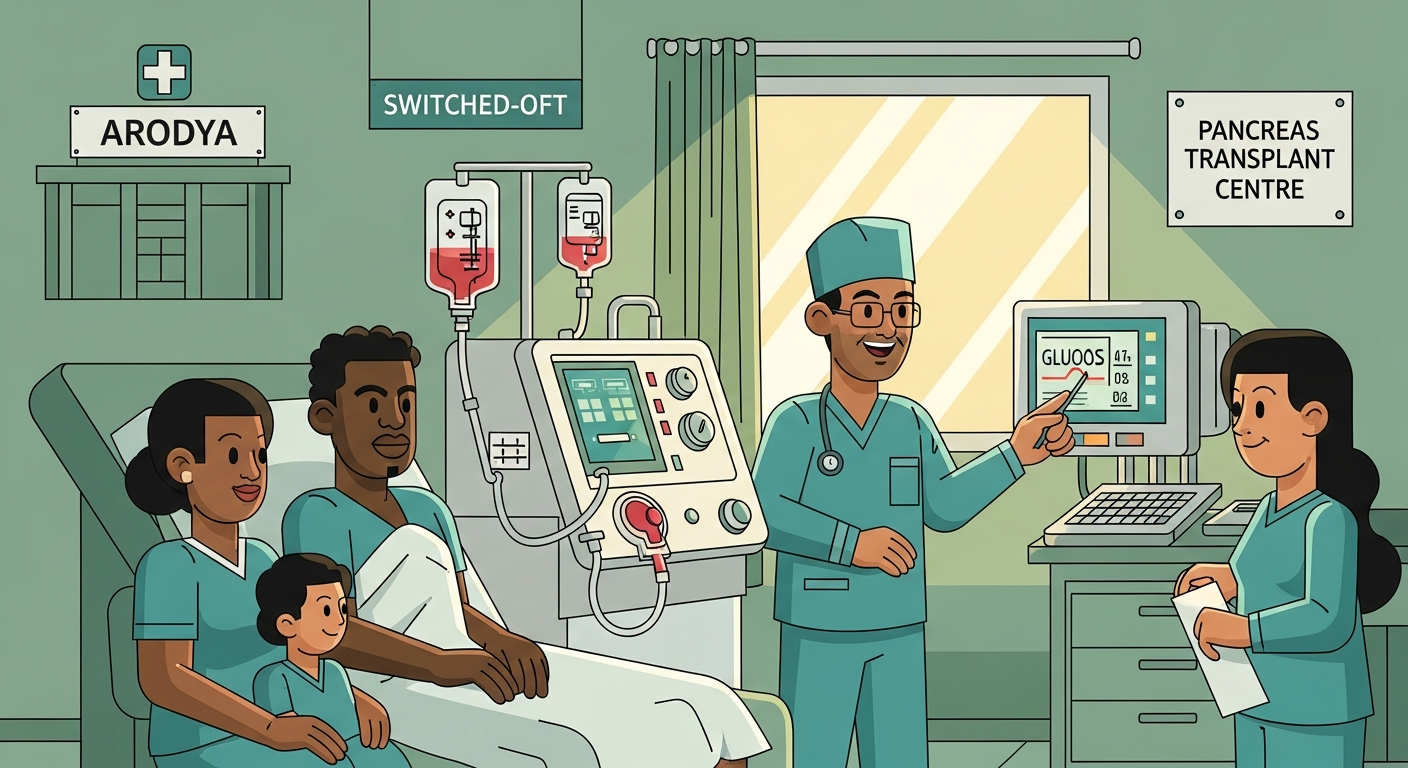

A pancreas transplant is one of the most transformative procedures available to patients with Type 1 diabetes and kidney failure — it can eliminate insulin dependence entirely, restore normal glucose metabolism, and halt the progression of diabetic complications. It's also one of the most complex solid organ transplants performed, requiring experienced joint teams and ICU infrastructure that few centres in Africa can offer. For patients who are candidates, India's transplant centres represent a realistic pathway at costs far below what Western hospitals charge.
TL;DR: Simultaneous pancreas-kidney transplant (SPK) — the most common combination — costs USD 30,000–45,000 in India, compared to USD 150,000–300,000 in the USA (Patients Beyond Borders, 2024). In Class I thalassemia-free recipients of SPK, insulin independence rates exceed 85% at one year at leading Indian transplant centres. Long-term immunosuppression is lifelong and must be managed at home after return.
Who Is a Candidate for Pancreas Transplant?
Pancreas transplantation isn't for every diabetic patient — the procedure carries significant risks and immunosuppression requirements that must be weighed carefully against the benefits.
Simultaneous pancreas-kidney (SPK) is indicated for Type 1 diabetes patients with end-stage renal disease (eGFR under 20) who are already planning kidney transplant. Adding a pancreas simultaneously achieves both goals in one operation with a single donor, avoiding the need for two separate surgeries. SPK is the most commonly performed combination and has the best documented outcomes.
Pancreas after kidney (PAK) is for patients who've already received a kidney transplant and have a functioning kidney graft. The pancreas is added as a second procedure.
Isolated pancreas transplant (IPT) is for Type 1 diabetes patients with intact kidney function but life-threatening hypoglycaemia unawareness — episodes of severe low blood sugar without warning. This is a high-risk procedure that requires careful patient selection.
Indian transplant teams require comprehensive pre-transplant assessment:
- Cardiac clearance (stress test or coronary angiography in patients over 35)
- HLA typing and panel reactive antibody (PRA) testing
- Cross-match testing with the donor
- Full metabolic panel, coagulation screen, viral serology
- Ophthalmology assessment (advanced retinopathy affects post-transplant prognosis)
What Does the Pancreas Transplant Procedure Involve?
SPK transplant is performed under general anaesthesia and typically takes 4–6 hours. The donor pancreas and kidney are placed extraperitoneally or intraperitoneally in the right and left iliac fossae respectively. The pancreatic duct is anastomosed either to the bladder (bladder drainage) or the small bowel (enteric drainage) — most experienced Indian centres now use enteric drainage as the preferred approach.
ICU stay after SPK is typically 5–7 days, followed by 2–3 weeks in a high-dependency transplant ward. The total hospital stay runs 3–4 weeks. Insulin independence — the point at which the transplanted pancreas takes over glucose regulation without exogenous insulin — typically occurs within 24–72 hours of successful revascularisation.
The most critical early complications are pancreatic graft thrombosis (occurs in 5–10% of cases, requires urgent intervention or graft removal) and anastomotic leak. These are managed with surgical re-exploration or angiographic intervention depending on presentation.
Costs in Context
| Procedure | India (USD) | USA (USD) | Germany (EUR equiv.) |
|---|---|---|---|
| Simultaneous pancreas-kidney (SPK) | 30,000 – 45,000 | 150,000 – 300,000 | €80,000 – €150,000 |
| Pancreas after kidney (PAK) | 25,000 – 38,000 | 100,000 – 200,000 | €60,000 – €120,000 |
| Isolated pancreas transplant (IPT) | 22,000 – 35,000 | 100,000 – 180,000 | €55,000 – €100,000 |
Sources: Patients Beyond Borders 2024; hospital quotes collected by Arodya, 2025.
Costs include surgical fees for both pancreas and kidney teams (for SPK), anaesthesia, theatre, ICU stay, ward days, and initial immunosuppression (tacrolimus, mycophenolate, steroids). The ongoing cost of immunosuppression — which must continue for life — is a separate and significant long-term expense. Indian generic immunosuppressants are considerably cheaper than brand-name equivalents; many patients arrange supply from India for their home country.
For broader context on organ transplant economics, see our kidney transplant cost guide.
Which Centres Perform Pancreas Transplants in India?
Pancreas transplant is a low-volume procedure even at major Indian centres. Centres with documented active programmes include:
- Fortis Memorial Research Institute, Gurgaon — One of India's most active pancreas transplant programmes, with published outcomes
- Apollo Hospitals, Chennai — Experienced joint kidney-pancreas team
- Medanta The Medicity, Gurgaon — Comprehensive transplant programme including pancreas
- Amrita Institute of Medical Sciences, Kochi — Strong academic transplant programme
When evaluating centres, ask specifically: How many SPK transplants did you perform in 2024? What is your 1-year insulin independence rate? What is your graft thrombosis rate and how do you manage it?
Arodya verifies active programme status before any referral — a hospital listing pancreas transplant on its website does not always mean it has performed procedures recently.
The Road After Transplant: Long-Term Management
Successful pancreas transplant doesn't mean the journey is over. Lifelong immunosuppression is required. The risk of rejection is highest in the first year and decreases thereafter but never disappears. Regular monitoring — tacrolimus levels, renal function, HbA1c, urine amylase (for bladder-drained grafts) — continues indefinitely.
Before discharge, Indian transplant centres provide a detailed immunosuppression protocol and monitoring schedule. Arodya coordinates with your local physician to ensure the monitoring can be implemented at home, and arranges telemedicine follow-up with the Indian transplant team at 1 month, 3 months, and 6 months post-discharge.
When you're ready to explore whether pancreas transplant is appropriate for your situation, start with a case review through Arodya. We'll have the Indian transplant team assess your case before you travel — avoiding a wasted trip if the criteria aren't met.