

Liver Transplant in India: Your Complete Guide to World-Class Hepatic Transplantation

Healthcare Economics & Cost Analyst

TL;DR: Liver transplant in India costs USD 25,000–40,000 - 50–65% less than the USA (USD 300,000–500,000) or Gulf hospitals. India's leading centres (Medanta, Max, Apollo, ILBS Delhi) perform 800+ liver transplants annually with 1-year patient survival of 88–92%. Living donor transplant (from a family member) is the most common route for international patients. (NOTTO India, 2023)
End-stage liver disease kills more than 2 million people globally each year - with cirrhosis and hepatocellular carcinoma responsible for the majority. (WHO Global Hepatitis Report, 2022). In Africa, chronic hepatitis B infection affects 6–8% of the population, driving high rates of cirrhosis and liver cancer. India performs 800+ liver transplants annually with 1-year survival rates of 88–92%, at costs 50–65% below the USA. For patients with end-stage liver disease, this guide explains what's available and how to access it.
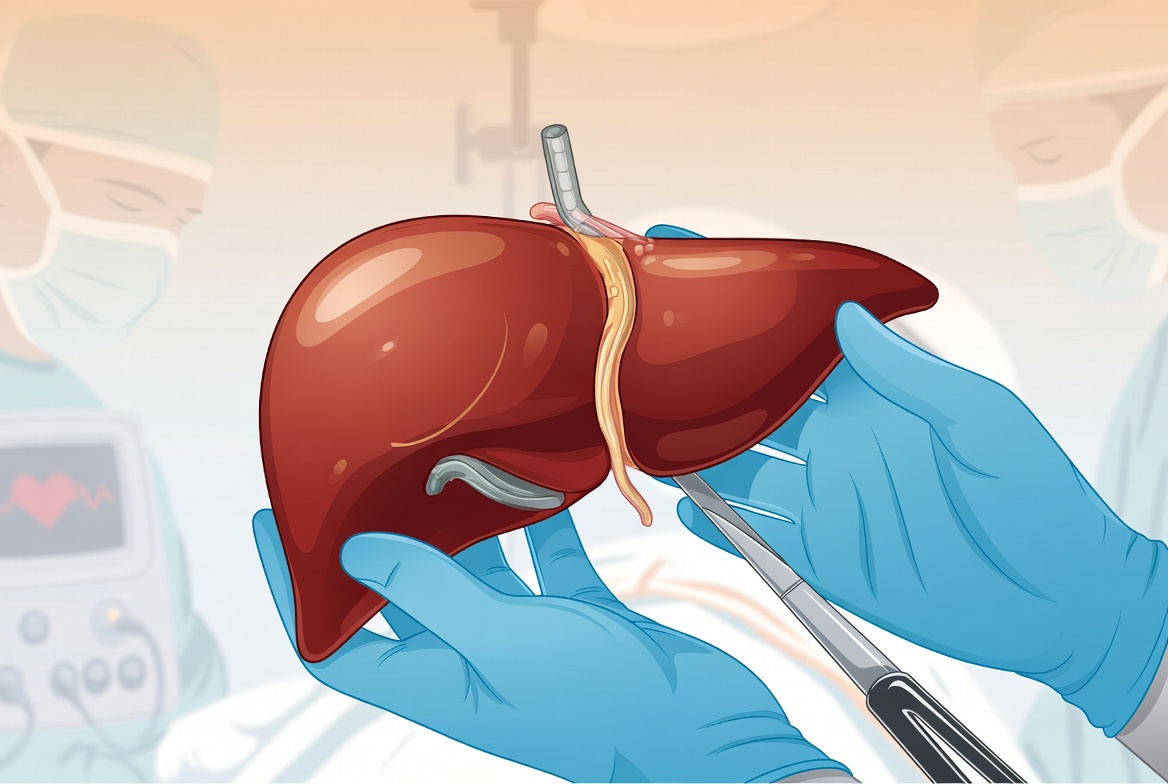
Understanding Liver Transplantation
When Is Liver Transplant Needed?
Liver transplant is the definitive treatment for end-stage liver disease when no medical or surgical alternative can restore function. The MELD score (Model for End-Stage Liver Disease) quantifies urgency - patients with MELD scores above 15 generally benefit from transplant over continued medical management. Candidates include patients with cirrhosis from hepatitis B and C, alcohol-related liver disease with sustained abstinence, autoimmune hepatitis, and hepatocellular carcinoma within transplant criteria.
Common indications:
- Decompensated cirrhosis (ascites, variceal bleeding, hepatic encephalopathy, jaundice)
- Fulminant hepatic failure (acute liver failure)
- Hepatocellular carcinoma - within Milan criteria (1 lesion ≤5 cm, or 3 lesions each ≤3 cm)
- Chronic viral hepatitis B or C with decompensation
- Primary biliary cholangitis, primary sclerosing cholangitis
- Autoimmune hepatitis
- Metabolic liver diseases (Wilson's disease, haemochromatosis, NASH cirrhosis)
Why Choose Liver Transplant in India?
How Do Costs Compare?
Liver transplantation in India costs 60–75% less than in Western countries, with no compromise on surgical quality or outcomes. (Medical Tourism Association, 2023). A comprehensive package - including surgery for both donor and recipient, hospitalisation, investigations, and first-month follow-up - runs USD 25,000–40,000 in India.
Citation capsule: Liver transplant in India costs USD 25,000–40,000 for a complete package - compared to USD 300,000–500,000 in the United States, according to the Medical Tourism Association (2023). India's leading centres (Medanta, Max, Apollo, ILBS Delhi) report 1-year patient survival of 88–92%, consistent with ELTR and UNOS Registry data.
Cost Comparison:
| Component | USA | UK | India |
|---|---|---|---|
| Liver transplant surgery | $250,000–350,000 | £150,000–200,000 | $20,000–30,000 |
| Hospital stay (2–3 weeks) | $50,000–80,000 | £30,000–50,000 | $4,000–8,000 |
| Immunosuppression (year 1) | $20,000–40,000 | £15,000–25,000 | $4,000–8,000 |
| Total comprehensive package | $300,000–500,000 | £200,000–350,000 | $25,000–40,000 |
World-Class Liver Transplant Centres
India's leading liver transplant programmes operate at:
Specialised Facilities:
- Dedicated hepatobiliary and transplant units
- Advanced ICU with organ support systems including MARS (Molecular Adsorbent Recirculating System) for acute liver failure
- Ex vivo organ perfusion technology at select centres
- Dedicated transplant anaesthesia teams
Diagnostic Capabilities: HRCT abdomen, contrast-enhanced MRI, liver volumetry, hepatic vein pressure gradient measurement, Fibroscan for fibrosis staging, advanced hepatic angiography.
Accreditation: JCI, NABH, ISO. Medanta (Gurugram), Max (Delhi), Apollo (Chennai/Delhi), and ILBS (Delhi) are internationally recognised transplant centres with published outcome data.
Expert Hepatobiliary Surgeons
India's liver transplant surgeons typically hold international fellowship training (USA, UK, or France) and have performed 500–1,000+ transplants over 15–25 years of practice. Living donor surgery expertise is particularly strong - India leads globally in living donor liver transplant volume, which is the primary pathway for international patients.
Types of Liver Transplants Available in India
Living Donor Liver Transplant (LDLT)
Living donor liver transplant is the most common pathway for international patients. A healthy related donor donates the right lobe of the liver (approximately 60% of liver volume). Both the donor's remaining left lobe and the recipient's implanted right lobe regenerate to full functional size within 6–8 weeks.
Donor requirements: Age 18–55, BMI under 30, no viral infections, no hepatic fibrosis, adequate liver volume and anatomy on CT volumetry.
Outcomes:
- 1-year patient survival: 88–92%
- Donor mortality: less than 0.5%
- Donor return to work: 4–8 weeks
- Donor liver regeneration: complete within 2–3 months
Deceased Donor Liver Transplant (DDLT)
A whole liver from a brain-dead donor is transplanted, allocated through NOTTO (National Organ and Tissue Transplant Organisation) criteria. International patients are listed but receive lower priority than Indian residents. Most international patients plan for living donor transplant rather than waiting for deceased donor allocation.
1-year patient survival: 85–90%.
Split Liver Transplant
One deceased donor liver is divided and transplanted into two recipients - typically one adult and one paediatric. This expands access without additional deceased donors. Available at high-volume centres.
The Liver Transplant Procedure
Pre-Transplant Evaluation
Recipient Assessment:
- Complete blood count, liver function, kidney function, coagulation panel
- MELD score calculation and urgency assessment
- Infectious disease screening (HIV, Hepatitis B and C, CMV, EBV, TB, syphilis)
- Cancer screening (AFP, imaging for HCC)
- Cardiovascular evaluation (ECG, echocardiography)
- Pulmonary function testing
- Upper endoscopy for variceal screening
- Psychological evaluation and compliance assessment
Imaging Studies:
- Contrast-enhanced CT or MRI abdomen - assesses hepatic anatomy, portal vein, hepatic vein, vascular anatomy
- PET-CT if hepatocellular carcinoma suspected
Living Donor Evaluation:
- Full medical assessment, liver function tests
- CT volumetry to assess liver volume and vascular anatomy
- Psychological evaluation and ethics committee clearance (independent donor advocate required by Indian law)
Surgical Procedure
The recipient surgery takes 6–8 hours under general anaesthesia. The native liver is removed (hepatectomy), and the donor liver is implanted with anastomoses of the hepatic veins, portal vein, hepatic artery, and bile duct. The donor right hepatectomy takes 4–5 hours and is performed simultaneously or sequentially. Hospital stay: 15–20 days for the recipient, 7–10 days for the donor.
Post-Transplant Management
First 3–5 days (ICU): Haemodynamic support, liver function monitoring, immunosuppression initiation, infection prophylaxis, mechanical ventilation until extubation.
Days 5–15 (Ward): Drain removal, oral nutrition introduction, daily liver function tests, tacrolimus level monitoring, mobilisation.
Weeks 2–8 (Outpatient): Two to three visits per week. Tacrolimus dose adjustment, complication surveillance, gradual activity increase.
Long-term: Monthly visits for year 1, then quarterly. Annual imaging to screen for HCC recurrence (if original indication was hepatocellular carcinoma).
Arodya Data
Immunosuppression After Liver Transplant
Standard Maintenance Protocol
Triple therapy is standard in India's liver transplant centres:
- Calcineurin inhibitor (tacrolimus, preferred): Primary immunosuppression. Tacrolimus blood levels are monitored every 1–2 weeks in the first year and adjusted to target range.
- Antimetabolite (mycophenolate mofetil): Reduces acute rejection episodes. Dose-adjusted for renal function.
- Corticosteroid (prednisolone): High-dose at transplant, then tapered over 6–12 months.
Rejection - Types and Management
Acute cellular rejection occurs in 30–40% of liver transplant recipients in the first year. It presents with rising liver enzymes and is diagnosed by biopsy. The majority of episodes respond to 3-day methylprednisolone pulse therapy. Chronic rejection - ductopenic rejection - occurs in 2–5% and may ultimately require re-transplantation.
Long-Term Liver Transplant Outcomes
Survival Rates
| Period | Patient Survival | Graft Survival |
|---|---|---|
| 1 year | 88–92% | 85–88% |
| 5 years | 70–80% | 65–75% |
| 10 years | 55–65% | 50–60% |
These outcomes are consistent with European Liver Transplant Registry (ELTR) data. (ELTR, 2022).
Quality of Life After Transplant
Compared to end-stage liver disease with decompensation:
- Return to work: 70–80% at 12 months
- Freedom from ascites and encephalopathy: immediate
- Improved energy and nutritional status: within weeks
- Most patients resume normal family and social life within 3–6 months


