Epilepsy Surgery & VNS in India for International Patients: 2026 Guide
Epilepsy Surgery & VNS in India for International Patients: 2026 Guide
Epilepsy is one of the world's most common serious neurological conditions, affecting approximately 50 million people globally. In Africa, the burden is disproportionate — an estimated 10 million Africans live with epilepsy, yet the treatment gap (the proportion of people with epilepsy who do not receive any treatment) exceeds 90% in many sub-Saharan African countries. This means nine in ten Africans with epilepsy receive no treatment at all.
Even among those who do receive medication, approximately 30% of people with epilepsy have drug-resistant epilepsy — their seizures are not adequately controlled despite trying two or more appropriate antiepileptic drugs at therapeutic doses. For these patients, epilepsy surgery or vagal nerve stimulation (VNS) offers the possibility of seizure freedom or dramatic reduction that medication alone cannot provide.
India's epilepsy surgery programme, led by centres such as NIMHANS Bangalore, is among the most experienced in Asia, achieving outcomes comparable to international benchmark epilepsy surgery centres.
Key figures: Epilepsy surgery in India costs $10,000–18,000. Temporal lobectomy achieves seizure freedom (Engel Class I) in 60–70% of well-selected patients. VNS reduces seizure frequency by 50%+ in approximately 50% of appropriate candidates.
The Epilepsy Burden in Africa
The reasons for Africa's high epilepsy burden and massive treatment gap are interrelated:
High incidence: Africa has elevated rates of epilepsy risk factors — perinatal brain injury (birth asphyxia), central nervous system infections (neurocysticercosis caused by pork tapeworm, cerebral malaria, bacterial meningitis, tuberculous meningitis), traumatic brain injury, and strokes.
Antiepileptic drug supply: Even basic antiepileptic drugs (phenobarbitone, carbamazepine, sodium valproate) are intermittently unavailable at many African health facilities. When medication supply is interrupted, seizures recur.
Stigma: Epilepsy carries profound stigma in many African societies — widely misattributed to spiritual causes, contagion through saliva during seizures, or witchcraft. Stigma prevents people from seeking medical care, accepting diagnosis, and adhering to medication.
Specialist shortage: Neurologists are rare across Africa. The continent has fewer than 2,000 neurologists for over a billion people. Epilepsy surgery programmes require a highly specialised multidisciplinary team (neurologist, neurosurgeon, neuroradiologist, neuropsychologist, neurophysiologist) that is effectively non-existent in most African countries.
India addresses the specialist gap for African patients who can access the India treatment pathway.
Drug-Resistant Epilepsy: When Medication Is Not Enough
Drug-resistant epilepsy (also called refractory epilepsy or intractable epilepsy) is defined as failure of two or more appropriate antiepileptic drug regimens at adequate doses. Approximately 30% of people with epilepsy — around 15 million people globally — fall into this category.
Drug-resistant epilepsy is not just a quality-of-life issue. It is associated with:
- Significantly elevated mortality (sudden unexpected death in epilepsy — SUDEP)
- Cognitive decline from repeated seizures and their effects on the developing or adult brain
- Social exclusion from education, employment, and community life
- Depression and anxiety in up to 50% of affected individuals
For patients who have failed two appropriate drug regimens, epilepsy surgery evaluation should be the next step — not a further trial of additional medications.
The Pre-Surgical Evaluation in India
Not all epilepsy is surgically treatable. The pre-surgical evaluation is designed to identify whether a patient has a focal seizure onset zone that can be safely removed or disconnected without causing unacceptable neurological deficit. This evaluation is rigorous and typically takes one to two weeks in India.
Video-EEG Monitoring
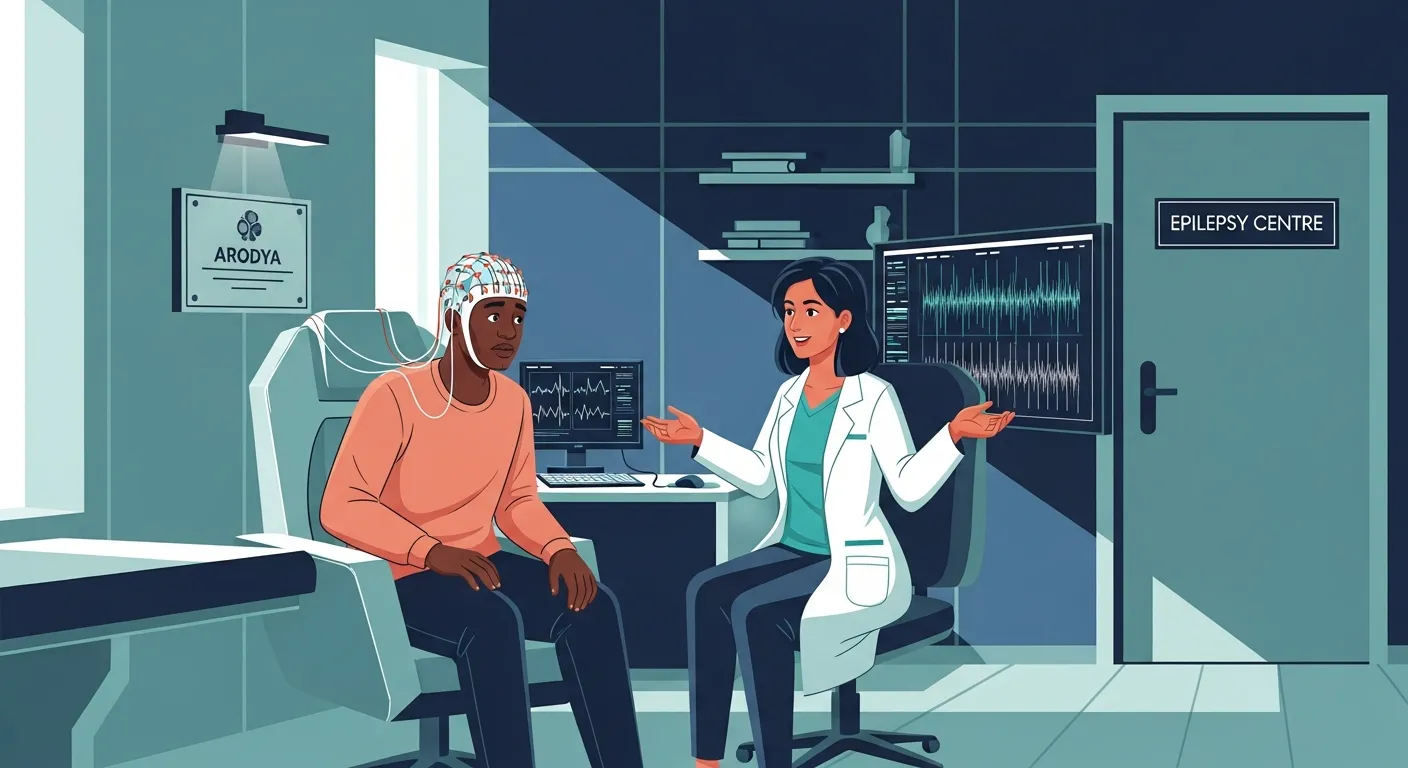
The patient is admitted to a dedicated epilepsy monitoring unit (EMU) and connected to continuous EEG recording for three to seven days. Anti-epileptic drugs are typically tapered to provoke seizures and allow recording. The EEG pattern during seizures (ictal EEG) and the clinical manifestations captured on video together help localise the seizure onset zone.
Cost in India: Included in the pre-surgical evaluation package ($2,000–4,000 for monitoring alone).
High-Resolution Brain MRI
A dedicated epilepsy MRI protocol using specific sequences (FLAIR, volumetric T1, T2) at 3 Tesla field strength is essential to identify structural abnormalities such as hippocampal sclerosis (the most common surgical target in temporal lobe epilepsy), focal cortical dysplasia, cavernomas, or tumours.
Cost in India: $200–400 for dedicated epilepsy MRI.
FDG-PET Scan
Fluorodeoxyglucose (FDG) PET imaging shows glucose metabolism in the brain. The seizure onset zone is typically hypometabolic between seizures — appearing as a cold spot on the PET scan. PET can identify the epileptic region even when MRI is normal (MRI-negative epilepsy).
Cost in India: $400–700.
WADA Test (Intracarotid Amobarbital Procedure)
Before temporal lobe surgery, the WADA test determines which hemisphere is dominant for language and memory function. An anaesthetic drug is injected into one internal carotid artery at a time, temporarily putting one hemisphere to sleep. Language and memory are tested during this window. This identifies patients at risk of post-operative memory or language deficits.
Cost in India: $1,500–2,500.
Neuropsychological Assessment
A comprehensive neuropsychological battery assesses IQ, memory, language, attention, and executive function. This establishes baseline cognitive function, helps lateralise the epileptic hemisphere, and guides post-operative rehabilitation.
Surgical Options for Drug-Resistant Epilepsy
Temporal Lobectomy
The most common epilepsy surgery, performed for mesial temporal lobe epilepsy — the most common type of drug-resistant focal epilepsy. Hippocampal sclerosis (scarring of the hippocampus, the memory centre) is the most frequent underlying pathology.
The surgeon removes the anterior temporal lobe including the amygdala and hippocampus on the affected side.
Outcomes: 60–70% of well-selected patients achieve Engel Class I outcome (complete seizure freedom or rare non-disabling seizures). An additional 15–20% achieve worthwhile improvement (Engel Class II). These outcomes are sustained long-term at experienced centres.
Cost in India: $10,000–14,000 including pre-operative monitoring, surgery, anaesthesia, and one week of hospitalisation.
Hemispherotomy
For patients with one hemisphere that is severely damaged (by stroke, encephalitis, Rasmussen syndrome, or congenital abnormality) and generating all or most seizures, hemispherotomy disconnects the affected hemisphere from the healthy one. Modern techniques (vertical paramedian hemispherotomy) accomplish this through a small craniotomy with minimal tissue removal.
Outcomes: 70–80% seizure freedom in appropriately selected cases, particularly children with infantile hemiplegia.
Cost in India: $14,000–20,000.
Corpus Callosotomy
Division of the corpus callosum (the main connection between the two cerebral hemispheres) reduces the spread of seizures from one side to the other. It does not cure epilepsy but reduces the most debilitating seizure types — particularly atonic seizures (drop attacks) that cause falls and injury.
Cost in India: $12,000–18,000.
Vagal Nerve Stimulator (VNS) Implantation
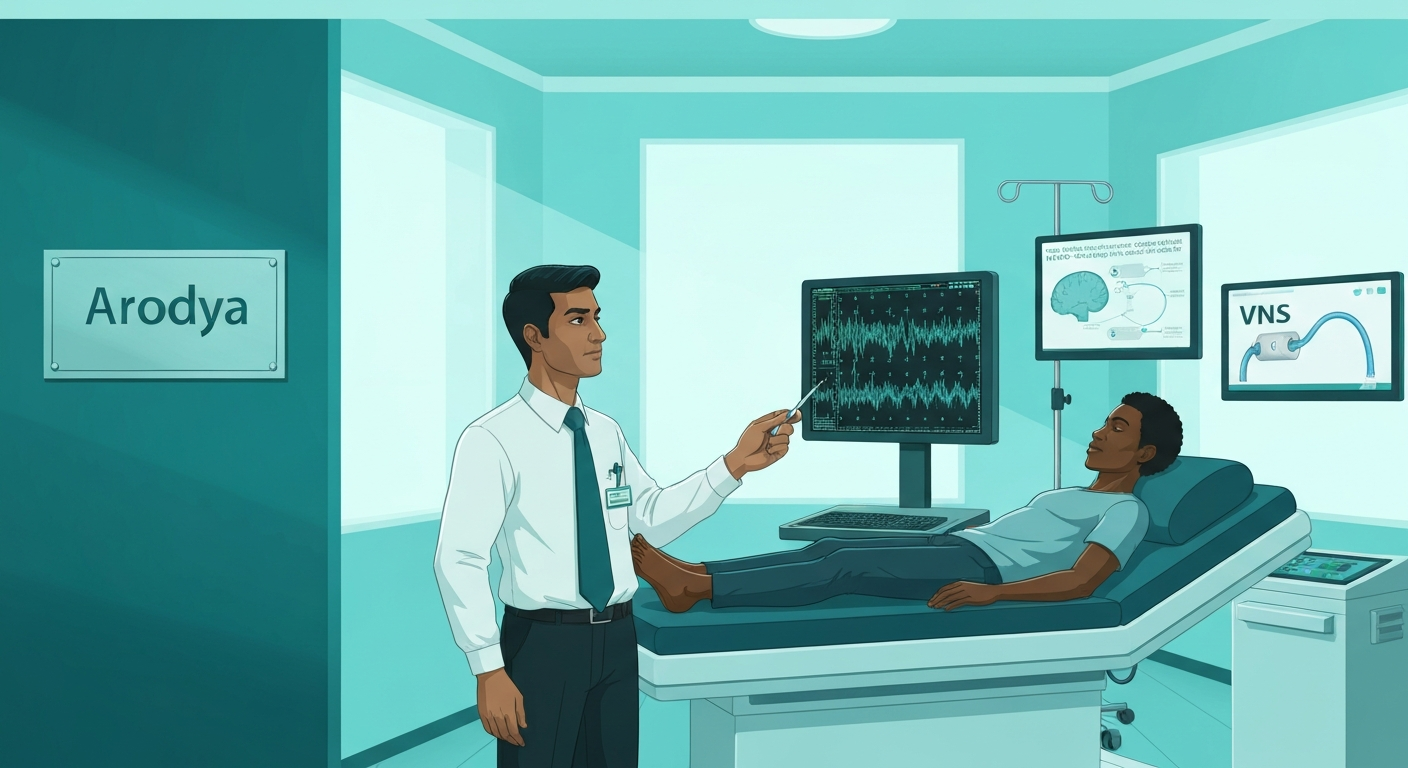
VNS is an implantable device approximately the size of a matchbox, placed under the skin in the left upper chest, with a lead wrapped around the left vagus nerve in the neck. The device delivers regular electrical pulses to the vagus nerve, which carries these signals to the brain and reduces seizure frequency and severity.
Who is VNS for: Patients who are not surgical candidates (multifocal epilepsy, seizures arising from eloquent cortex), or who want to avoid brain surgery. Also increasingly used in children with Lennox-Gastaut syndrome, Dravet syndrome, or other epileptic encephalopathies.
Outcomes: VNS reduces seizure frequency by 50% or more in approximately 50% of patients. Complete seizure freedom is rare but possible over years of use. The device can be adjusted non-invasively after implantation.
Cost of VNS in India: $12,000–20,000 including the device (which constitutes the majority of cost) and the implantation procedure.
NIMHANS Bangalore: India's Premier Epilepsy Surgery Centre
The National Institute of Mental Health and Neurosciences (NIMHANS) in Bangalore is India's most experienced and respected epilepsy surgery centre. NIMHANS has performed over 2,000 epilepsy surgeries over several decades, with published outcomes consistent with international benchmarks. The centre has dedicated EMU beds, a full pre-surgical evaluation programme, and experienced epilepsy neurosurgeons.
For international patients, NIMHANS's international patient division coordinates admission, evaluation, and surgery. Apollo Hospitals, Fortis, and Manipal also have active epilepsy surgery programmes at multiple cities.
Life After Epilepsy Surgery
For patients who achieve seizure freedom after surgery, the implications are transformative:
- Antiepileptic drug reduction: Most patients can eventually reduce or discontinue antiepileptic medications under supervision, eliminating drug side effects
- Driving licence: Patients who are seizure-free for a defined period (varies by country) can often obtain or reinstate a driving licence
- Employment and education: Seizure-controlled patients can pursue careers and education previously closed to them
- Mortality risk: SUDEP risk is dramatically reduced in seizure-free patients
For patients who do not achieve complete freedom but experience meaningful reduction (Engel Class II–III), quality of life still improves significantly.
Anti-Epileptic Drug Management in India
Even for patients who are not surgical candidates, India offers advantages in antiepileptic drug (AED) management:
Access to newer AEDs: Levetiracetam, lacosamide, perampanel, brivaracetam, eslicarbazepine, and cenobamate — newer antiepileptic drugs with different mechanisms — are available in India at substantially lower cost than in the UK or USA. Many of these medications are difficult to access or prohibitively expensive in African countries. Indian pharmacies can supply these medications in quantities sufficient for six to twelve months, with prescriptions that can be renewed via telemedicine.
Therapeutic drug monitoring: Optimal AED therapy requires monitoring drug blood levels to confirm the patient is within the therapeutic range. This is rarely available at most African hospitals. India's clinical pharmacology laboratories provide precise AED level monitoring as part of epilepsy management.
Medication interactions: Many epilepsy patients take multiple AEDs (polypharmacy) and may also take antituberculosis drugs (rifampicin is a potent inducer of AED metabolism, dramatically reducing levels of many AEDs), antimalarials, or antiretrovirals. India's neurologists are experienced in managing these complex drug interactions that are particularly relevant in the African patient context.
Ketogenic diet therapy: For children with drug-resistant epilepsy who are not surgical candidates, the ketogenic diet (a high-fat, low-carbohydrate diet that induces ketosis and reduces seizures) is an evidence-based treatment. India's paediatric neurology centres at NIMHANS, AIIMS, and Apollo have dedicated ketogenic diet programmes with trained dietitians who can initiate the diet and supervise the transition during a two to three week admission.
To discuss your epilepsy situation and understand whether you are a candidate for epilepsy surgery evaluation in India, start your enquiry with Arodya. Our coordination team will connect you with a neurologist for case review before you travel.
For a dedicated guide to epilepsy surgery outcomes and the full pre-surgical workup, see our epilepsy surgery guide. India's epilepsy surgery programme offers a genuine path to freedom for African patients with drug-resistant seizures.