

General and Minimal Access Surgery in India: Complete Guide to Minimally Invasive Surgical Techniques, Advanced Surgical Procedures, and Expert Surgical Care

Surgical Specialties & Women's Health Writer

TL;DR: Minimal access surgery (laparoscopic, thoracoscopic, robotic) in India costs USD 2,000–8,000 depending on procedure - significantly below Western rates. India's surgical centres use the same equipment and techniques as top hospitals in Germany or the USA. Recovery is faster than open surgery: most patients resume travel within 7–14 days.
Surgery through tiny incisions rather than large open cuts was the defining technical advance of late 20th-century surgery. Minimal access approaches reduce pain, shorten hospital stays, lower infection rates, and speed recovery - without compromising surgical outcomes. India's general and minimal access surgery departments apply these techniques across a wide range of abdominal, thoracic, and other procedures, using the same technology as leading Western centres at dramatically lower cost.
What Is Minimal Access Surgery?
Minimal access surgery (MAS) is the broader category that includes laparoscopic surgery (abdominal), thoracoscopic surgery (chest), and robotic-assisted procedures. The unifying principle: performing operations through small incisions (5–15 mm) using a camera and specialised instruments, rather than a large incision.
The patient benefits are well-documented:
- Hospital stay: 1–3 days instead of 5–10 days for equivalent open procedures
- Recovery time: 1–3 weeks instead of 4–8 weeks
- Blood loss: significantly reduced
- Wound infection rate: markedly lower
- Scarring: minimal
India's surgical teams have adopted these techniques comprehensively. High-volume centres perform hundreds of minimal access procedures monthly, and the procedural outcomes - conversion rates, complication rates, length of stay - are comparable to published Western benchmarks.
Citation capsule: A 2021 multi-centre analysis of laparoscopic cholecystectomy outcomes across Indian tertiary hospitals reported a 95–97% completion rate without conversion to open surgery, and a major complication rate below 2% - consistent with outcomes reported by the European Association of Endoscopic Surgery (Journal of Minimal Access Surgery, 2021).
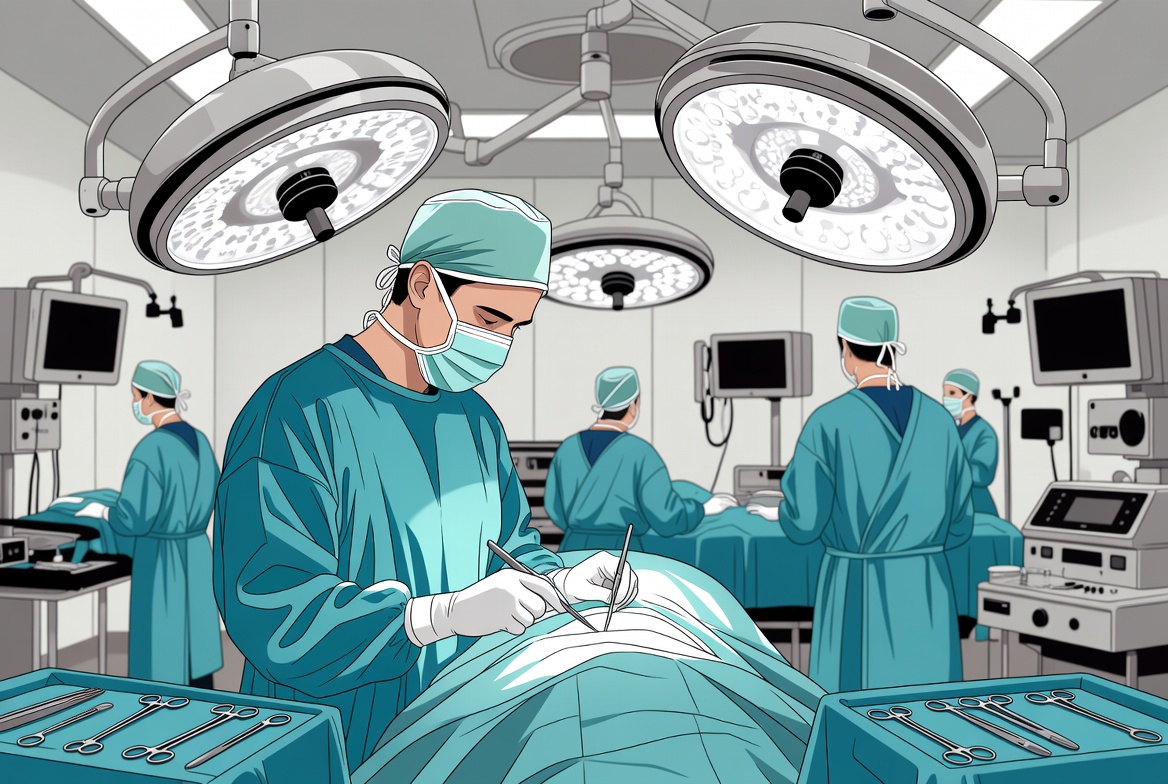
Minimal Access vs Laparoscopic vs Robotic: What's the Difference?
These terms are sometimes used interchangeably and sometimes precisely:
Laparoscopic surgery refers specifically to abdominal operations performed through ports using a laparoscope (camera in the belly). It's the most established minimal access approach, used for cholecystectomy, hernia repair, colectomy, appendectomy, bariatric surgery, and many other procedures.
Thoracoscopic surgery (VATS - video-assisted thoracoscopic surgery) applies the same principles to the chest cavity. Lung resections, pleural procedures, and oesophageal surgery are performed through tiny chest incisions rather than a thoracotomy.
Robotic surgery uses a robotic platform (commonly the da Vinci system) where the surgeon operates from a console, controlling robotic arms with instruments inserted through small ports. Robotic surgery offers enhanced three-dimensional visualisation and wristed instrument movement - particularly useful for precise suturing in confined spaces. Available at major Indian centres for prostatectomy, hysterectomy, complex hernia repair, and colorectal resections.
All three approaches share the core advantage over open surgery: smaller incisions, less tissue trauma, faster recovery.
Core Minimal Access Procedures Available in India
Gastrointestinal Surgery
Laparoscopic cholecystectomy (gallbladder removal) remains the most common MAS procedure globally. India's high volume - tens of thousands annually - reflects genuine expertise. Same-day or overnight discharge is routine at major centres.
Laparoscopic appendectomy for acute appendicitis. Compared to open appendectomy, the laparoscopic approach reduces wound infection rates from 5–7% to under 2% and shortens recovery by 1–2 weeks.
Laparoscopic Heller myotomy for achalasia (a rare oesophageal motility disorder) - cuts the muscle at the gastro-oesophageal junction to relieve obstruction.
Laparoscopic anti-reflux surgery (fundoplication) for GERD and hiatal hernia - wraps the stomach around the lower oesophagus to prevent reflux. Effective in 90–95% of carefully selected patients.
Hernia Surgery
All types of hernia - inguinal, femoral, umbilical, ventral, incisional - can be repaired laparoscopically at major Indian centres. Mesh placement through minimal access ports reinforces the defect with lower recurrence rates than open repair.
Giant ventral hernia repair - large complex hernias sometimes requiring component separation - represents more advanced surgery. Robotic-assisted repair is available at select centres for these complex cases.

Bariatric and Metabolic Surgery
Laparoscopic sleeve gastrectomy and gastric bypass are India's most sought-after elective surgical procedures for medical tourists. The metabolic benefits of gastric bypass for Type 2 diabetes are substantial - diabetes remission rates of 70–80% in appropriate candidates (Lancet, 2012).
Total cost for sleeve gastrectomy in India: $4,000–8,000. USA equivalent: $20,000–35,000.
Colorectal Surgery
Laparoscopic resection for colorectal cancer, diverticular disease, and inflammatory bowel disease achieves equivalent oncological outcomes to open surgery. Three to five small ports replace the large laparotomy incision. Recovery time: 3–4 weeks to normal activities, compared to 6–8 weeks for open resection.
Single-incision laparoscopic surgery (SILS) performs the entire operation through a single port, usually placed in the umbilicus. The scar is essentially invisible.
Thoracic Surgery (VATS)
Video-assisted thoracoscopic surgery is used for:
- Lung resection for early-stage lung cancer (VATS lobectomy or segmentectomy) - equivalent oncological outcomes to open thoracotomy with significantly less pain and shorter recovery
- Pleural procedures - decortication, drainage, pleurodesis
- Mediastinal tumours - thymoma, mediastinal cysts
- Sympathectomy for hyperhidrosis (excessive sweating)
VATS lobectomy in India costs $4,000–8,000 compared to $25,000–50,000 in the USA.

Robotic Surgery at Indian Centres
The da Vinci robotic platform is available at major private hospitals including Apollo (multiple cities), Fortis Gurugram, Manipal, and Medanta. Robotic surgery is particularly used for:
- Radical prostatectomy for prostate cancer - the most common robotic procedure globally
- Robotic hysterectomy for fibroids, endometrial cancer
- Robotic colorectal surgery for complex rectal cancer
- Robotic hernia repair for complex or recurrent hernias
- Robotic thyroidectomy (transaxillary approach) for no neck-scar thyroid removal
Robotic procedures cost 20–40% more than equivalent laparoscopic procedures but remain 60–70% cheaper than in Western countries.
Cost Comparison
| Procedure | India (USD) | USA (USD) |
|---|---|---|
| Laparoscopic cholecystectomy | $2,500–5,000 | $15,000–30,000 |
| Laparoscopic hernia repair | $2,000–4,500 | $10,000–20,000 |
| Sleeve gastrectomy | $4,000–8,000 | $20,000–35,000 |
| VATS lobectomy | $4,000–8,000 | $25,000–50,000 |
| Robotic prostatectomy | $5,000–9,000 | $25,000–50,000 |
| Laparoscopic colectomy | $4,000–9,000 | $25,000–50,000 |
What to Expect: Timeline for International Patients
Most minimal access general surgery can be completed in a 7–14 day visit:
- Days 1–2: Arrival, pre-operative assessment, any required imaging
- Day 3–4: Surgery (most procedures are 1–3 hours)
- Days 4–7: Hospital stay and early recovery (1–3 nights for most MAS procedures)
- Days 7–10: Out-patient recovery, wound check, discharge assessment
- Day 10–14: Return flight (surgeon clears for flying)
Bariatric surgery patients typically stay 14–21 days to allow for early nutritional monitoring.


