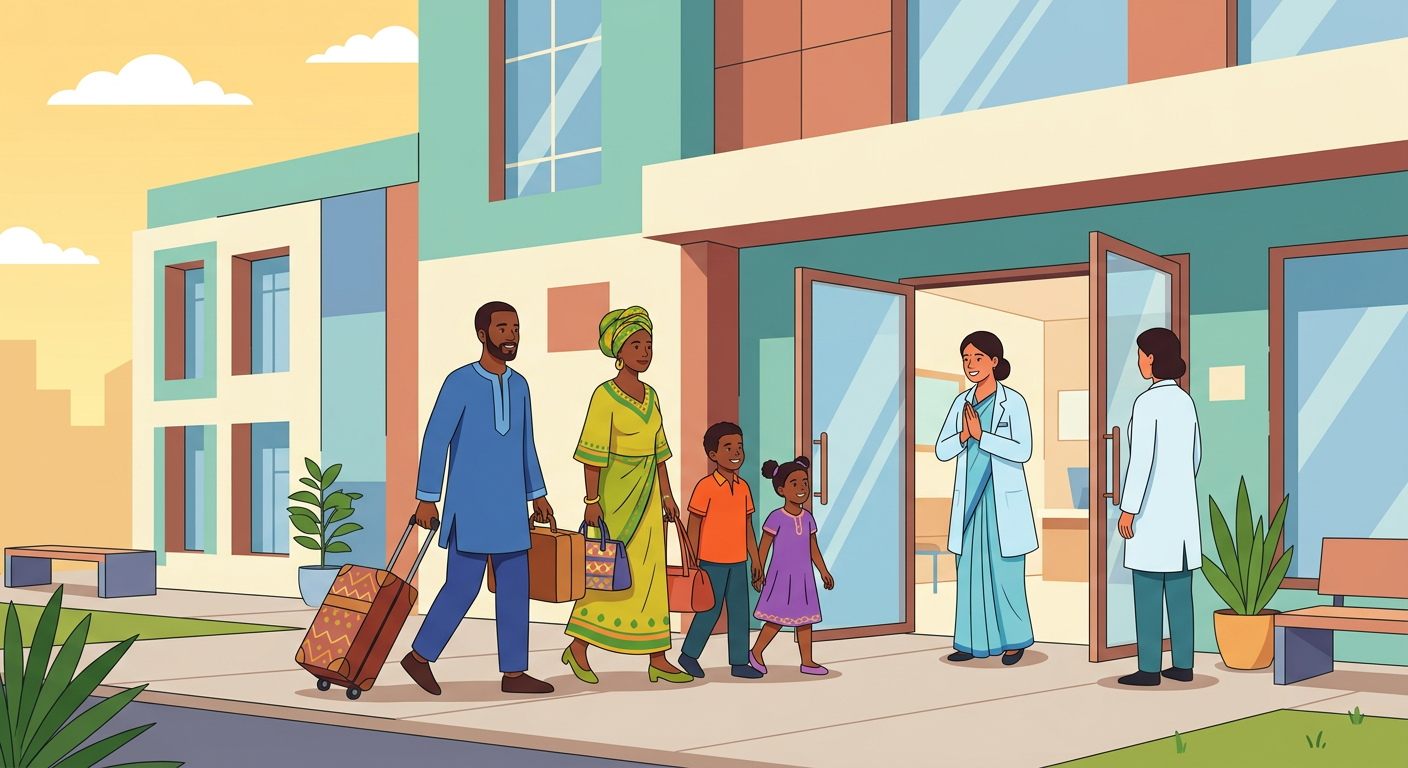
Eid al-Adha 2026: Medical Travel to India Guide for Muslim African Patients
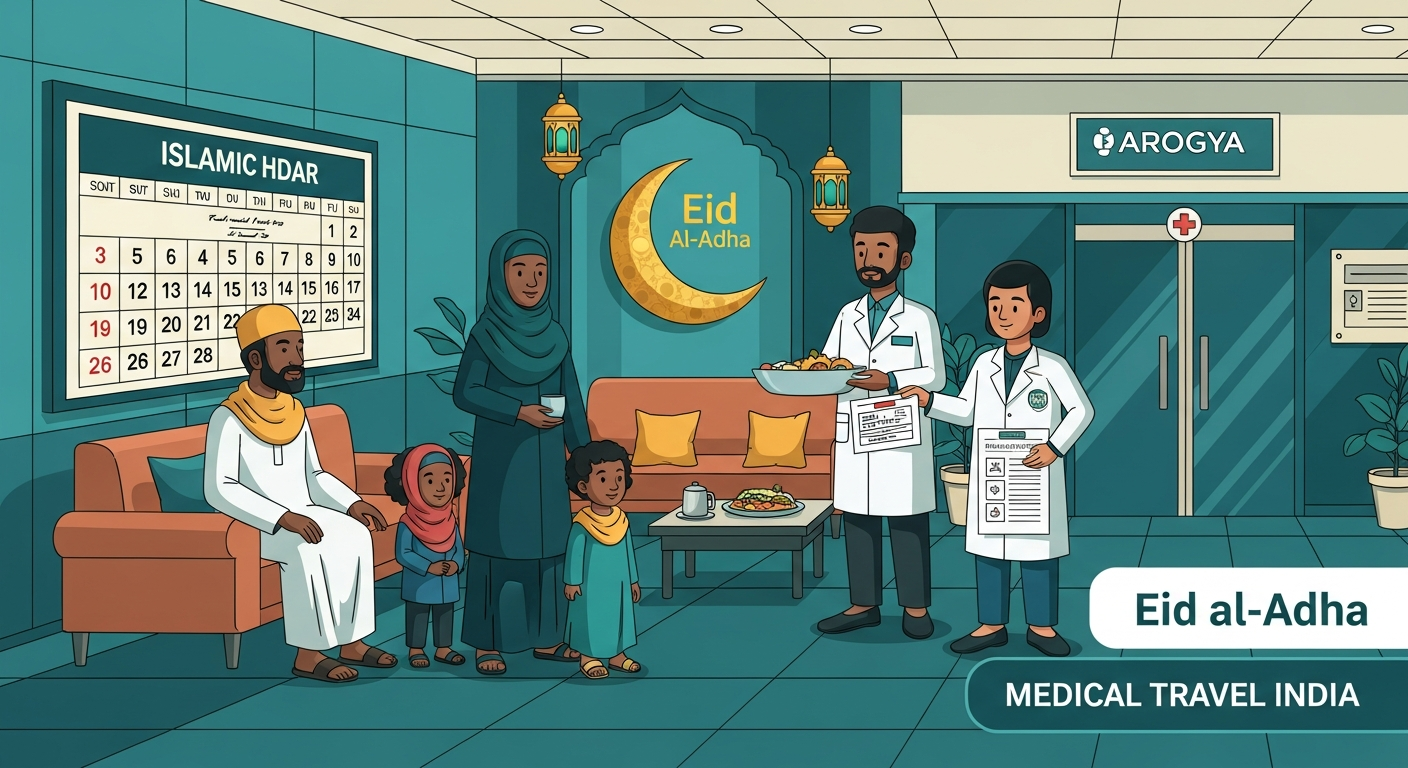

Eid al-Adha 2026: Medical Travel to India Guide for Muslim African Patients
Eid al-Adha 2026 falls on May 27–28, coinciding with one of the busiest seasons for African patients seeking medical treatment in India. For Muslim patients and their families, the convergence of a major religious festival with a planned medical journey raises important practical questions: Should I schedule surgery before or after Eid? Is halal food available in Indian hospitals? Are there prayer facilities? Can I observe Eid properly while receiving treatment abroad?
This guide is specifically written for Muslim African patients — from Nigeria, Senegal, Somalia, Sudan, Tanzania, Kenya, Ghana, Uganda, Niger, Burkina Faso, and beyond — who are planning or considering medical travel to India around the Eid al-Adha period, or at any time of year.
Key message: India's major hospitals are experienced in caring for Muslim patients and accommodating Islamic religious needs. With proper coordination, your medical journey and your faith practice can coexist seamlessly.
Understanding the Eid al-Adha Timing
Eid al-Adha (the Festival of Sacrifice) commemorates Prophet Ibrahim's willingness to sacrifice his son in obedience to Allah, and the subsequent divine provision of a ram in his son's place. It is one of the two holiest days in the Islamic calendar. In 2026, Eid al-Adha is observed on May 27–28 (subject to moon sighting confirmation).
For medical travellers, this date has practical implications:
If your treatment is elective: Many patients prefer to observe Eid at home with family before travelling to India. Scheduling elective procedures for early June onwards allows you to celebrate fully with your community and then travel with peace of mind. Arodya can help you time appointments accordingly.
If your condition is time-sensitive: For conditions such as cancer, cardiac disease, or acute surgical problems, medical urgency takes priority. No Islamic scholar or fatwa would require a seriously ill person to delay necessary treatment for a religious holiday — indeed, preserving life (hifz al-nafs) is one of the five objectives of Islamic law (maqasid al-shariah). Your treating doctor and Arodya will design a care plan that respects your clinical needs while being sensitive to the religious calendar.
If you are already in India on Eid: Many patients find themselves in Indian hospitals during Eid al-Adha. Major hospitals in cities with large Muslim populations (Mumbai, Delhi, Hyderabad, Chennai) are accustomed to this and can organise appropriate celebrations within medical constraints.
Halal Food in Indian Hospitals
Food is central to any hospital experience, and for Muslim patients, halal certification is non-negotiable. Here is the honest picture of halal food provision in Indian hospitals:
Hospitals with Strong Halal Provision
Aga Khan Hospital, Mumbai: Founded by the Aga Khan Health Services, this hospital has a long tradition of halal food provision and Islamic patient care. It serves one of the largest Muslim patient populations of any private hospital in India.
Apollo Hospitals (multiple cities): Apollo has dedicated halal food menus at most major campuses and works with certified halal caterers. Their international patient coordinators can arrange halal meals as a pre-confirmed dietary requirement before admission.
Fortis, Max, and Medanta (Delhi): These major Delhi hospitals have experience with Muslim patients from Africa and the Middle East. Halal dietary options are available and can be pre-arranged.
For Hospitals with Limited In-House Halal Options
Where the hospital's in-house catering does not include halal-certified food, practical alternatives are readily available:
- Most major Indian hospital areas (particularly in Delhi, Mumbai, Hyderabad, and Chennai) have numerous halal-certified restaurants and food delivery services operating nearby.
- Arodya's local coordinators can identify halal restaurants within walking distance or delivery range of your hospital and arrange daily meal delivery during your admission.
- Indian vegetarian food is widely available in all hospitals and, while not halal-certified in the Islamic sense, avoids meat altogether — a practical option for many patients.
When you submit your intake enquiry with Arodya, specify your halal dietary requirement in the notes. We confirm this arrangement with the hospital before you travel.
Prayer Facilities and Salah in Indian Hospitals
Maintaining the five daily prayers (Salah) is fundamental to Muslim life, and hospitalisation should not interrupt this practice unless the patient is physically unable. Here is how to manage Salah during your hospital stay in India:
Prayer Rooms at Indian Hospitals
Several major hospitals have dedicated multi-faith chapels or prayer rooms available around the clock:
- Aga Khan Hospital Mumbai: Has a dedicated prayer space.
- Apollo Hospitals (Delhi, Hyderabad, Chennai): Multi-faith rooms are available; nursing staff can direct patients.
- Medanta, Gurugram: Has a dedicated space for prayer near the international patient area.
- Fortis Hospitals: Multi-faith rooms or designated quiet spaces available at most campuses.
Qibla Direction
Every Muslim patient needs to know the direction of Mecca (Qibla) for their prayer. In India, the Qibla direction is approximately 292–295 degrees (west-northwest) from most major cities. A standard compass, the Qibla function on any Islamic app (such as Muslim Pro), or simply asking a Muslim member of the hospital staff will orient you correctly. Arodya provides Qibla direction information as part of our hospital orientation pack for Muslim patients.
Prayer in Hospital Rooms
If a dedicated prayer room is unavailable, Islamic jurisprudence permits Salah to be performed anywhere clean. Patients can perform prayer in their hospital room. A clean prayer mat can be brought from home or procured locally; Arodya can arrange for a prayer mat to be available in your room on arrival. For patients who cannot stand due to their medical condition, Islamic law permits prayer while seated or even lying down.
Friday Prayers (Jumu'ah)
For male patients who are medically able, attending Friday Jumu'ah prayers at a nearby mosque is important. Arodya can identify the nearest mosque to your hospital, confirm distance, and arrange transport if your condition permits. Hospital social coordinators can also liaise with visiting imams for patients who are not mobile.
Islamic Considerations During Medical Treatment
Several practical Islamic considerations arise during hospitalisation:
Medications During Treatment
Most medications are permissible in Islamic jurisprudence even if they contain trace elements of non-halal substances (alcohol-based solvents, gelatine capsule shells) because necessity (darura) permits what is otherwise prohibited. However, many patients prefer halal-verified medications where alternatives exist. Inform your treating team of your preference — Indian pharmacies often stock alternative formulations, and your doctors can prescribe accordingly where clinically equivalent.
Fasting (Sawm) During Treatment
Eid al-Adha is not associated with obligatory fasting (that is Ramadan). However, the Sunnah encourages fasting on the Day of Arafah (the day before Eid al-Adha, May 26 in 2026). If you are a post-operative patient or have a medical condition that makes fasting inadvisable, Islamic scholars are unanimous that sick and hospitalised patients are exempt from any fasting obligation. Prioritise your recovery.
Observing Eid While Hospitalised
If you are in hospital on Eid al-Adha, the hospital team can assist with:
- Eid prayers in your room or the hospital prayer room
- A festive halal meal (pre-arranged with Arodya's coordination)
- Video calls with family at home to share the celebration
- Udhiyah (Qurbani) donation can be made remotely through any certified Islamic charity — you do not need to be physically present for the animal sacrifice
Arodya's Muslim Patient Coordination
Arodya's coordination for Muslim patients goes beyond logistics. Our team understands that religious practice and medical treatment are inseparable for devout Muslim patients and we treat Islamic requirements as a medical need, not a preference:
- Pre-travel: Halal food confirmation, prayer room location, Qibla direction information, mosque nearest to hospital
- During treatment: Coordination with hospital to support Salah times, Islamic dietary requirements, and Eid observance
- Culturally competent staff: Where available, Arabic, Hausa, Somali, or Swahili-speaking coordinators
- Scheduling around the Islamic calendar: Awareness of Ramadan, both Eids, and other Islamic observances when planning elective treatment dates
Muslim African patients deserve world-class healthcare delivered with full respect for their faith. Start your enquiry with Arodya and tell us about your treatment needs and your religious requirements. We will take care of both.
Planning Your Trip: Practical Checklist for Muslim Patients
Before departure:
- Confirm halal food arrangement with Arodya in advance
- Download a Qibla compass app and prayer time app for your destination city in India
- Bring or source a travel prayer mat
- Pack or arrange an abaya/thobe as appropriate for your daily wear
- Research nearest mosques to your hospital (Arodya provides this)
On arrival in India:
- Check prayer room location on your first day
- Confirm halal meal arrangement with the hospital dietitian
- Note Fajr and Isha times in India (they may differ significantly from your home country)
During treatment:
- Do not feel obligated to fast or maintain practices that your treating doctor advises against — Islamic law explicitly protects the sick
- Maintain spiritual practice through dhikr (remembrance), Quran recitation, and dua (supplication) during recovery
- Connect with the hospital chaplaincy or Islamic visitor service if available
India is a country with approximately 200 million Muslim citizens — the third-largest Muslim population in the world. In cities like Hyderabad, Mumbai, and Delhi, you will find mosques, halal restaurants, and Islamic bookshops within easy reach of major hospitals. You will not be spiritually isolated during your medical journey.
Eid Mubarak to all our Muslim patients and families. May your health journey be one of healing, and may the blessings of Eid al-Adha accompany your recovery.