Dealing with Homesickness During a Long Medical Trip to India: Practical Coping Strategies

Nobody tells you about homesickness when you're researching hospitals and surgeons. But for many patients — especially those facing extended stays of 4, 8, or even 12 weeks in India — the emotional weight of being away from family, familiar food, your own bed, and your community becomes one of the most significant challenges of the medical journey. This guide shares practical strategies from patients who have been through long India stays to help you cope, stay connected, and return home stronger.
TL;DR: Homesickness during extended India stays is normal and nearly universal. Scheduled video calls, Arodya's patient community, familiar food habits, cultural exploration when health allows, and finding a recovery routine all make a substantial difference. Planning connection rituals before departure is as important as packing your medications.
Why Homesickness Hits Harder on Medical Trips
Medical travel combines several factors that intensify the normal feeling of being away from home:
Vulnerability: You are managing health anxiety, post-operative discomfort, and uncertainty about outcomes simultaneously. These emotions lower your psychological reserves.
Reduced activity: When you are recovering, you cannot distract yourself with work, exploring, or socialising. Time passes slowly in a hospital room.
Role reversal: At home you are a parent, professional, provider. In India for treatment you become a patient — dependent on others. This shift is psychologically significant for many people.
Cultural distance: India is genuinely different from sub-Saharan Africa — food, language, customs, climate, noise levels. This difference, which is part of what makes India an interesting destination, can also feel alienating when you are unwell.
Communication anxiety: Worrying about family problems at home that you cannot resolve from a distance. Feeling guilty about being away. Wondering if you made the right choice to travel.
All of this is normal. Recognising it does not mean something is wrong — it means you are human.
Before You Leave: Setting Up for Success
The best time to plan for homesickness is before you depart. A few decisions made in advance make a significant difference:
Establish Communication Rituals
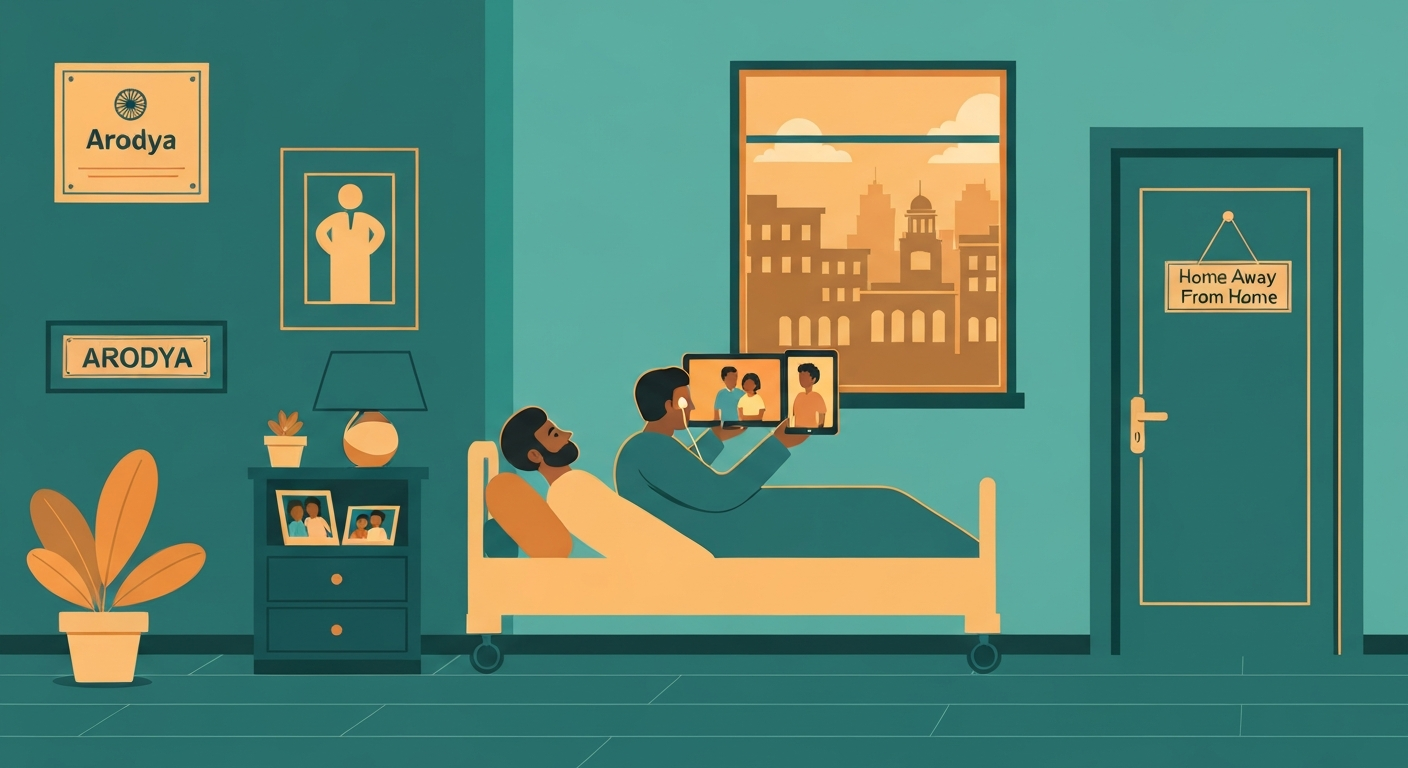
Agree with your family on regular video call times before you leave. Not just "we'll call when we can" — specific days and times that both parties look forward to. For example: every day at 7 PM your family's time. Consistency provides comfort in both directions.
Apps to use: WhatsApp Video (works well with Indian WiFi), FaceTime (for iPhone users), Zoom, or Facebook Messenger. Download all apps before you leave — Indian app stores have full access.
Brief Your Family
Family members at home often add to homesickness by calling frequently in distress, sharing every home problem, or expressing worry that makes you feel guilty. Brief your family before departure: "I will call every day. Please save non-urgent news for our calls. I need you to be calm and positive when we talk."
Bring Comfort Items
A small number of familiar items significantly change how a hospital or serviced apartment feels:
- A family photo (ask the hospital if you can put it by your bed — almost all will say yes)
- Your own pillow case (the familiar smell is surprisingly comforting)
- A playlist of music that makes you feel at home
- Your favourite tea, coffee, or spice if it travels well
Plan One Weekly Treat
Before you leave, identify one thing each week you will do for yourself: a specific Indian food you want to try, a video of a favourite film, a phone call with a friend you have not spoken to in a while. Having something small to look forward to in each week structures the time psychologically.
During Your Stay: Practical Coping Strategies
Establish a Daily Routine
Recovery time without structure is psychologically harder than recovery time with routine. Create a simple daily schedule:
- Morning: wash, brief walk in corridor if able, breakfast
- Mid-morning: communication with family
- Afternoon: rest, reading, or a favourite show
- Evening: scheduled family call, dinner, light activity if possible
- Night: wind-down without phone screens
Routine creates a sense of normalcy and control in an unfamiliar environment.
Explore Indian Food
Food is one of the most direct connections to place and culture. Indian food is deeply varied — what you try in Delhi (north Indian, roti, dal, butter chicken, paneer) is entirely different from Chennai (south Indian, idli, dosa, sambar, coconut) or Mumbai (street food, vada pav, pav bhaji).
When hospital food feels repetitive, ask your Arodya coordinator about nearby African or familiar restaurants. Many Indian cities have restaurants catering to African diaspora and international students. Several Indian dishes share spice profiles with West and East African cooking — jollof rice has cousins in Indian biryani, egusi has distant cousins in Indian lentil preparations.
Connect with the Arodya Patient Community
Arodya maintains a patient community WhatsApp group connecting current and former patients from Africa who have been through the India experience. The group is active, practical, and empathetic.
Current patients share:
- Hospital food alternatives they've found
- Transport tips and reliable drivers
- Hospital staff who were especially kind
- Local experiences when mobile enough to venture out
Former patients provide the most valuable thing of all: reassurance. "I sat in that exact room feeling exactly what you're feeling, and now I'm home and well."
Your Arodya coordinator will add you to the group upon arrival.
Physical Movement When Health Allows
Even short walks — down the hospital corridor, around the car park, to the hospital café — reset the mind. Sitting in a room all day makes homesickness worse. Discuss with your care team when and how much you can move. Most recovery protocols encourage gentle movement from day 1 post-operatively.
As recovery progresses, ask your Arodya coordinator about nearby parks, markets, or sites that are appropriate for your recovery stage. Many Indian hospital areas have landscaped gardens or green spaces. Getting outside — even briefly — significantly improves mood.
Managing Family Communication
What to Share and What to Wait On
A difficult balance exists between staying connected and being burdened by home problems you cannot help with. Some principles that help:
Share your genuine experience — homesickness acknowledged is lighter than homesickness suppressed. Tell your family you miss them. Let children hear it. This validates their feelings too.
Set boundaries on home news — ask family to handle manageable issues independently and share only things that require your input. "Don't tell me about things you can manage without me."
Be honest about hard days — but also share good moments. Tell them about the kind nurse, the funny thing that happened in the corridor, the Indian dish you tried. Balance keeps calls nourishing rather than draining.
When Children Are Struggling with Your Absence
Young children struggle with the absence of a parent. Some approaches that help:
- Leave a recorded voice message or video they can watch
- Ask your partner to take photos of everyday moments and share them so you feel connected to normal life
- Create a countdown calendar with your child that they can cross off days until you return
For children old enough, video calls with some physical demonstration — showing them your room, your view, your dinner — makes the distance feel smaller.
Cultural Exploration as Medicine
India is genuinely fascinating, and when health allows, engaging with the culture is one of the best antidotes to homesickness. You are not just a patient — you are briefly a traveller.
Depending on your city and recovery stage, ask your coordinator about:
- Museum visits accessible by car (no walking required for some mobility restrictions)
- Local markets for browsing and buying small gifts to take home
- Indian classical music concerts or cultural events
- Temples, mosques, or churches depending on your faith tradition
India has substantial Muslim, Christian, and Hindu communities with places of worship near most major hospital clusters. For many patients, engaging with their faith tradition in a new cultural context is unexpectedly moving and restorative.
For guidance on managing pre-surgery anxiety — a related emotional challenge — see our anxiety before surgery abroad guide. For planning your companion's travel alongside you, read our companion travel guide.
You will get through this. Thousands of African patients have sat in that same room, felt that same distance, and come home healed. When you're ready to plan your treatment journey, start here — and we will make sure you're as supported emotionally as you are medically.