Can Family Travel with You to India for Medical Treatment? A Complete Guide for African Families (2026)
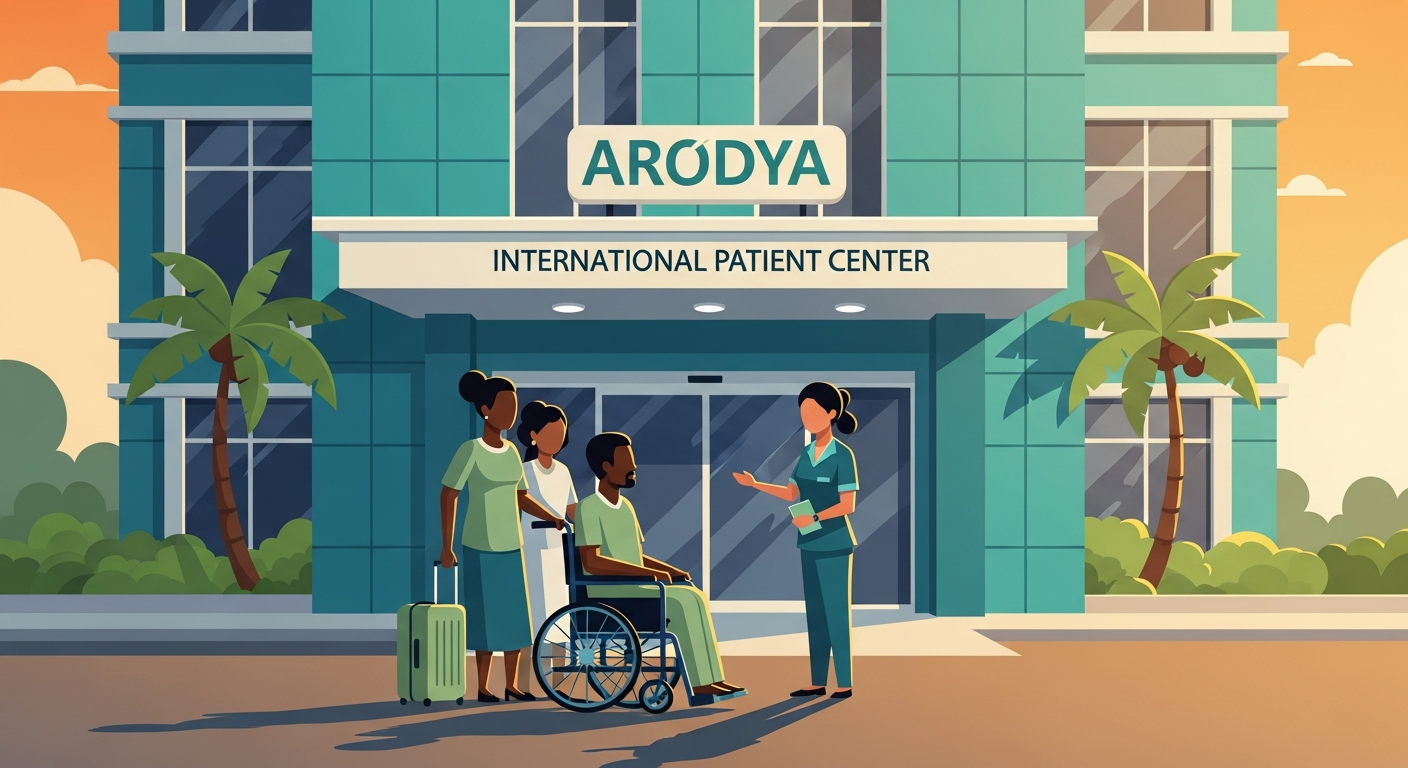

Yes — family members can travel with you to India for medical treatment. Not only is it allowed, it is actively encouraged by India's major hospitals, which have designed their international patient facilities with companions in mind. If you are planning treatment in India and wondering whether to bring a spouse, parent, sibling, or adult child, the answer is: bring them.
This guide explains exactly how, with specific detail for African families navigating the process for the first time.
TL;DR: India's Medical Attendant Visa (MED-ATT) allows up to two family companions to travel with a patient on a Medical Visa. Applying is straightforward — companions apply simultaneously with the patient using the same hospital invitation letter. Budget $1,500–$4,000 per companion for a 3–6 week trip from Africa covering flights, accommodation, meals, and local transport. Companions stay in the patient's private hospital room at no extra charge in most major hospitals. Having a companion is not a luxury — for major procedures, it is medically and practically essential.
The Medical Attendant Visa: How It Works
India created a dedicated visa category specifically for patients' family members and caregivers: the Medical Attendant Visa, sometimes labelled MED-ATT or MX-Visa depending on the issuing mission. Up to two companions per patient can obtain this visa.
The attendant visa is tied to the patient's Medical Visa (M-Visa or e-MED). You cannot apply for one independently — it requires a copy of the patient's visa application or approved visa as supporting documentation.
Documents required for the Medical Attendant Visa
| Document | Notes |
|---|---|
| Valid passport (6+ months remaining validity) | Must have at least 2 blank pages |
| Completed visa application form | From the Indian embassy or official e-portal |
| Passport-sized photographs | Per embassy specifications — typically 2 photos, 4×6 cm, white background |
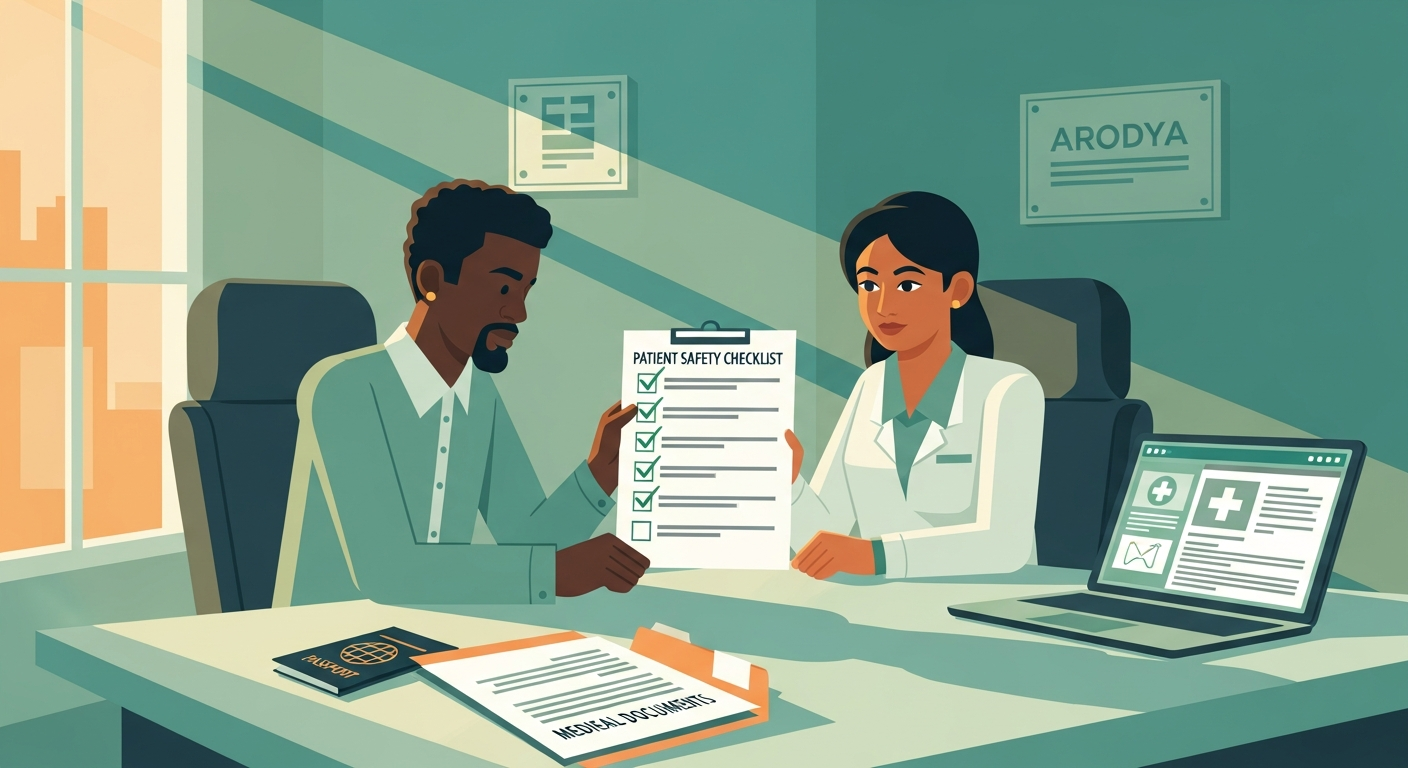
| Copy of patient's medical visa or application | Proof that the person you are accompanying has an active M-Visa application |
| Proof of relationship to the patient | Marriage certificate, birth certificate, or statutory declaration |
| Hospital invitation letter | The same letter issued to the patient — your copy is sufficient |
| Proof of funds | Bank statement showing ability to cover stay; travel insurance documents help |
How to apply
Submit your application through the same Indian embassy or consulate handling the patient's visa. The most important rule: apply at the same time as the patient, not after. Processing timelines are 5–10 business days at most African missions, but some embassies — particularly in Nigeria, Kenya, and Ghana — have introduced faster 3–4 day turnaround for medical cases where documentation is complete.
For patients applying via Indian e-Visa, the attendant visa still typically requires an in-person application at the consulate. Check the specific requirements at your nearest Indian diplomatic mission, as procedures vary slightly by country.
Validity: The attendant visa is issued for the same duration as the patient's Medical Visa — typically up to 60 days, with a triple-entry provision. Extensions can be applied for at the Foreigners Regional Registration Office (FRRO) inside India if the patient's treatment is extended.
Choosing the Right Companion
Not every family member is equally suited to the companion role. When African families ask me who should come, I ask three questions: Who is calm under medical stress? Who can commit fully for 3–6 weeks? And who has the practical capacity — financially and in terms of responsibilities at home — to travel?
The ideal companion is someone who:
- Communicates clearly in English (which is the working language of all major Indian hospital international departments)
- Is physically capable of sustained walking — Indian hospitals are large, and the daily movement between wards, pharmacy, cafeteria, and accommodation adds up
- Can handle administrative tasks: reading documents, tracking medication schedules, managing receipts and billing queries
- Is emotionally resilient — they will be the patient's primary support through painful and anxious moments
- Can be away from home obligations for the full duration without crisis
For many African families, the natural choice is a spouse. For elderly patients, an adult child often works best. For patients with younger children, think carefully about who you can ask — bringing a companion who is constantly anxious about responsibilities at home may create more stress than it relieves.
One companion is almost always sufficient. Two companions share the caregiving load during long procedures and intensive recovery periods, but doubles the cost. If your treatment is major surgery with a 4–6 week total timeline, two companions rotating in shifts — one travelling home mid-way and returning, or a second joining for the recovery phase — can be a cost-effective arrangement.
What Companions Actually Do: A Day-by-Day Role Breakdown
The word "companion" undersells what a good attendant does. In practice, a companion is the patient's operational manager for the duration of the trip. Here is what the role looks like concretely:
Pre-surgical days (days 1–3)
- Accompany the patient to each pre-operative evaluation appointment — blood draws, ECG, imaging, anaesthesia consultation
- Take notes during every doctor consultation; most clinical conversations happen quickly and in technical language
- Liaise with the hospital's international patient coordinator to confirm the surgical schedule and understand what to expect on operation day
- Set up the hospital room: keep chargers, personal documents, comfort items, and medications organised and accessible
Surgery day
- Be present at the hospital from early morning through to the patient's transfer to the recovery ward
- Sign consent forms if the patient is unable to — confirm in advance with the hospital whether you will be listed as a next-of-kin signatory
- Communicate updates to family members back home via phone or WhatsApp
- Do not leave the hospital premises until the surgical team has confirmed the patient is stable in recovery
Post-surgical hospital days
- Morning and evening check-ins with the nursing team to understand overnight events, medication changes, and physiotherapy schedule
- Manage the patient's meals — ordering from the hospital menu, ensuring dietary restrictions are being followed, supplementing with outside food where appropriate and permitted
- Track every medication administered, including the time and dosage — discrepancies should be raised with the nursing team immediately
- Help the patient with personal hygiene, movement, and positioning when nursing staff are not present
- Attend every physiotherapy session in the first few days so you understand the exercises and can prompt the patient to do them correctly
Post-discharge recovery period
This is when the companion's role becomes most demanding. Once the patient is discharged from hospital, they move to a guest house or hotel for 10–14 days before they are cleared to fly. The companion becomes the primary carer:
- Managing all medication schedules
- Accompanying the patient to follow-up wound checks and outpatient appointments
- Monitoring for warning signs: fever, unusual swelling, wound discharge, breathing changes — and knowing the hospital's emergency contact number
- Handling all logistics: meals, laundry, local transport to appointments
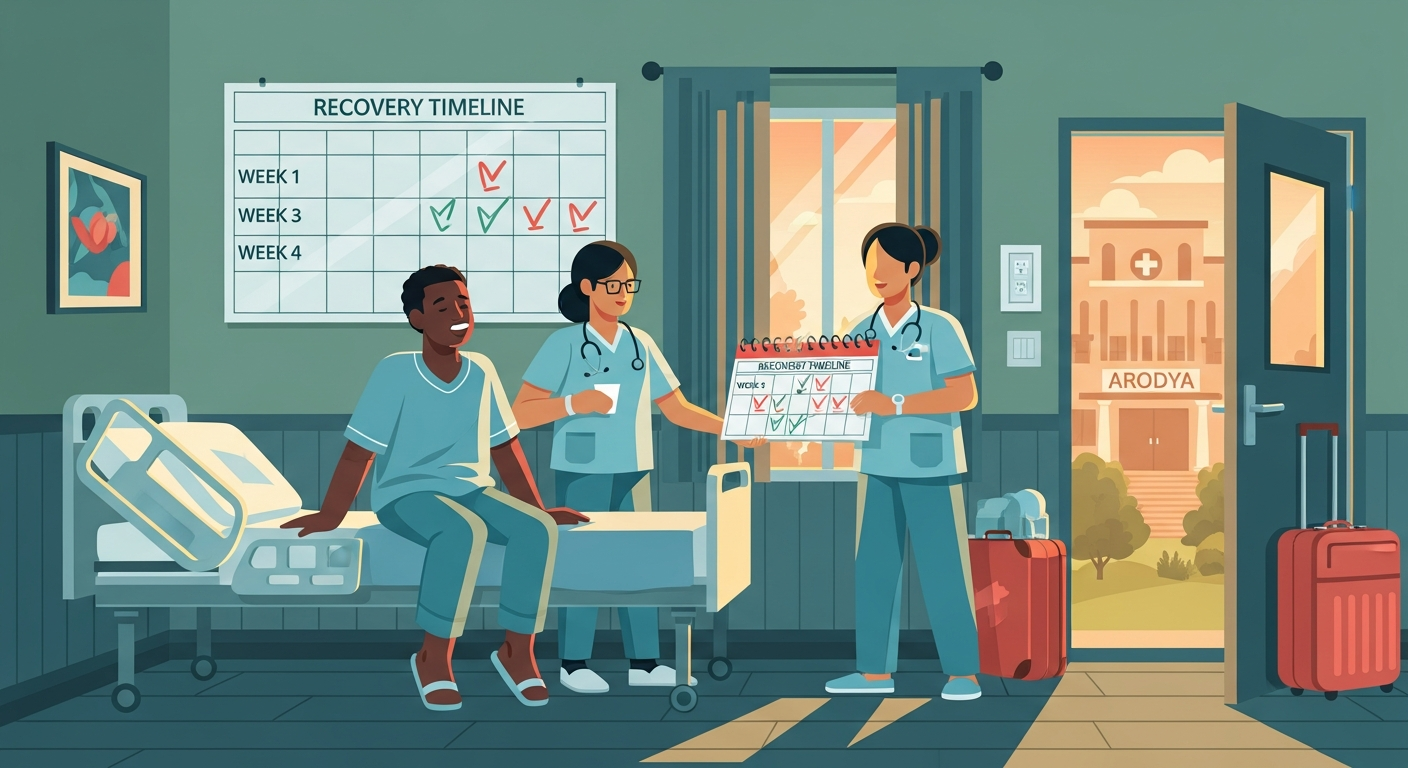
If you are planning a major procedure such as cardiac surgery, a joint replacement, or organ transplant, discuss companion responsibilities frankly with your hospital's international patient team before departure. Read our guide on how long to stay in India after surgery to understand the full recovery timeline your companion needs to plan for.
Accommodation Options for Companions in India
Staying in the patient's hospital room
Most international-patient-grade private rooms in Indian hospitals include a fold-out bed or sofa for one companion. This is standard — you do not pay extra for it. The companion gets basic meals, bathroom access, and a locker for personal items. This arrangement is ideal for the first few post-surgical days when the patient needs round-the-clock support.
For very long stays, living inside a hospital ward becomes exhausting. After the first week, most companions transition to nearby accommodation for sleeping while spending daytime hours in the patient's room.
Hospital guest houses
Apollo, Fortis, Max, Medanta, and most other major hospitals maintain or partner with dedicated guest houses or service apartments within walking distance of the main facility. These are specifically designed for medical families:
- Discounted rates for hospital patients' families: typically $30–$70 per night
- Shuttle service to and from the hospital (often free)
- Basic kitchen facilities for preparing meals
- 24-hour security and reception
- Housekeeping included
Always ask the hospital's international patient department about guest house availability before you book anything independently. Rates and availability should be confirmed at the same time you confirm the patient's appointment.
Hotels near the hospital
If the guest house is full, short-stay serviced apartments and mid-range hotels cluster around every major hospital district in Delhi, Mumbai, Chennai, and Hyderabad. Budget $40–$100 per night for a clean, comfortable room with breakfast. Proximity matters — being within a 5–10 minute auto-rickshaw ride of the hospital is essential for the middle-of-the-night emergencies that do occasionally happen.
Avoid booking accommodation at the other end of the city just because it is cheaper. The time and cost of daily transport will exceed the savings.
Full Cost Breakdown for a Companion
The numbers below reflect a typical 3–6 week medical trip from an East or West African country to Delhi or Chennai in 2026.
| Expense | Estimated Cost (USD) |
|---|---|
| Return airfare (Lagos/Nairobi/Accra to Delhi/Chennai) | $600–$1,200 |
| Medical Attendant Visa fee | $50–$100 |
| Travel insurance (comprehensive, 6 weeks) | $80–$150 |
| Accommodation (guest house, 3–6 weeks) | $500–$1,800 |
| Meals and daily expenses | $300–$700 |
| Local transport (auto-rickshaws, Uber) | $80–$150 |
| SIM card and data | $10–$20 |
| Miscellaneous (personal items, pharmacy, entertainment) | $100–$200 |
| Total per companion | $1,720–$4,320 |
A few things to note: accommodation costs rise steeply for longer stays. If the patient is admitted for cardiac surgery followed by a 14-day post-discharge recovery, the companion's total India time can easily reach 5–6 weeks. Budget for the upper end in these cases.
The cost of the companion should be budgeted alongside the patient's treatment costs from the beginning — it is not an afterthought. When you start your treatment enquiry through Arodya, we include companion logistics in the planning package, covering accommodation referrals, airport transfer arrangements, and hospital registration for both patient and attendant.
Cultural and Practical Considerations for African Families
Food
Indian hospital food is predominantly vegetarian and moderately spiced. Most international departments offer customised meal options — halal meat dishes are available on request at most major hospitals. Inform the hospital of dietary requirements on admission day, not after the first disappointing tray arrives.
Outside the hospital, Indian cities have excellent variety. Nigerian, Ghanaian, and East African food is not readily available, but rice-based dishes, grilled meats, and fruit are universally accessible. African patients and companions consistently report that Indian food takes some adjustment — carry a few packets of familiar comfort food from home if this matters to you.
Language
English is spoken competently by all international patient coordinators, most senior nurses, and all doctors in the hospitals that serve international patients. However, Hindi, Tamil, Telugu, or Kannada is the language of everyday interaction outside the hospital — in markets, auto-rickshaws, and local restaurants. Download Google Translate and enable offline mode for the relevant regional language before you arrive. You will not be stranded, but the app reduces friction enormously.
Currency and payments
India uses the Indian Rupee (INR). Cash remains necessary for small purchases — auto-rickshaw rides, street food, small pharmacy items. Exchange currency at the airport arrivals hall or at the hospital's forex counter on your first day. Banks and official forex counters offer better rates than street exchanges. Major hospital bills accept Visa, Mastercard, and international wire transfers.
Inform your bank in your home country of your travel dates and destination before you leave. Unexplained foreign transactions trigger automatic blocks on many Nigerian, Kenyan, and Ghanaian bank cards — a problem that is easily prevented but extremely difficult to fix from India.
SIM cards
Buy a local Indian SIM card at the airport or near the hospital within your first 24 hours. Airtel and Jio are the two most reliable networks for voice and data in major cities. You will need a local number for hospital communications, ride-hailing apps (Uber and Ola), and online food delivery (Swiggy and Zomato). Data packages are inexpensive — a 28-day plan with generous daily data costs less than $10.
Weather
India's climate varies dramatically by city and season. Delhi in winter (November–February) drops to single-digit Celsius at night. Chennai and Mumbai are warm year-round but humid. Hyderabad is temperate for most of the year. Check the specific weather for your destination city and travel period, and pack accordingly. Hospital wards are air-conditioned to sometimes uncomfortable levels — bring a light jacket regardless of the outdoor temperature.
Personal safety and cultural navigation
India is a welcoming country for medical travellers. African patients and companions are a consistent presence at all major hospitals — the international patient teams are experienced and culturally aware. As in any large city, apply standard urban caution: use app-based transport rather than unmetered taxis, keep documents secure, and rely on hospital-coordinated services for anything unfamiliar.
How to Prepare Your Companion Before Departure
The companion who arrives prepared is worth ten times more than one who arrives uninformed. Before you fly, ensure your companion has done the following:
Administrative preparation:
- Obtain the Medical Attendant Visa with at least 3 months validity (even if the planned stay is shorter — buffer matters)
- Purchase comprehensive travel insurance that covers medical evacuation and trip cancellation
- Make copies of all patient medical records and carry them in a separate bag from the patient's documents
- Save the hospital's international patient helpline number in their phone before departure
Medical preparation:
- Review the patient's current medication list and understand what each medication does and when it is taken
- Know the warning signs specific to the patient's condition — what constitutes an emergency requiring immediate escalation
- Attend the final pre-departure consultation with the patient's home doctor, so both patient and companion hear the handover briefing
Practical preparation:
- Download offline maps for the destination city (Google Maps works well offline in India)
- Exchange at least $100–$150 worth of Indian Rupees before departure (INR is not freely available in most African countries — it may require advance ordering from your bank)
- Notify family at home of the complete itinerary, hospital name, and international patient department contact details
Emotional preparation:
This matters more than most people acknowledge. The companion will witness the patient in pain, frightened, and vulnerable — often for the first time in an adult relationship. Discuss this in advance. Agree on how you will communicate. Establish a rhythm before you travel: who makes decisions under pressure, how you will update family at home without creating panic, and how you will look after the companion's own wellbeing during a long stay far from home.
Conclusion
Travelling to India for medical treatment with a family companion is not only possible — it is the norm among patients from Africa, the Middle East, and Southeast Asia. India's hospital system is designed for it. The visa process accommodates it. The accommodation infrastructure supports it. And patient outcomes are meaningfully better when a capable, informed companion is present throughout.
The planning for your companion should start at the same moment you begin planning the patient's treatment. Visa applications, accommodation, flights, and insurance all need to be arranged in parallel.
If you are ready to begin, start your treatment enquiry with Arodya. We coordinate companion logistics alongside medical arrangements as a standard part of the process — from the hospital invitation letter through to accommodation referrals and on-the-ground support once you arrive in India.