12 Common Mistakes International Patients Make When Coming to India for Treatment
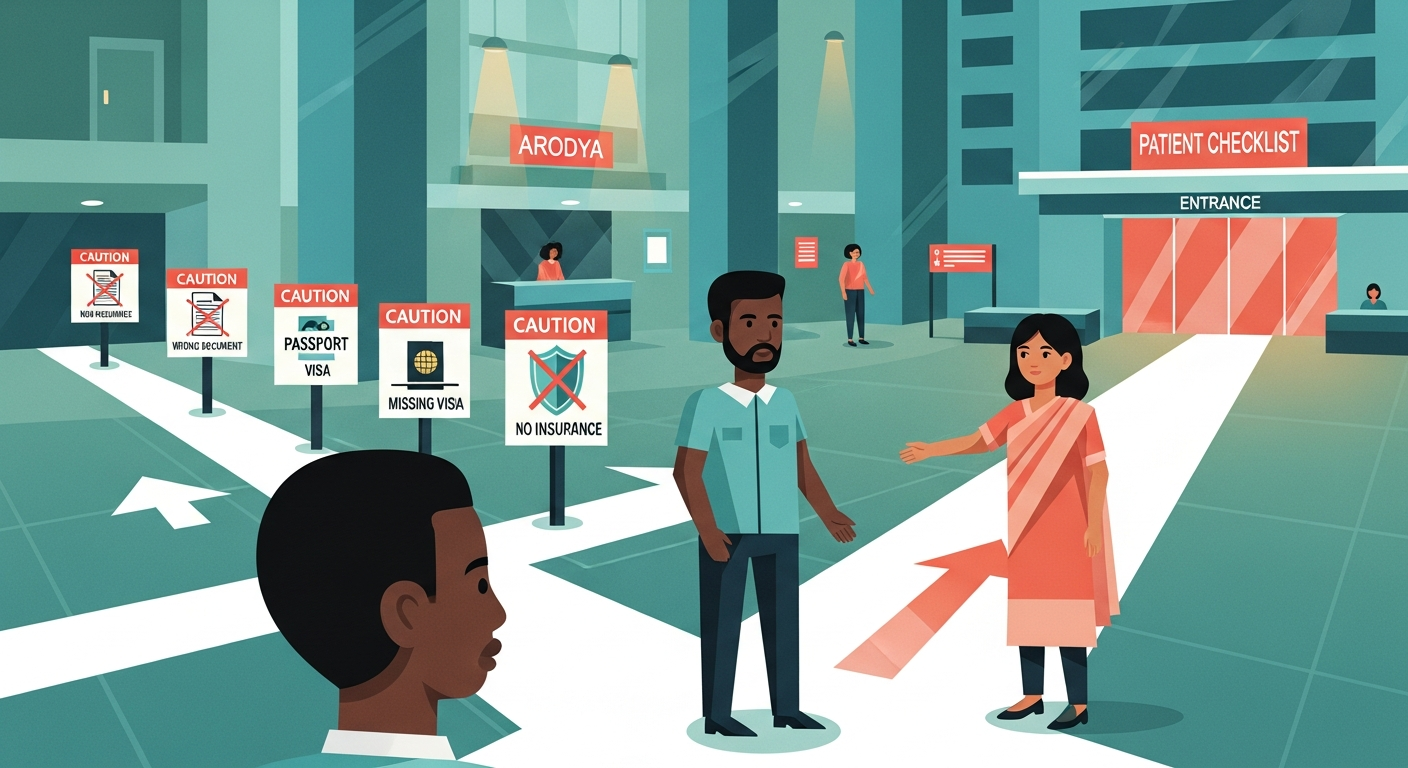

Consider a scenario that plays out more often than it should. A patient from Lagos — call him Chukwuemeka — spends three weeks researching hospitals online, finds an impressive-looking website with low prices, and books a hip replacement in India without speaking to a surgeon, without verifying the hospital's accreditation, and without arranging travel insurance. He arrives to find that the quoted price does not include the implant. The implant costs twice what he expected. He cannot reach the person who booked him. His visa does not allow a longer stay. He is back on a flight home — procedure incomplete, money spent, months of hope undone.
This scenario is composite, but it is not fictional. It is assembled from recurring patterns that medical facilitators and hospital international patient departments see regularly. The good news is that every single mistake in this scenario — and every mistake in this list — is entirely preventable with preparation.
Here are the twelve most common errors international patients make when coming to India for treatment, and exactly how to avoid each one.
Mistake 1: Choosing a Hospital Based on Price Alone
The cheapest quote is not always the safest option. India has a tiered hospital system that spans from world-class JCI-accredited tertiary care centres to small private clinics with no meaningful quality oversight. The price difference between these tiers can be significant — but so can the difference in safety standards, equipment, surgical expertise, and post-operative monitoring.
When comparing hospitals, accreditation should be your first filter, not price. JCI (Joint Commission International) and NABH (National Accreditation Board for Hospitals) accreditations are not marketing labels — they represent documented compliance with internationally benchmarked safety and quality standards. A JCI-accredited hospital has been assessed on infection control, surgical outcomes, medication management, patient rights, and dozens of other clinical criteria.
How to avoid it: Before looking at any price, ask for the hospital's accreditation certificate. Verify it independently on the JCI or NABH websites, which maintain searchable public databases. Only after confirming accreditation should you compare costs between accredited options. Our guide on understanding JCI and NABH accreditation explains exactly what to look for.
Mistake 2: Skipping the Video Consultation With the Surgeon
Some patients book surgery in India without ever speaking to the surgeon who will perform the procedure. They may have spoken to a hospital representative, a coordinator, or a sales contact — but not the actual doctor. This is a serious error with consequences that can range from a mismatch in treatment expectations to genuine patient harm.
The pre-travel video consultation is not a formality. It is your opportunity to confirm that the surgeon has reviewed your specific case, understands your medical history, agrees with the proposed treatment plan, and can answer your clinical questions. It is also your chance to assess the surgeon's communication style and build confidence before entrusting them with your care.
How to avoid it: Insist on a video consultation directly with your operating surgeon — not with an assistant, not with a coordinator — before booking flights. A reputable hospital will always facilitate this. If a hospital or facilitator resists arranging this consultation, treat it as a significant warning sign.
Mistake 3: Not Getting a Written Treatment Plan and Cost Estimate
Verbal quotes and informal messages are not binding. Costs in medical care can shift when unanticipated elements are added — implants, specific medications, extended ICU stays, or additional tests. Without a written treatment plan and itemised cost estimate, you have no basis for managing these situations.
A written estimate should specify: the procedure(s) to be performed, the surgeon's fee, anaesthesia fee, theatre charges, hospital room category and daily rate, expected duration of stay, medications included, nursing care, physiotherapy sessions, and which follow-up appointments are covered. It should also clearly state what is not included and under what circumstances additional charges apply.
How to avoid it: Request a written cost estimate and treatment plan before booking anything. Review it carefully. Ask the coordinator to explain every line item. Understand what the contingency clauses mean. Keep this document with your travel paperwork and refer back to it during your admission process.
Mistake 4: Underestimating Visa Processing Time
The Indian medical visa (MED visa) is a distinct visa category designed for patients travelling for treatment. It is not the same as a tourist visa and has different requirements: an invitation letter from the hospital, documentation of the medical condition requiring treatment, and evidence of financial means to cover treatment and accommodation costs.
Processing time for a medical visa at Indian consulates in African countries typically ranges from five to fourteen working days. Some consulates are slower. Applicants who apply close to their intended travel date — or who apply for a tourist visa instead of a medical visa — frequently encounter delays that disrupt carefully planned treatment schedules.
How to avoid it: Start the visa process immediately once your treatment dates are confirmed. Allow at least three weeks. Your hospital or facilitator should provide the invitation letter promptly — if they delay, escalate. Ensure you apply for the correct visa category: MED, not tourist (B/T). The medical visa allows a longer initial stay and is renewable if your recovery requires more time. See the complete India medical visa guide for international patients for a country-by-country checklist.
Mistake 5: Travelling Without Comprehensive Travel and Medical Insurance
Medical travel insurance and comprehensive travel insurance are both essential — and they are not the same product. Standard travel insurance typically covers trip cancellation, lost baggage, and minor medical emergencies. It usually does not cover planned surgical procedures or the complications arising from them.
Medical travel insurance, by contrast, covers complications arising from your planned procedure: post-surgical infection, unexpected extended hospital stays, emergency evacuation if needed, and in some policies, repatriation in case of death. Without it, a complication that extends your stay by two weeks can cost ten times more than the complication would have cost with insurance.
How to avoid it: Purchase both products before travel. Speak to an insurance broker about specific medical travel policies. Disclose your planned procedure fully — policies purchased without disclosure of the planned treatment may be void when you need to claim. Keep policy documents and emergency claim numbers accessible at all times during your trip.
Mistake 6: Not Bringing Complete Medical Records
This is one of the most common and most preventable problems. A patient arrives at a top-tier hospital for a cardiac procedure, but has only brought a one-page referral letter from their local cardiologist. The Indian surgeon needs to see the echocardiogram report, stress test results, coronary angiography imaging, blood test panels, and medication history. Without these, they cannot proceed safely — the patient must undergo repeat tests at their own expense, delaying the procedure by several days.
Complete medical records means: all diagnostic imaging (X-rays, CT scans, MRI scans — ideally on a USB drive or CD), all pathology and blood test reports, all previous surgical records, your current medication list with dosages, and any allergy documentation. If you have a chronic condition (diabetes, hypertension, kidney disease), include your last six months of management records.
How to avoid it: Before travel, contact your home hospital or clinic and request a full copy of your medical file. Scan everything to PDF and store on cloud storage (email it to yourself) as a backup. Carry physical copies in your hand luggage. Brief your facilitator so they can forward documents to the Indian hospital in advance for review.
Mistake 7: Planning Too Short a Stay
Patients who book the cheapest return flight they can find before knowing their surgical outcome often create serious problems for their recovery. The minimum time in India after major surgery is not negotiable — it is determined by medical factors: wound healing, suture removal timing, drain removal, physiotherapy assessment, and the surgeon's clearance that you are safe to fly.
Typical minimum durations: minor laparoscopic procedures require 7–10 days total (including pre-op). Major abdominal surgery requires 14–21 days. Cardiac surgery requires 3–4 weeks. Organ transplantation may require 4–6 weeks or longer. Booking a return flight before these minimum periods means either flying before you are medically cleared (which is dangerous) or paying expensive last-minute change fees on your ticket.
How to avoid it: Do not book your return flight until you have spoken to the surgeon and have a clear understanding of the expected discharge date and minimum recovery period in India. Book an open or flexible return ticket when possible, especially for major procedures. The cost difference between a flexible and inflexible ticket is insignificant compared to the cost of a complication caused by flying too early.
Mistake 8: Ignoring the Companion and Support Person Logistics
Most patients from Africa travel with at least one companion — a spouse, adult child, or sibling. This is genuinely beneficial for recovery: having someone familiar present reduces anxiety, ensures continuity of care instructions, and provides emotional support that medical staff cannot fully substitute. However, the logistics for companions are often not properly planned.
Companions need their own visa (tourist visa is appropriate), their own accommodation arrangements, and a realistic understanding of their caregiving role. They need to know the warning signs of post-operative complications, understand the discharge instructions, be able to communicate with hospital staff, and manage practical matters like food, laundry, and money while the patient is in the hospital.
How to avoid it: Include your companion in all planning conversations. Ensure they have their own travel documents, visa, and travel insurance. Brief them on their specific responsibilities: attending discharge consultations with the surgeon, keeping a daily recovery journal, monitoring for fever or wound changes, and managing communication with the facilitator and home family.
Mistake 9: Not Researching the Neighbourhood and Accommodation Near the Hospital
Some patients book hotels based on star rating or online reviews without considering proximity to their hospital. After major surgery, a thirty-minute drive through Delhi or Mumbai traffic for a follow-up appointment is not merely inconvenient — it is genuinely taxing. Traffic in major Indian cities can transform a five-kilometre journey into a forty-minute ordeal.
Equally, accommodation without basic amenities — an elevator if you are on an upper floor, air conditioning in summer months, a reliable hot water supply, and proximity to a pharmacy and grocery store — makes recovery harder than it needs to be.
How to avoid it: When your hospital is confirmed, ask the international patient coordinator for a list of recommended accommodation within 2–3 kilometres. Hospital-endorsed recovery hotels exist near every major hospital cluster in Delhi, Mumbai, Chennai, and Bengaluru. They are specifically equipped for recovering patients and have established protocols with the hospital for emergencies. Prioritise proximity and patient-appropriate amenities over price or aesthetics.
Mistake 10: Trusting Unverified Middlemen and Touts
The medical tourism industry in India — like any high-value industry — attracts a range of actors, from professional and ethical facilitators to opportunistic touts. The latter operate through social media groups, WhatsApp referrals, and informal community networks. They promise the lowest prices, claim special relationships with hospitals, and ask for upfront fees before any documentation is provided.
The markers of an unverified middleman include: no registered business address or company registration, communication exclusively through personal WhatsApp numbers, inability to provide written contracts, pressure to pay quickly before the "deal" expires, and reluctance to provide references from previous patients.
How to avoid it: Work only with registered medical facilitation companies that have a verifiable business presence, a professional website, documented hospital partnerships, and a team you can speak with directly. Ask for patient references and check them. Legitimate facilitators do not charge excessive upfront fees and do not pressure you to commit before you have all the information you need.
Mistake 11: Skipping Post-Discharge Follow-Up Planning
The discharge day often feels like the finish line — you have made it through surgery and are heading to your recovery accommodation. But discharge from hospital is not the end of your medical journey. It is the beginning of the most variable phase: the period when early complications (wound infection, fluid retention, blood clots, fever) are most likely to emerge and most important to catch early.
Many patients neglect to arrange proper follow-up before discharge because they are fatigued, overwhelmed, or eager to get out of the hospital. They leave without a written follow-up schedule, without knowing the emergency contact number for the ward, and without a plan for what to do if something goes wrong.
How to avoid it: Before leaving the hospital, ensure you have: a written discharge summary (in English), a list of all medications with dosages and schedules, the dates of all follow-up appointments, the direct phone number for the ward or surgical team, and a clear protocol for emergency situations (what symptoms require immediate hospital return). Your facilitator should also be briefed on your post-discharge schedule so they can help coordinate transport to follow-up appointments.
Mistake 12: Not Informing Your Home Doctor Before Leaving
Many patients treat their India medical trip as a private matter — sometimes for cultural or family reasons, sometimes simply because they planned everything independently. This creates a serious gap when they return home: their local doctor has no record of the surgery, no knowledge of the medications prescribed in India, and no context for the follow-up care required.
Post-operative care after major surgery does not end when you board your flight home. You will need suture removal, wound checks, blood tests, medication reviews, and ongoing specialist follow-up — all of which require your home doctor to have the full picture of what was done in India. Without that information, your home physician is effectively treating you blind.
How to avoid it: Before travel, inform your primary care physician that you are planning surgery in India. After surgery, send a copy of your discharge summary, operative report, and medication list to your home doctor. Ask the Indian hospital's international patient department whether they can communicate directly with your home physician — many hospitals actively support this coordination. Ensure your home doctor knows which Indian specialist to contact for telemedicine follow-up if needed.
Medical travel to India is one of the most effective healthcare decisions many patients from Africa can make. World-class surgical outcomes, experienced specialists, and costs that are a fraction of Western equivalents make India a rational choice for thousands of patients every year. But the word "rational" is the key: this is a decision that requires preparation, research, and a degree of systematic planning that casual approaches cannot substitute.
Every mistake on this list is entirely avoidable. The patients who have the best experiences in India are those who treat planning as seriously as they treat choosing the hospital.
If you would like support in planning your medical journey to India — from identifying the right hospital to preparing your documents, securing your visa, and arranging recovery accommodation — submit your case to the Arodya team. We work with patients across Africa to navigate every step of this process. Reach out before you book anything. Good planning is the best protection against the mistakes in this list.