

Bowel Transplant in India: Complete Guide to Small Intestine Transplantation and Intestinal Failure Treatment

Surgical Specialties & Women's Health Writer

TL;DR: Bowel (intestinal) transplant in India is available at select centres including AIIMS Delhi, PGI Chandigarh, and Apollo. Cost: USD 50,000–80,000 - significantly lower than the USA (USD 200,000+). India performs 20–30 bowel transplants annually; this is a rare, complex procedure requiring specialised evaluation. Contact Arodya for direct hospital assessment.
Intestinal failure is one of medicine's most challenging conditions. When the small bowel stops absorbing nutrients, a patient depends entirely on intravenous nutrition - parenteral nutrition (PN) - delivered through a central venous catheter, every day, for life. Over time, PN causes liver damage, line infections, and progressive loss of venous access. Bowel transplantation offers the possibility of independence from PN. It is also one of the most complex transplants in existence.
India performs bowel transplants at a small number of specialist centres. The outcomes, the complexity, and the long-term management requirements make this a procedure that demands careful evaluation - not just of the surgery, but of whether the patient and their support system can manage what comes after.
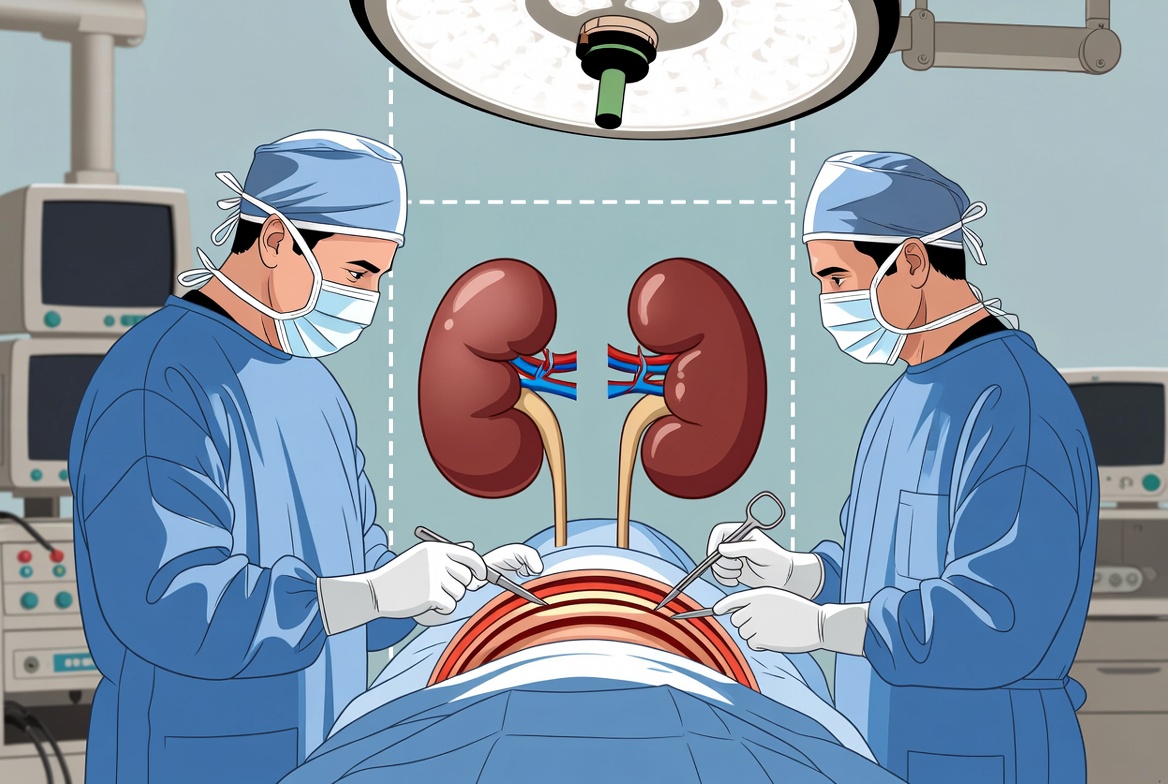
Understanding Intestinal Failure and When Transplant Is Considered
Bowel transplantation is not a first-line treatment. It is considered only when intestinal failure is irreversible and parenteral nutrition is no longer a viable long-term option. The International Intestinal Rehabilitation and Transplant Association guidelines identify the following as transplant indications (IIRTA, 2023):
- Loss of central venous access from repeated line infections or thrombosis
- PN-associated liver disease progressing to cirrhosis
- Recurrent life-threatening episodes of line sepsis (two or more per year)
- Short bowel syndrome with less than 20 cm of remaining small intestine
- High morbidity from repeated bowel obstructions
The decision to proceed to transplant is made by a multidisciplinary team after thorough evaluation of all surgical, medical, and psychosocial factors.
Citation capsule: The International Intestinal Rehabilitation and Transplant Association reports that 5-year patient survival after intestinal transplant at experienced centres has improved from 40% in the early 2000s to 65–70% in recent series, driven by better immunosuppression protocols and infection management (IIRTA, 2023).
Types of Bowel Transplant
Not all bowel transplants are the same. The extent of the transplant depends on what organs are failing:
Isolated small bowel transplant - the most common type. A donor small intestine is transplanted when the small bowel is the primary failing organ and liver function is still preserved.
Combined liver-intestine transplant - for patients who have developed PN-associated liver disease alongside intestinal failure.
Multivisceral transplant - the most extensive option, involving stomach, small bowel, colon, liver, and pancreas. Used when multiple abdominal organs have failed. This is technically the most demanding and carries the highest risk.
Modified multivisceral transplant - includes the above except the liver, for selected patients with preserved liver function.
Which Hospitals in India Perform Bowel Transplants?
Bowel transplantation in India is limited to a handful of centres with the necessary infrastructure and surgical expertise:
- AIIMS (All India Institute of Medical Sciences), New Delhi - the leading public-sector centre
- PGI (Postgraduate Institute of Medical Education and Research), Chandigarh
- Apollo Hospitals, Chennai
- Medanta - The Medicity, Gurugram
The small number of centres reflects how rarely this procedure is performed worldwide. Even in the USA, only about 30 centres perform intestinal transplants, with total annual volume around 200 procedures (Organ Procurement and Transplantation Network, 2024).
What Does Bowel Transplant Cost in India?
| Component | India (USD) | USA (USD) |
|---|---|---|
| Pre-operative evaluation | $15,000–25,000 | $40,000–60,000 |
| Bowel transplant surgery | $30,000–50,000 | $150,000–250,000 |
| Hospital stay (6–8 weeks) | $12,000–20,000 | $60,000–100,000 |
| Immunosuppression (first year) | $8,000–12,000 | $25,000–40,000 |
| Total first year | $65,000–107,000 | $275,000–450,000+ |
Annual follow-up costs in India run $5,000–10,000, compared to $30,000–50,000 in the USA.
The Transplant Process
Pre-Transplant Evaluation
Evaluation is comprehensive and takes several weeks. It includes:
- Complete medical workup: liver function, kidney function, cardiac assessment, pulmonary function
- Imaging: CT abdomen, vascular assessment, liver imaging
- Immunological: HLA typing, panel reactive antibody (PRA) testing, cross-match
- Psychosocial evaluation: psychiatric assessment, social support assessment, compliance history
A patient with active infection, recent malignancy, severe cardiovascular disease, or poor psychosocial support is unlikely to be considered a suitable candidate. Honesty at this stage is essential - the transplant team's goal is to identify patients most likely to survive and benefit.
Waiting for a Donor
Bowel transplants rely on deceased donors. Waiting times in India are shorter than in Western countries, partly because the programme is smaller. Allocation is based on urgency, blood type compatibility, and size matching.
Surgery and Post-Operative Care
The operation takes 4–8 hours. The transplanted bowel is connected to the recipient's blood vessels (aorta and portal vein) and intestinal continuity is re-established. An ileostomy is almost always created to allow direct monitoring of the graft and to facilitate endoscopic surveillance.
Post-operative ICU care runs 2–4 weeks. The focus is on immunosuppression, infection prevention, and managing the transition from parenteral to enteral (oral/tube) feeding as the graft begins to function.
Long-Term Management
Bowel transplant patients require lifelong immunosuppression. Rejection and infection remain the leading causes of graft loss and death. Regular endoscopic surveillance with biopsies is required to detect early rejection. Most patients need monthly clinic visits for the first year, quarterly thereafter.
What Are the Outcomes?
Personal Experience
Published data from the Intestinal Transplant Registry (Intestinal Transplant Registry, 2022):
- 1-year patient survival: 80–85%
- 3-year patient survival: 65–75%
- 5-year patient survival: 55–65%
- Independence from PN at 1 year: 50–70% of surviving patients
Early graft loss from acute rejection affects 15–25% of patients. Infection - bacterial, fungal, and viral - remains the dominant cause of death after the first year.
These outcomes continue to improve as immunosuppression protocols evolve. But prospective patients should understand that bowel transplant extends and improves life for many patients - it does not guarantee a long, complication-free recovery.


