

Vascular Surgery in India: World-Class Vascular and Endovascular Treatments for African Patients

Cardiac & Major Surgery Correspondent

TL;DR: Vascular surgery in India costs 65–75% less than Western hospitals: carotid endarterectomy USD 3,000–6,000, aortic aneurysm repair USD 8,000–15,000, peripheral arterial bypass USD 5,000–10,000, varicose vein treatment USD 1,500–4,000. India's vascular surgery centres offer endovascular (EVAR/TEVAR), hybrid, and open surgical approaches with experienced teams. (Indian Society of Vascular and Endovascular Surgery, 2023)
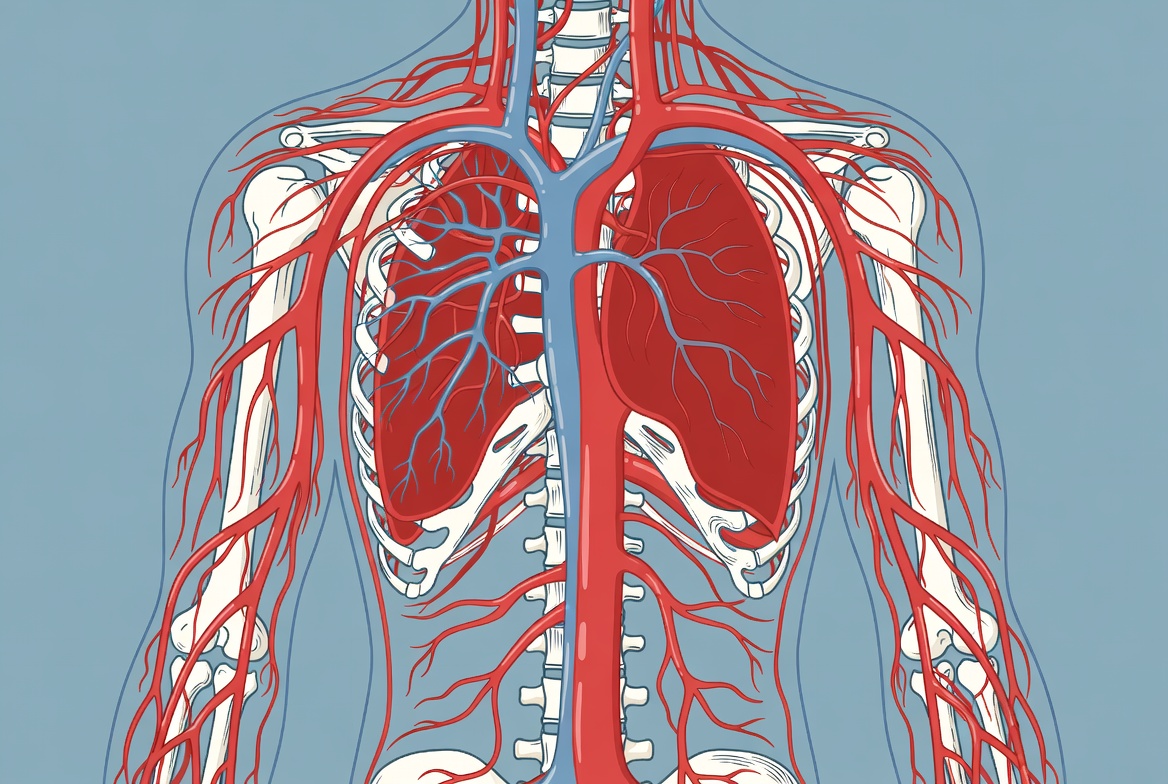
Vascular disease - narrowing or blockage of arteries and veins - is one of the leading causes of preventable death and limb loss globally. In Africa, diabetic vascular complications and hypertension-driven atherosclerosis are driving increasing incidence, while access to specialist vascular surgery remains limited outside major capitals.
India's vascular surgeons combine open surgical expertise with endovascular techniques - angioplasty, stenting, EVAR, and TEVAR - to manage the full spectrum of vascular disease. Major centres in Delhi, Mumbai, Chennai, and Bangalore maintain 24/7 emergency vascular capability alongside planned elective programmes for arterial, venous, and dialysis access cases.
What Conditions Does Vascular Surgery Treat?
Vascular surgery addresses diseases of arteries and veins throughout the body. The most common presentations among African patients include:
Peripheral arterial disease (PAD): Atherosclerotic narrowing of leg arteries causing claudication (leg pain on walking) and, in severe cases, critical limb ischaemia with rest pain and tissue loss. The WHO estimates 202 million people globally have PAD. (WHO Global Status Report, 2023)
Abdominal aortic aneurysm (AAA): Progressive dilation of the main abdominal artery that ruptures without warning once it exceeds critical dimensions. India performs both EVAR (endovascular repair - minimally invasive) and open surgical repair.
Carotid artery disease: Atherosclerotic plaque in the carotid arteries causes 20–30% of all strokes. (Stroke, 2021) Carotid endarterectomy removes the plaque - reducing stroke risk by up to 50% in symptomatic patients.
Diabetic vascular complications: Diabetes accelerates atherosclerosis at every level. Indian vascular surgeons see high volumes of diabetic patients with combined neuropathic and ischaemic foot disease - requiring coordinated limb salvage programmes.
Chronic venous insufficiency and varicose veins: Venous reflux causes leg swelling, aching, skin changes, and venous ulcers. India offers endovenous laser ablation, radiofrequency ablation, sclerotherapy, and open surgical treatment.
Deep vein thrombosis and pulmonary embolism: Acute DVT management including anticoagulation, catheter-directed thrombolysis when indicated, and IVC filter placement when anticoagulation is contraindicated.
Dialysis vascular access: AV fistula creation and maintenance for patients receiving haemodialysis.
What Surgical and Endovascular Approaches Are Used?
Endovascular Angioplasty and Stenting
Percutaneous transluminal angioplasty (PTA) with or without stent placement treats arterial stenosis through catheter-based access - typically through the groin artery. This approach requires no large incision, allows discharge within 1–2 days, and is the first choice for suitable lesions in the aorta, iliac, femoral, and tibial arteries.
Endovascular Aortic Repair (EVAR/TEVAR)
EVAR treats abdominal aortic aneurysms by deploying a stent graft via catheters from the groin - avoiding major abdominal surgery. Mortality for elective EVAR in experienced hands is under 1%. Recovery time is 1–2 weeks versus 6–8 weeks for open repair.
TEVAR treats thoracic aortic aneurysms and acute type B aortic dissections using the same catheter-based approach through the femoral artery.
Open Arterial Bypass Surgery
When endovascular approaches fail or are anatomically unsuitable, open bypass surgery provides durable flow restoration. Autologous saphenous vein graft provides superior long-term patency (70–80% at 5 years) compared to prosthetic alternatives. India's vascular surgeons maintain proficiency in both approaches.
Carotid Endarterectomy
Carotid endarterectomy involves surgical exposure of the carotid artery in the neck, cross-clamping, opening the artery, removing the atherosclerotic plaque under direct vision, and closing with a patch. Operative stroke risk in experienced hands is under 2% - significantly less than the risk of leaving the stenosis untreated in symptomatic patients.
Hybrid Vascular Procedures
Complex multilevel disease - stenosis at both the aorta and leg arteries simultaneously - sometimes requires hybrid procedures combining open surgical repair and endovascular treatment in the same operating session. India's major vascular centres have dedicated hybrid operating rooms with intraoperative imaging capability.
Arteriovenous Fistula Creation
AV fistulae for haemodialysis access are the domain of vascular surgery. India's nephrology and vascular teams perform high volumes of radiocephalic, brachiocephalic, and prosthetic AV graft creation for dialysis-dependent patients.
What Does Vascular Surgery Cost in India?
Arodya Data
| Procedure | India (USD) | USA (USD) | UK (GBP) |
|---|---|---|---|
| Carotid endarterectomy | 3,000–6,000 | 20,000–40,000 | 12,000–25,000 |
| EVAR (abdominal aortic aneurysm) | 8,000–15,000 | 40,000–80,000 | 25,000–50,000 |
| Open AAA repair | 6,000–12,000 | 30,000–60,000 | 20,000–40,000 |
| Peripheral arterial bypass | 5,000–10,000 | 25,000–50,000 | 15,000–30,000 |
| Femoral angioplasty with stent | 2,000–5,000 | 10,000–25,000 | 7,000–18,000 |
| AV fistula creation | 800–2,000 | 4,000–10,000 | 2,500–7,000 |
| Varicose vein (endovenous laser) | 1,500–4,000 | 5,000–12,000 | 3,000–8,000 |
| IVC filter placement | 1,500–3,500 | 6,000–15,000 | 4,000–10,000 |
How Is Vascular Disease Investigated in India?
Duplex Ultrasound
The first-line investigation for most vascular problems. Combines anatomical B-mode imaging with Doppler velocity measurement to assess stenosis degree, plaque morphology, venous reflux, and DVT. Non-invasive, widely available, and typically results within 24 hours.
CT Angiography
The standard pre-operative imaging for aortic and peripheral vascular disease. Multi-detector CTA produces high-resolution 3D reconstructions of the entire aorta and its branches, enabling detailed surgical planning. Available at all major Indian vascular centres within 24–48 hours.
Magnetic Resonance Angiography (MRA)
Provides excellent peripheral arterial imaging without ionising radiation. Particularly valuable for patients with impaired renal function who cannot receive iodinated contrast.
Diagnostic Catheter Angiography
The "gold standard" for complex cases or when endovascular intervention is planned in the same session. Access via the femoral or radial artery, with contrast injection and X-ray imaging under fluoroscopy. Conducted in the catheter laboratory or hybrid operating room.
Ankle-Brachial Index (ABI)
A simple bedside measurement comparing ankle to arm blood pressure. ABI below 0.9 confirms PAD. Below 0.5 suggests critical limb ischaemia. An essential component of the initial vascular assessment.
Limb Salvage for Critical Limb Ischaemia
Critical limb ischaemia (CLI) - with rest pain, non-healing wounds, or tissue death - represents the endpoint of untreated PAD. Without revascularisation, major amputation occurs in 30–50% of patients within 12 months. With aggressive revascularisation, 80–90% of limbs can be saved. (Journal of Vascular Surgery, 2022)
India's limb salvage programmes at major vascular centres coordinate endovascular and open surgical revascularisation with podiatry, wound care, infectious disease, and orthopaedics. The integrated approach - all specialties working toward the same goal of avoiding amputation - produces better outcomes than single-specialty management.
Many African patients arrive in India with diabetic foot wounds that have been treated for months without improvement because the underlying vascular problem was never assessed. Measuring the ABI and performing arterial duplex ultrasound should be the first step for any non-healing diabetic foot wound - not just wound dressings.
Personal Experience
Vascular Disease Prevention and Risk Management
Preventing progression of vascular disease requires systematic risk factor management:
Smoking cessation is the single most effective intervention. Smoking doubles the rate of atherosclerotic progression and is the strongest modifiable risk factor for PAD, AAA expansion, and stroke. Indian vascular surgeons routinely coordinate smoking cessation support.
Blood pressure control - target below 130/80mmHg - slows plaque progression and reduces AAA expansion rate.
Statin therapy - prescribed in virtually all patients with established PAD or carotid disease regardless of cholesterol level - reduces cardiovascular events by 25–35%.
Antiplatelet therapy - aspirin or clopidogrel - reduces arterial thrombosis risk in PAD and post-endarterectomy.
Glycaemic control - tight blood glucose management in diabetic patients reduces microvascular and macrovascular complications.


