Pancreatic Cancer & Whipple Surgery in India: Outcomes & Cost Guide 2026

Pancreatic Cancer & Whipple Surgery in India: Outcomes & Cost Guide 2026
Pancreatic cancer carries the most feared prognosis in oncology. A five-year survival rate that has historically hovered around 10–12%, a tendency to present at advanced stages, and a limited window during which surgery is possible — the statistics are sobering. But for the 15–20% of patients whose cancer is diagnosed at a resectable stage, surgery offers the only chance of cure or long-term survival. And the procedure at the centre of that chance is the Whipple operation.
India's hepatopancreatic surgery centres have made this most complex of abdominal procedures significantly more accessible. At high-volume centres, the 30-day mortality rate for the Whipple procedure is now below 2% — matching the best published outcomes from the USA and Europe. The cost, at $15,000–25,000, is 70–80% less than equivalent surgery in the United States. For African patients diagnosed with resectable pancreatic or periampullary cancer, India provides a realistic path to the surgery that offers their best chance of survival.
Understanding Pancreatic Cancer: Staging and Surgical Candidacy
Pancreatic cancer is staged based on tumour location, size, and relationship to adjacent blood vessels. This staging determines whether surgery is possible:
Resectable — The tumour has not grown into major blood vessels (the superior mesenteric artery and vein, the portal vein, the celiac axis). Approximately 15–20% of newly diagnosed patients are resectable. Surgery is the recommended first treatment.
Borderline resectable — The tumour abuts but has not encased major vessels. Surgical resection may be possible but carries a risk of incomplete removal (positive margins). Neoadjuvant chemotherapy — given before surgery to shrink the tumour and improve the surgical margin — is standard of care at leading Indian oncology centres.
Locally advanced (unresectable) — The tumour encases major vessels and cannot be safely removed surgically. Treatment is chemotherapy, sometimes combined with radiation, with the goal of disease control rather than cure.
Metastatic — Cancer has spread to the liver, lungs, or peritoneum. Surgery is not indicated. Chemotherapy is the primary treatment approach.
Getting accurate staging is critical and requires high-quality cross-sectional imaging — ideally a dedicated pancreatic protocol CT scan or MRI/MRCP. If your existing imaging is of limited quality, Indian centres will repeat it on arrival.
The Whipple Procedure: What It Involves
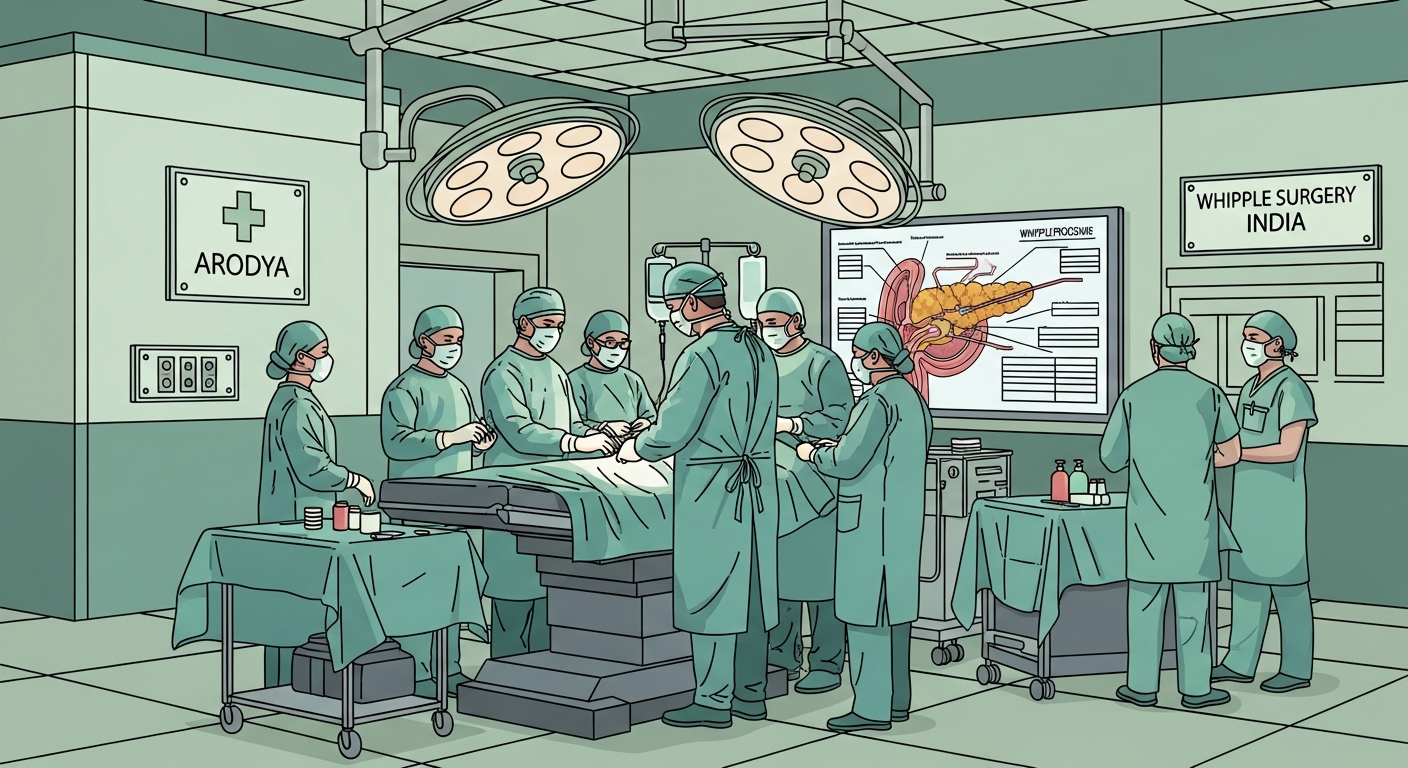
The pancreaticoduodenectomy — universally known as the Whipple procedure after surgeon Allen Whipple — removes the head of the pancreas, the duodenum, the lower portion of the bile duct, the gallbladder, and sometimes a portion of the stomach. It then reconstructs the digestive system with three surgical connections (anastomoses): pancreas to small intestine, bile duct to small intestine, and stomach to small intestine.
It is one of the most technically complex abdominal operations in surgery. The extensive dissection, the proximity to major blood vessels, and the three reconstructive anastomoses combine to make this a procedure where surgical volume and experience matter enormously. Centres performing 50+ Whipple procedures annually have significantly lower complication and mortality rates than low-volume hospitals — this is well-established in the surgical outcomes literature.
Open Whipple remains the standard technique: a midline abdominal incision, direct visualization of the operative field, and the most flexibility for managing unexpected anatomy or vascular involvement.
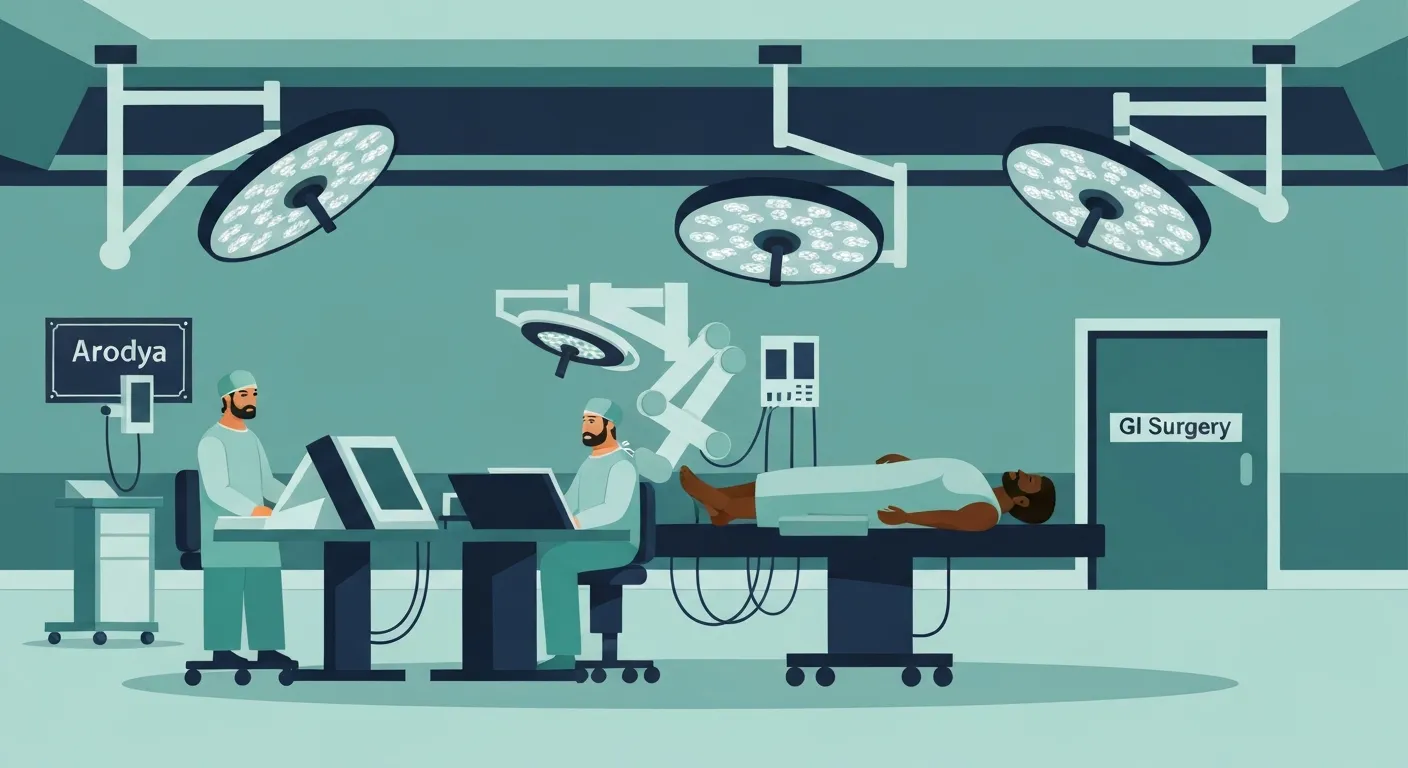
Robotic Whipple is available at Apollo Hospitals (Delhi, Chennai), Medanta Gurgaon, and Manipal Bangalore. The robotic platform — typically the da Vinci surgical system — provides 3D magnification, instrument wristing within small spaces, and reduced surgeon fatigue during the lengthy procedure. Some studies show reduced blood loss and transfusion requirements with robotic Whipple, with comparable oncological outcomes to open surgery. Cost premium over open Whipple: $3,000–5,000.
Laparoscopic Whipple is offered at selected centres with advanced laparoscopic expertise, though the robotic platform has largely superseded pure laparoscopic Whipple in India's high-volume centres.
India's Outcomes Data: What the Numbers Show
The critical question for any patient considering surgery abroad is: what are this hospital's actual results?
At India's high-volume hepatopancreatic surgery centres:
- 30-day mortality: Below 2% (consistent with USA and European benchmarks of 1.5–3% at high-volume centres)
- Major complication rate: 20–30% (comparable to international data; most are manageable — the most common is delayed gastric emptying and post-pancreatectomy fistula)
- R0 resection rate (clear surgical margins): 60–75% at leading centres (a key predictor of survival)
- Median survival for resected patients: 24–30 months; 5-year survival 15–25%
These figures improve consistently with surgical volume. Tata Memorial Hospital Mumbai, Apollo Hospitals, Medanta, and AIIMS Delhi are India's highest-volume hepatopancreatic surgery centres. When choosing a hospital, ask specifically about annual Whipple volume and their programme's 30-day mortality data.
Cost: Whipple Surgery India vs USA and UK
| Cost Component | India | USA | UK (Private) |
|---|---|---|---|
| Whipple procedure (open) | $15,000–20,000 | $80,000–120,000 | £50,000–80,000 |
| Robotic Whipple | $18,000–25,000 | $90,000–130,000 | £60,000–90,000 |
| Hospital stay (10–14 days) | Included in above | Additional $20,000+ | Included |
| ICU (2–3 days) | Included in above | Additional $10,000+ | Included |
| Pre-operative staging workup | $500–1,500 | $3,000–8,000 | £2,000–5,000 |
| Adjuvant chemotherapy (6 cycles) | $6,000–12,000 | $40,000–80,000 | £20,000–50,000 |
The total cost of resection plus adjuvant chemotherapy in India — including a 3–4 week stay — typically runs $25,000–40,000. The equivalent pathway in the USA can exceed $200,000.
Neoadjuvant Chemotherapy: When Surgery Comes Second
For borderline resectable tumours — those that abut major blood vessels without encasing them — the standard approach at leading Indian oncology centres is neoadjuvant chemotherapy: systemic treatment given before surgery to shrink the tumour, improve surgical margins, and test the biology of the cancer.
The standard neoadjuvant regimen is FOLFIRINOX (5-fluorouracil, irinotecan, oxaliplatin, leucovorin) or gemcitabine plus nab-paclitaxel, given every 2 weeks for 4–6 cycles. After restaging imaging, the surgical team reassesses resectability. Patients who achieve a good response to neoadjuvant chemotherapy — or whose tumour remains stable — then proceed to surgery.
This approach can convert a borderline resectable tumour to a clearly resectable one, improving the chance of achieving clear surgical margins (R0 resection), which is the single most important prognostic factor for long-term survival.
India's oncology centres can manage the entire neoadjuvant pathway, or your oncologist in Africa can administer the chemotherapy while you travel to India specifically for the Whipple procedure once you are deemed surgically ready.
Post-Whipple Quality of Life and Follow-Up
Recovery from the Whipple procedure takes time. Hospital stay is 7–12 days. Most patients remain in India for 3–4 weeks post-discharge for wound checks and follow-up before the surgeon clears them to fly. Full recovery takes 2–3 months.
The most important quality-of-life adjustments after Whipple:
Pancreatic exocrine insufficiency — With part of the pancreas removed, enzyme production falls. Most Whipple patients require pancreatic enzyme replacement therapy (PERT) with every meal — oral capsules that replace the digestive enzymes the reduced pancreas can no longer produce in sufficient quantity.
Blood sugar management — Removal of the head of the pancreas reduces insulin-producing beta cell mass. Some patients develop new-onset diabetes or worsening of pre-existing diabetes. Close monitoring and sometimes insulin or oral medication is required.
Dietary adjustments — Small, frequent meals, avoiding high-fat foods initially, and working with a dietitian to optimise nutrition. Most patients achieve adequate nutrition within 3–6 months.
Understanding Periampullary Cancer: Related Procedures
The Whipple procedure is not only performed for pancreatic cancer. The same operation is the standard surgical treatment for several other cancers of the periampullary region — the area where the bile duct, pancreatic duct, and duodenum converge:
Ampullary carcinoma — Cancer of the ampulla of Vater. Generally has a better prognosis than pancreatic cancer, with 5-year survival rates of 30–40% following Whipple resection. Staging and surgical eligibility differ from pancreatic cancer.
Distal bile duct cholangiocarcinoma — Cancer of the lower common bile duct. Presents similarly to pancreatic cancer with jaundice and requires Whipple resection. Outcomes better than pancreatic cancer — 5-year survival 20–30% for resected disease.
Duodenal carcinoma — Cancer of the duodenum. Rare but treated with Whipple resection. Prognosis is relatively favourable compared to pancreatic head adenocarcinoma.
Chronic pancreatitis with pain — In selected cases of chronic pancreatitis causing intractable pain from a diseased pancreatic head, Whipple resection provides durable pain relief without the oncological urgency.
For all these indications, India's hepatopancreatic surgery centres offer the same quality and cost advantages as for pancreatic cancer. Getting an accurate tissue diagnosis and staging before planning surgery is essential — different tumour types require different surgical and oncological planning even if the operative procedure is similar.
Getting Your Case Evaluated
Pancreatic cancer decisions are time-sensitive. Tumours do not wait for scheduling backlogs or administrative delays.
The most effective first step is sharing your imaging (CT scan DICOM files, ideally pancreatic protocol) and biopsy or cytology results with Arodya, who will send them to India's surgical oncology teams for urgent review. A preliminary opinion on resectability and treatment approach is typically available within 48–72 hours.
Send your case to Arodya for pancreatic cancer evaluation — start here
For context on cancer treatment costs more broadly, see our guide to cancer treatment cost in India vs USA and UK. For guidance on choosing the right hospital, see our ten questions for hospital selection.
When surgery is possible, the window to act is the most precious resource. India's hepatopancreatic surgery centres are ready to move quickly for patients who are ready.