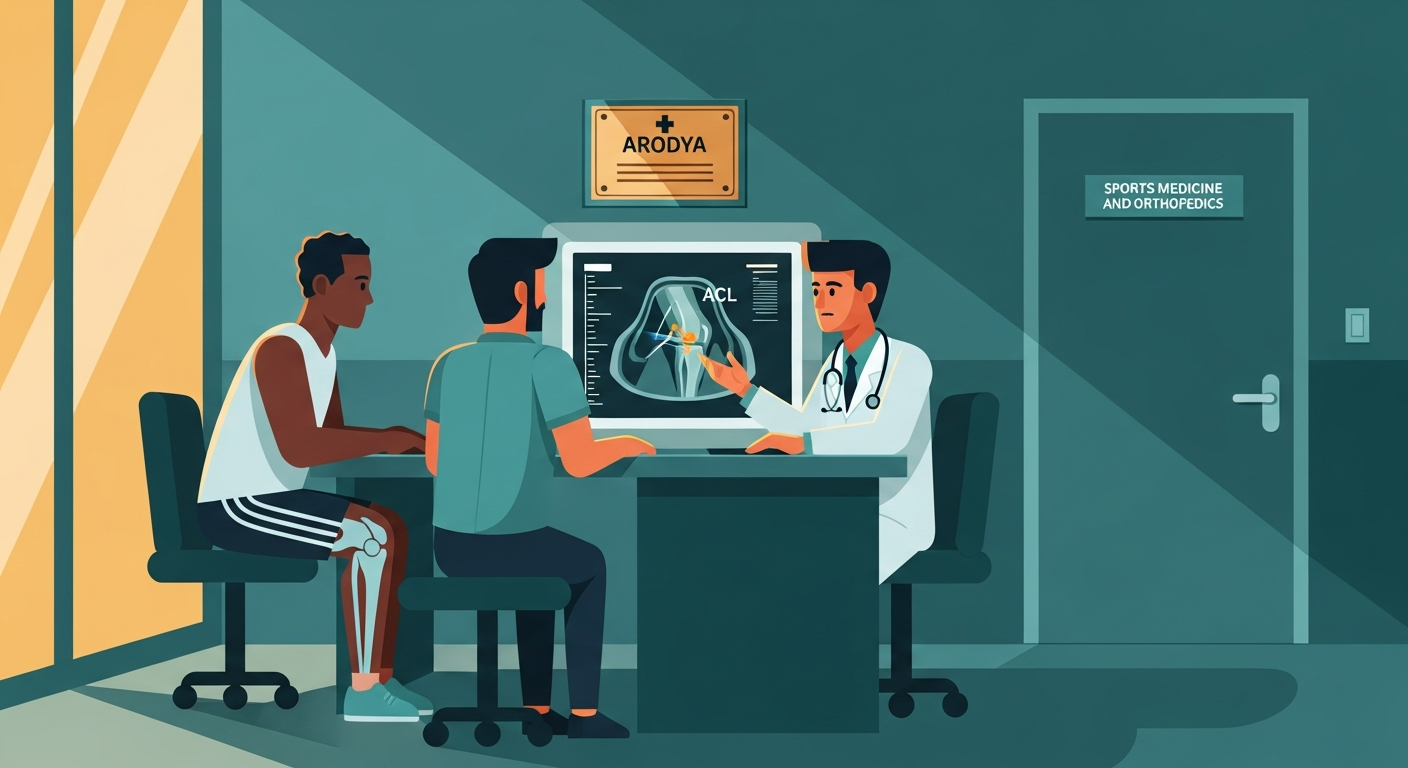
ACL Knee Ligament Repair in India for African Athletes: Cost & Recovery Guide 2026
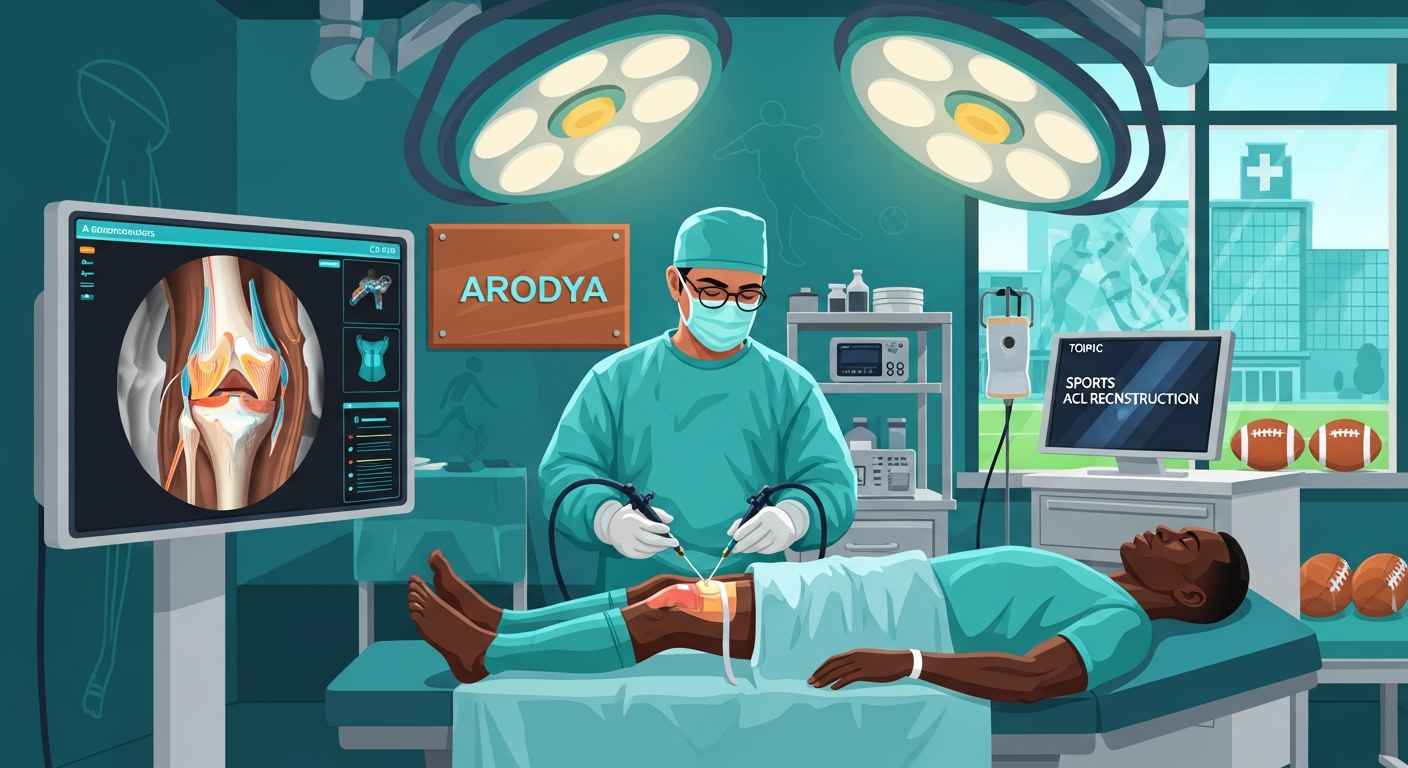

A single moment — a cutting run, a directional change, a tackle — can end a footballer's season. That sharp pain, the audible pop, the knee giving way: these are the hallmarks of an anterior cruciate ligament (ACL) tear. For professional and amateur athletes across Africa, ACL injuries represent one of the most significant orthopaedic challenges they will face. India's arthroscopic sports medicine centres are offering these athletes a path back to the pitch at a fraction of the cost of treatment in Europe or North America.
Understanding ACL Injuries
The anterior cruciate ligament runs diagonally through the centre of the knee joint, preventing the tibia from sliding forward and controlling rotational stability. ACL tears occur predominantly in cutting sports — football, basketball, rugby, handball — where rapid deceleration combined with directional change creates forces that exceed the ligament's tensile strength.
The injury mechanism is well understood. Over 70% of ACL tears are non-contact: the athlete decelerates, plants the foot, and pivots — the ligament tears under eccentric load. Contact mechanism (direct blow to the knee) accounts for the remainder. Women athletes are 2–4 times more likely than men to sustain ACL injuries due to differences in neuromuscular control, landing mechanics, and hormonal influences on ligament laxity.
Clinical signs of ACL tear include:
- The Lachman test: anterior tibial displacement with the knee at 20–30 degrees flexion
- Anterior drawer test: tibial shift at 90 degrees flexion
- Pivot shift test: rotational instability under load
- Haemarthrosis (blood in the knee joint): present in 70% of acute ACL injuries
- MRI confirmation: the gold standard, showing ligament discontinuity with 95% accuracy
Surgical Options: Choosing the Right Graft
ACL reconstruction replaces the torn ligament with a tissue graft that gradually integrates into the bone tunnels and functions as a new ligament. The graft choice significantly influences outcomes and is tailored to the patient's sport, activity level, previous injuries, and anatomy.
Patellar Tendon Graft (Bone-Patellar Tendon-Bone, BPTB)
The gold standard for high-level athletes in pivoting sports. The central third of the patellar tendon is harvested with bone plugs at each end, which fix securely in femoral and tibial tunnels. The bone-to-bone healing is rapid and strong. Studies show the lowest re-rupture rates among all graft types for competitive athletes. The trade-off is donor site morbidity: anterior knee pain and quadriceps weakness that resolve in most patients within 6 months.
Hamstring Graft (Semitendinosus/Gracilis, Quadrupled)
The most widely used graft in India and globally. Four strands of hamstring tendon are folded to create a strong multi-strand construct. Donor site pain is minimal, kneeling is more comfortable, and the incision is smaller. Re-rupture rates are slightly higher than BPTB in high-risk athletes but remain low in properly rehabilitated patients. Preferred for patients with pre-existing anterior knee pain or kneeling occupations.
Quadriceps Tendon Graft
An increasingly popular choice, particularly for revision ACL surgery. The quadriceps tendon graft offers a large, strong construct with minimal donor site morbidity. India's orthopaedic surgeons with international fellowship training are experienced with this approach.
Arthroscopic Technique: Minimal Invasive Surgery
India's ACL reconstruction is performed entirely arthroscopically. Two or three small incisions (7–10mm) allow the arthroscope and instruments into the joint. The approach offers:
- Direct visualisation of the entire joint surface
- Assessment and treatment of concomitant meniscus tears, cartilage damage, and ligament injuries
- Precise tunnel placement guided by anatomical landmarks
- Reduced post-operative pain compared to open surgery
- Hospital stay of 1–2 days
- Return to walking within 24 hours
The arthroscopic camera projects the knee interior onto a high-definition monitor, allowing the surgeon to assess the full extent of injury before proceeding with reconstruction.
Addressing Meniscus Tears
Around 30–50% of ACL injuries are accompanied by meniscus tears, the most common being the lateral meniscus (at the time of injury) and the medial meniscus (in chronic ACL-deficient knees). India's arthroscopic surgeons evaluate and address meniscus pathology simultaneously during ACL reconstruction.
Where possible, meniscal repair (suturing the torn meniscus) is preferred over meniscectomy (trimming away damaged tissue) because preserving the meniscus reduces the risk of long-term osteoarthritis. Repair is most successful for peripheral tears in the vascular zone. India's surgeons are conservative in meniscectomy decisions, protecting long-term joint health.
Cost Comparison: India vs USA vs UK
| Procedure | India (USD) | USA (USD) | UK (GBP) |
|---|---|---|---|
| ACL reconstruction (arthroscopic) | 5,000–8,000 | 25,000–35,000 | 10,000–18,000 |
| ACL + meniscus repair | 6,500–10,000 | 30,000–45,000 | 12,000–20,000 |
| ACL revision surgery | 8,000–12,000 | 35,000–50,000 | 15,000–25,000 |
| 3-week physiotherapy programme | 500–1,200 | 3,000–6,000 | 2,000–4,000 |
All Indian costs include surgeon fees, anaesthesia, hospital stay, and immediate post-operative physiotherapy. Travel, accommodation, and companions typically add $1,500–2,500 for a 3-week stay.
The Return-to-Sport Timeline
The single most important principle following ACL reconstruction is that the biological healing process cannot be rushed. Graft ligamentisation — the process by which the transplanted tissue transforms into a functional ligament — takes 9–12 months. Returning to competitive pivoting sport before this process is complete dramatically increases re-rupture risk.
Standard rehabilitation milestones:
- Week 1–2: Swelling management, quadriceps activation, walking unaided
- Week 4–6: Full range of motion restoration, cycling, pool walking
- Month 3: Jogging programme begins
- Month 4–5: Running, agility work, plyometric introduction
- Month 6: Sport-specific drills (non-contact)
- Month 9–12: Graduated return to competitive play with criteria-based clearance
Criteria-based return-to-sport clearance using functional tests (single leg hop tests, Y-balance test, isokinetic strength testing) is superior to time-based protocols alone. India's sports rehabilitation centres are equipped for these assessments.
Africa's Football Community and India
The demand for ACL reconstruction among African professional footballers has grown significantly. Players from West African leagues, East African club competitions, and national team setups have followed the path to India — attracted by surgical quality equivalent to European sports medicine centres, dramatically lower costs, and the support of coordinators experienced with African athletes.
For club medical staff managing an injured player, India represents the most cost-effective path back to competitive fitness. The cost savings compared to Europe allow clubs to manage more injured players simultaneously without exceeding healthcare budgets. Post-surgery communication between Indian surgeons and home-country physiotherapists ensures continuity of the rehabilitation programme after the player returns.
Choosing the Right Hospital and Surgeon
India's sports orthopaedics capacity is concentrated in Delhi (several leading sports medicine centres), Mumbai (Kokilaben, Breach Candy), Bangalore (Manipal, Narayana), Hyderabad, and Chennai. Key selection criteria:
- Arthroscopic fellowship training of the operating surgeon
- Surgical volume (high-volume surgeons have better outcomes)
- Dedicated rehabilitation centre on-site or nearby
- Experience with international athlete patients
- Access to return-to-sport testing equipment
Arodya matches each athlete patient with the most appropriate surgeon based on their specific injury pattern, graft preference, and rehabilitation goals. Start your assessment through our intake form and our patient coordinators will review your MRI and connect you with the right specialist within 24 hours.
Preventing the Second ACL Injury
Rehabilitation following ACL reconstruction goes beyond physical recovery. Neuromuscular training — teaching the brain to use the knee correctly during high-risk movements — significantly reduces the risk of re-injuring the same or opposite ACL. India's sports physiotherapists incorporate FIFA 11+ warm-up protocols, plyometric progression, and functional movement screening into rehabilitation programmes.
The data is clear: athletes who complete evidence-based rehabilitation and pass criteria-based return-to-sport tests have significantly lower re-injury rates. A disciplined 9–12 month process is the price of a full career.
Starting the Process
For athletes with ACL injuries — acute or chronic — the assessment process begins with your MRI. Share your knee MRI and a description of your injury history with Arodya, and we will review it with an orthopaedic specialist and provide a treatment recommendation within 24 hours. Thousands of African athletes have reclaimed their playing careers through India's sports medicine system. The next recovery story could be yours.