Congenital Heart Defect Repair in India for African Children: ASD & VSD Closure Guide 2026
Congenital Heart Defect Repair in India for African Children: ASD & VSD Closure Guide 2026
One in every 100 children born in Africa enters the world with a structural abnormality in their heart. That statistic is global — congenital heart disease (CHD) is the most common birth defect worldwide. But in Africa, where paediatric cardiac surgery is available in fewer than 20 countries and where the queue of children needing intervention vastly exceeds the capacity to treat them, the consequence of that statistic is devastating and largely invisible.
In Nigeria, the estimated backlog of children waiting for cardiac surgery is over 300,000. In Ethiopia, the country has fewer than 10 paediatric cardiac surgeons for 120 million people. In Uganda, Kenya, Ghana, and across the continent, families learn their child has a heart defect and are told to wait — for years, sometimes for a surgeon who may never come.
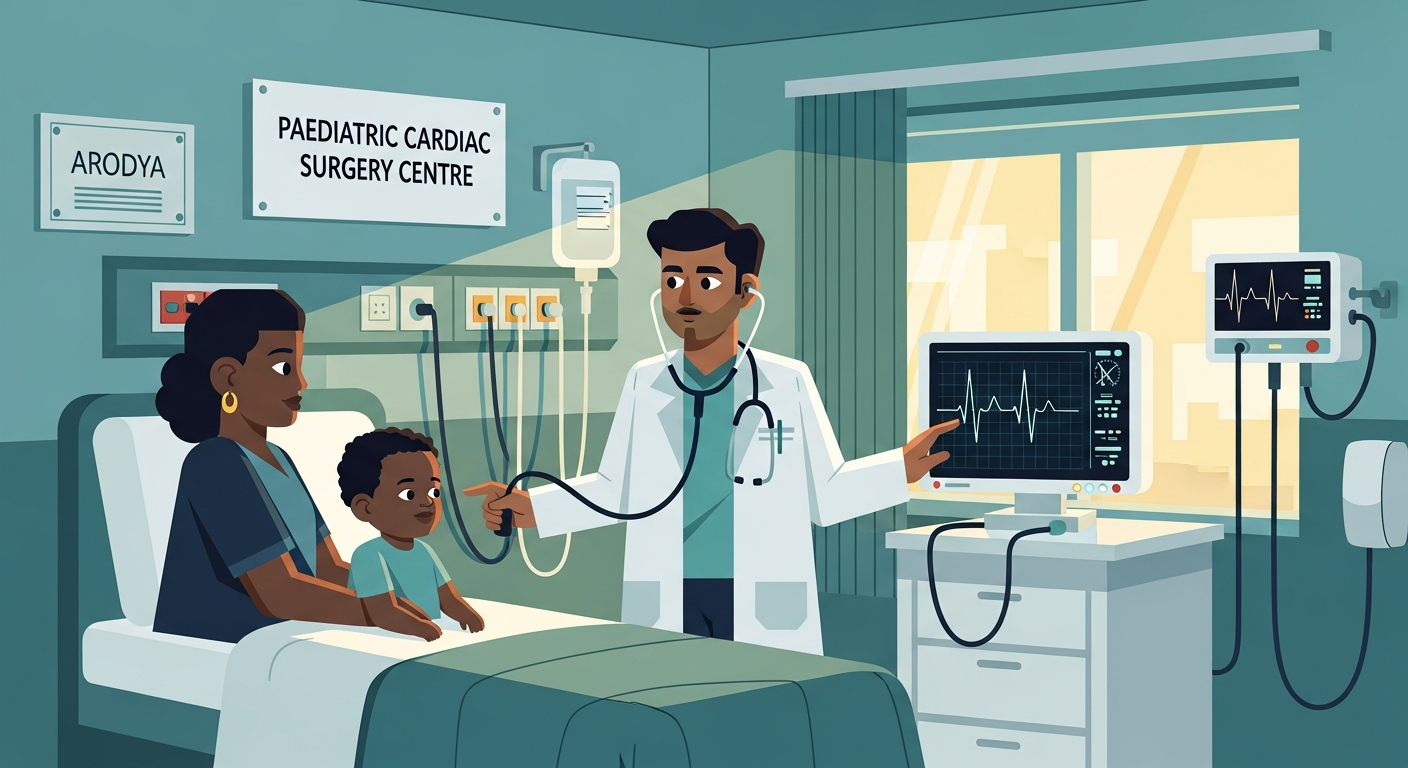
India's paediatric cardiac surgery programmes are the most accessible alternative for African families. At costs of $8,000–15,000 for the majority of CHD repairs, with success rates exceeding 97% for straightforward defects, and with facilities specifically organised to serve families travelling from abroad, India has become the destination where thousands of African children receive the heart surgery they cannot access at home.
This guide covers the most common defects, the treatment options, the costs, and how to plan the journey.
Common Congenital Heart Defects in African Children
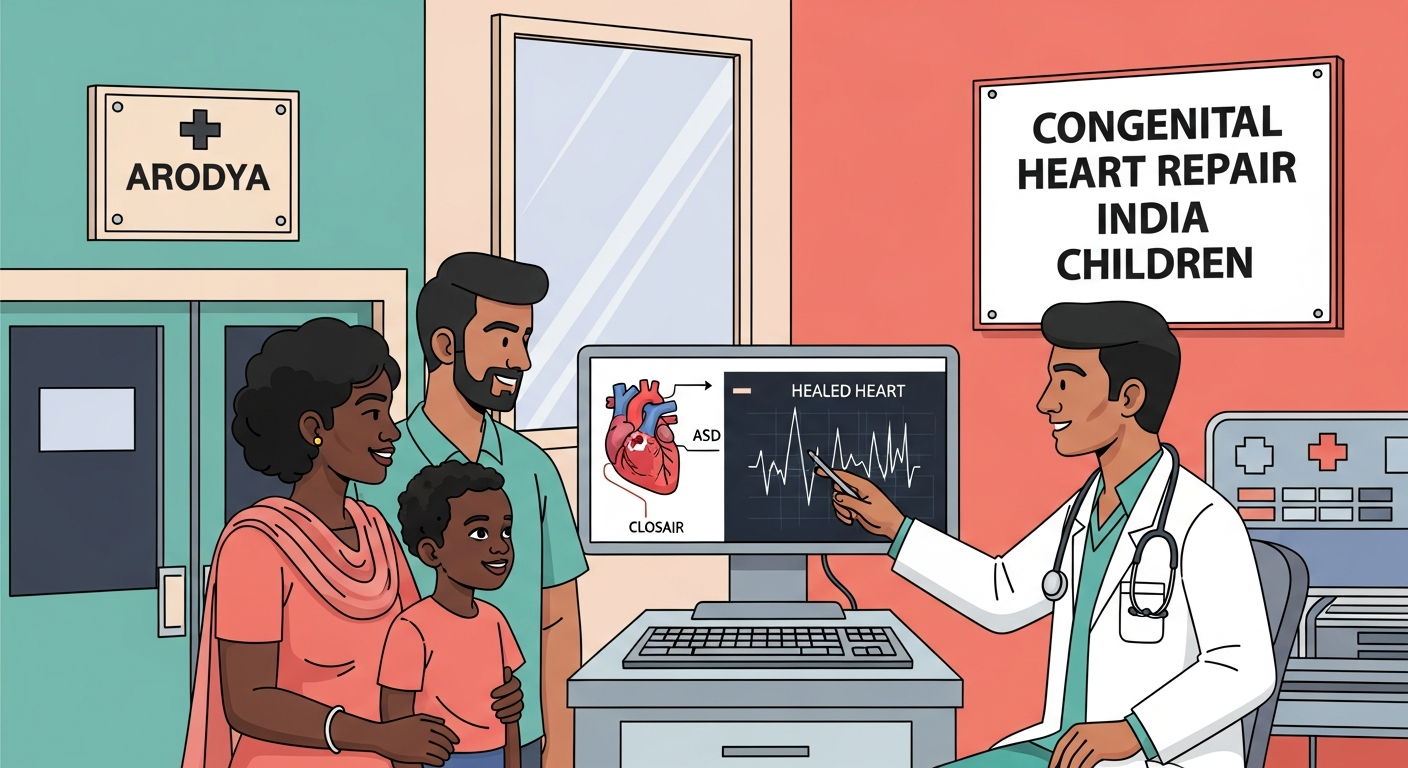
Atrial Septal Defect (ASD) — A hole in the wall (septum) separating the two upper chambers of the heart (atria). Small ASDs may close spontaneously in early childhood. Larger ones allow blood to cross from left atrium to right atrium, increasing blood flow through the right heart and lungs over time, eventually causing right heart enlargement and, if untreated, pulmonary hypertension. ASDs are one of the most common CHDs and one of the most accessible to treat.
Ventricular Septal Defect (VSD) — A hole in the septum between the two lower chambers (ventricles). Small VSDs often close spontaneously. Large VSDs cause excessive pulmonary blood flow, heart failure symptoms in infancy, and, if untreated over years, irreversible pulmonary vascular disease (Eisenmenger syndrome). Surgical or catheter-based closure before irreversible pulmonary changes develop is curative.
Patent Ductus Arteriosus (PDA) — The ductus arteriosus is a vessel connecting the pulmonary artery to the aorta, present in fetal circulation and normally closing within days of birth. When it remains open (patent), it allows oxygenated blood to recirculate to the lungs, wasting cardiac output. PDA closure is one of the most straightforward CHD interventions.
Tetralogy of Fallot (TOF) — A combination of four defects: VSD, pulmonary stenosis (obstruction to blood flow from the right ventricle to the lungs), right ventricular hypertrophy, and an overriding aorta. TOF produces the classic "blue baby" — cyanosis from reduced pulmonary blood flow. Total surgical correction (VSD closure + pulmonary outflow tract reconstruction) achieves excellent long-term outcomes. It is one of the most common complex CHDs.
Pulmonary Stenosis — Obstruction at the pulmonary valve, reducing blood flow from the heart to the lungs. Mild cases are monitored; moderate to severe stenosis is treated by balloon valvuloplasty (catheter-based), often producing excellent long-term results without open surgery.
Transposition of Great Arteries (TGA) — The aorta and pulmonary artery arise from the wrong ventricles, effectively creating two separate circulation loops. TGA is a surgical emergency in neonates and requires the arterial switch operation — one of paediatric cardiac surgery's most technically demanding procedures, requiring experienced centres.
Catheter-Based Closure: When Surgery Can Be Avoided
For appropriately sized and positioned ASD and VSD defects, catheter-based device closure offers a compelling alternative to open-heart surgery.
The procedure: a cardiologist passes a thin flexible tube (catheter) through a vein in the groin to the heart, navigating under X-ray guidance to the defect. A small closure device — either an Amplatzer-type umbrella device or similar — is deployed across the defect and expanded, sealing it. The procedure typically takes 45–90 minutes under sedation or light anaesthesia.
Recovery is 1–2 days in hospital versus 5–7 days for surgical repair. There is no chest scar. Most children are up and playing within 24 hours.
Eligibility criteria for device closure:
- ASD: Defect size 5–38mm, adequate tissue rim around the defect
- VSD: Muscular VSD of appropriate size; some perimembranous VSDs at experienced centres
- PDA: All sizes if anatomy permits
Catheter-based closure for ASD costs $6,000–10,000 in India. For larger or complex defects not meeting catheter closure criteria, open surgical repair is performed with cardiopulmonary bypass.
India's Paediatric Cardiac Surgery: Outcomes and Accreditation
India's high-volume paediatric cardiac surgery centres publish outcomes data that compares favourably with global benchmarks:
- Narayana Health, Bengaluru: India's highest-volume paediatric cardiac surgery programme, performing 3,000+ paediatric cardiac procedures annually. Overall paediatric cardiac surgery mortality 2.5–3% — consistent with leading children's cardiac programmes worldwide. Narayana is the global reference point for high-volume, low-cost paediatric cardiac surgery.
- Apollo Hospitals (Chennai, Delhi): Strong paediatric cardiac programmes with full CHD spectrum capability and dedicated international patient services for African families.
- Amrita Institute of Medical Sciences, Kochi: Excellent paediatric cardiac surgery programme in Kerala with high surgical volume and internationally trained surgeons.
- AIIMS Delhi: Premier academic institution for complex CHD including single ventricle palliation (Norwood, Glenn, Fontan procedures) and rare structural defects.
For simple defects (ASD, VSD, PDA, pulmonary stenosis), success rates at these centres exceed 97–99% with mortality below 1%. Complex defects carry higher but still competitive risk profiles that your cardiologist will discuss specifically for your child's anatomy.
Costs: CHD Surgery in India vs USA and UK
| Procedure | India | USA | UK |
|---|---|---|---|
| ASD device closure (catheter) | $6,000–10,000 | $25,000–45,000 | £18,000–35,000 |
| VSD surgical repair | $8,000–12,000 | $40,000–70,000 | £30,000–55,000 |
| TOF total correction | $10,000–16,000 | $60,000–100,000 | £45,000–75,000 |
| TGA arterial switch | $14,000–22,000 | $100,000–180,000 | £70,000–120,000 |
| Complex single ventricle palliation | $16,000–28,000 | $120,000–250,000 | £80,000–160,000 |
Narayana Health's Africa Programme
Narayana Health Bengaluru, founded by cardiac surgeon Dr. Devi Shetty with the explicit mission of making world-class cardiac surgery accessible regardless of a patient's financial means, has a specific programme supporting African paediatric cardiac patients. Through partnerships with African governments, NGOs, and directly with families, Narayana provides:
- Direct access pathways for African patients with limited financial means
- Subsidised rates for paediatric cardiac surgery for children from developing countries
- Coordination support for families travelling from Africa
This programme has treated thousands of African children. It is one of the most tangible expressions of the Africa-India healthcare solidarity that defines the wider relationship.
Planning the Journey: Infant and Child-Specific Considerations
Travelling internationally with a sick infant or young child requires additional preparation.
Before travel: Echocardiogram and clinical records reviewed by Indian specialists before departure. Get a written preliminary opinion confirming surgical plan and timing. This avoids situations where you arrive and the surgical approach requires revision.
Fit to fly: Infants and young children with significant CHD and low oxygen saturation may require medical clearance to fly. Most airlines have policies for passengers with supplemental oxygen requirements. Consult the treating cardiologist about travel fitness.
Accommodation: Hospital accommodation for accompanying parents is available at major paediatric cardiac centres — most provide parent rooms within the unit or dedicated family accommodation on the hospital campus. India's hospital campuses are designed to accommodate family presence.
Post-surgery flying: Children cleared for discharge after cardiac surgery should wait for the paediatric cardiologist's flight clearance — typically 2–4 weeks post-surgery for major repairs, 1–2 weeks for catheter procedures. Altitude changes and cabin pressure variations are generally manageable, but the surgeon's judgment applies.
Follow-Up After Returning Home: The Continuing Care Plan
Successful congenital heart surgery in India does not end at the departure gate. Follow-up care after returning home is essential — and planning it before you leave India is just as important as the surgery itself.
Echocardiogram schedule: Most paediatric cardiac surgery patients require echocardiogram follow-up at 1 month, 3 months, 6 months, and annually thereafter. The Indian cardiologist provides a detailed written follow-up schedule — bring this to your local cardiologist upon return.
Liaison with home cardiologist: Arodya facilitates direct communication between the Indian cardiologist and your local paediatric cardiologist — where one exists — to ensure continuity of care. The Indian team sends a full discharge summary, operative notes, echocardiography results, and follow-up protocol in a format your home team can use directly.
Activity restrictions: Most children can resume normal activity within 6–12 weeks of surgery. Contact sports restrictions vary by procedure — your cardiologist provides specific guidance. School re-attendance is typically 4–6 weeks post-discharge.
Medications post-discharge: Most simple CHD repairs require no long-term medications. Some complex repairs or prosthetic valve insertions require anticoagulation (warfarin) for a defined period — this needs monitoring at your local hospital with INR checks. The discharge summary details exactly what medications are required and for how long.
Dental and infection precautions: Patients who have had prosthetic heart valve insertion, complex repairs, or who have residual defects require antibiotic prophylaxis before dental procedures to prevent bacterial endocarditis. Your Indian cardiologist will specify which patients need this and what the recommended antibiotic protocol is.
Getting Your Child Evaluated
The first step is an echocardiogram report and clinical notes sent to Arodya for specialist review.
Contact Arodya for paediatric cardiac evaluation in India
We will send your child's records to the appropriate paediatric cardiac surgery centre — whether Narayana for its accessible pricing, Apollo for its comprehensive international patient services, or Amrita for Kerala's location — and obtain a preliminary surgical plan within 48–72 hours.
For guidance on hospital accreditation, see JCI and NABH hospital accreditation in India. For families concerned about financial planning for the journey, the medical trip budget guide covers all cost components comprehensively.
Every child with a congenital heart defect deserves access to the surgery that can heal them. In India, that surgery is within reach.