

Cerebral Palsy Treatment in India for Children: Surgery, Physio & Costs

Cardiac & Major Surgery Correspondent

Cerebral Palsy Treatment in India for Children: Surgery, Physio & Costs
Cerebral palsy (CP) is the most common childhood physical disability worldwide. In sub-Saharan Africa, where birth-related complications are more frequent, CP prevalence is estimated at 2–10 per 1,000 live births. Many children with CP have treatable spasticity, gait abnormalities, and communication challenges that respond dramatically to specialist intervention - but access to that intervention in Africa is limited.
India has developed specialist paediatric rehabilitation and neurosurgery programmes that have transformed outcomes for children with CP. From intensive physiotherapy to selective dorsal rhizotomy (SDR) to multi-level orthopaedic surgery, India offers a continuum of care that simply does not exist at this scale elsewhere in the region.
Understanding Cerebral Palsy Types and Interventional Targets
| CP Type | Prevalence | Primary Intervention Target |
|---|---|---|
| Spastic diplegia | ~35% | Spasticity reduction (SDR, Botox, physio) |
| Spastic hemiplegia | ~30% | Upper/lower limb function (CIMT, physio, ortho) |
| Spastic quadriplegia | ~25% | Multiple interventions; baclofen pump, ortho |
| Dyskinetic | ~10% | DBS in some cases; medications |
| Ataxic | ~5% | Physiotherapy; occupational therapy |
This guide focuses primarily on spastic CP - the most common type and the one most responsive to surgical and intensive therapy intervention.
Selective Dorsal Rhizotomy (SDR): India's Neurosurgical Option
SDR is a permanent neurosurgical procedure that reduces lower limb spasticity by cutting a portion of the sensory nerve rootlets entering the spinal cord. It is among the most impactful interventions available for children with spastic diplegic CP.
Ideal candidates:
- Age 3–8 years (some centres up to 12)
- Spastic diplegia (predominant diagnosis)
- Ability to walk (at least with support)
- Good cognitive function and ability to participate in rehabilitation
- No underlying progressive neurological disease
Outcomes:
- Significant permanent spasticity reduction
- Studies show improved walking velocity, stride length, and energy efficiency
- Combined with intensive post-operative physiotherapy: substantial functional gains
SDR cost in India:
| Cost Component | India (USD) | UK (SDR Trust) (USD) | USA (USD) |
|---|---|---|---|
| Neurosurgery (SDR) | 8,000–12,000 | 20,000–30,000 | 40,000–80,000 |
| Post-op physiotherapy (4 weeks intensive) | 2,000–4,000 | 10,000–15,000 | 15,000–25,000 |
| Total | 10,000–16,000 | 30,000–45,000 | 55,000–105,000 |
Intensive Physiotherapy Programmes
For children who are not SDR candidates, or as pre/post-surgical therapy, intensive physiotherapy in India produces significant functional gains:
What intensive physiotherapy involves:
- 3–4 hours of therapy daily (vs 1–2 sessions/week in many African countries)
- Physiotherapy + occupational therapy + speech therapy combined
- Technology-assisted therapy: body-weight support treadmill, robotic gait training, functional electrical stimulation
- Goal-directed therapy frameworks (GMFM goal setting, task-specific training)
Duration and cost:
- Minimum intensive programme: 3 weeks
- Recommended for significant gains: 4–6 weeks
- Cost: USD 1,500–3,500 for 3-week programme (physiotherapy only)
Best centres for intensive CP physiotherapy:
- NIMHANS Bangalore (neurological rehab unit)
- Apollo Children's Hospital Chennai
- Kokilaben Dhirubhai Ambani Hospital Mumbai
- Asha Kiran (Mumbai) - specialist CP centre
- Rainbow Children's Hospital Hyderabad
Constraint-Induced Movement Therapy (CIMT)
CIMT is a specialised intervention for hemiplegic CP (one-sided weakness). The less-affected arm is constrained in a cast or splint, forcing the child to use and develop the weaker arm.
Evidence base:
CIMT is one of the best-evidenced interventions in paediatric neurorehabilitation. Studies show improved arm function, grip strength, and fine motor skills that persist at 6-month follow-up.
Protocol:
- Constraint worn for 6 hours per day
- Intensive therapy of the weak arm: 3–4 hours daily
- Duration: 2–4 weeks
- Child must be motivated and family must be engaged
Cost in India: USD 2,000–5,000 for a 3–4 week programme.
Orthopaedic Surgery for Cerebral Palsy
As children with CP grow, muscle spasticity causes progressive bone and joint deformities. Common surgical procedures:
Single Event Multi-Level Surgery (SEMLS):
The most significant advance in CP orthopaedic surgery. Multiple soft-tissue and bony procedures are performed in a single anaesthetic event, avoiding multiple operations. A child who previously would need 3–4 separate operations now has one procedure addressing:
- Hamstring lengthening (tight hamstrings causing crouched gait)
- Iliopsoas release (hip flexion contracture)
- Adductor release (scissoring gait)
- Gastrocnemius/soleus lengthening (equinus foot)
- Tibialis posterior transfer (in-toeing)
Cost of SEMLS in India: USD 5,000–10,000 (vs USD 20,000–40,000 in South Africa or UK).
Hip reconstruction:
Hip displacement is common in quadriplegic CP. Surgical hip stabilisation prevents painful hip dislocation and maintains sitting balance. Available at AIIMS Delhi, Apollo Chennai, and Manipal Bangalore.
Gait Analysis Before Surgery:
Leading Indian CP centres (AIIMS Delhi, Apollo Chennai) have computerised gait analysis laboratories - force plates, video analysis, surface EMG - that objectively measure gait abnormalities and guide surgical planning. This technology prevents unnecessary or incorrectly planned surgery.
Intrathecal Baclofen Pump
For children with severe generalised spasticity who are not SDR candidates, an intrathecal baclofen pump delivers continuous low-dose baclofen directly to the spinal cord. This reduces spasticity throughout the body without the sedation of oral baclofen.
Available at AIIMS Delhi and select Apollo centres. Cost in India: USD 8,000–15,000 for pump implantation. Pump refills every 3–6 months thereafter.
Planning Your CP Treatment Trip to India
How long to plan:
- Physiotherapy programme alone: 3–6 weeks
- SDR + post-operative physiotherapy: 6–8 weeks minimum
- Orthopaedic SEMLS + rehabilitation: 4–6 weeks
Accommodation:
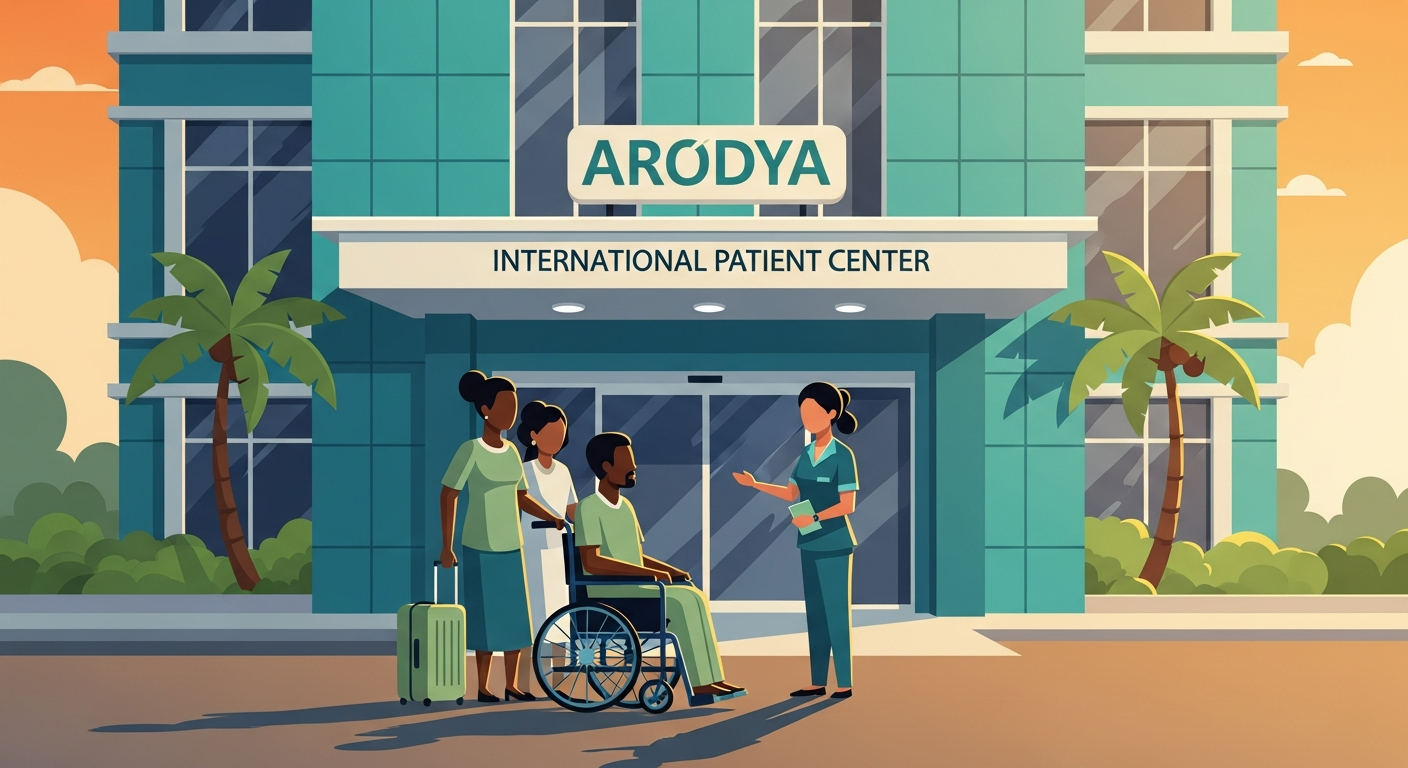
Family accommodation near the hospital is essential - most Indian hospitals have on-site family guesthouses at USD 30–60/night. Arodya helps book accommodation with accessibility features for children with mobility aids.
What to bring:
- All previous physiotherapy assessments and reports
- Video of the child walking (extremely helpful for surgical planning)
- Any prior orthopaedic reports or imaging
- Current medication list
- Orthotics / AFOs the child uses
After Returning Home: Maintaining Gains
Gains from intensive physiotherapy or surgery require ongoing community-based therapy to be maintained. Before discharge from Indian hospitals, therapists provide:
- Home exercise programme with video demonstrations
- Splinting and orthotic recommendations
- Goals for the next 3–6 months
- Instructions for home-country physiotherapists
Arodya connects families with physiotherapy contacts in major African cities and provides the discharge summary in both English and (on request) French or Portuguese.
Start your free consultation for cerebral palsy treatment in India →
Every child with CP deserves access to the best available interventions. India makes that access possible for African families.


