Robotic Surgery in India: Which Hospitals Offer It and Is It Worth the Extra Cost? 2026

Robotic Surgery in India: Is It Worth the Extra Cost?
Robotic surgery has a marketing problem. Hospitals promote it as a premium upgrade, patients hear "robot" and imagine autonomous machines, and the $3,000–8,000 premium over traditional surgery is real. The honest answer to whether it's worth it depends entirely on your diagnosis — for the right procedures, robotic surgery produces measurably better outcomes; for the wrong ones, you're paying for technology that adds no clinical benefit.
India has 80+ da Vinci robotic surgical systems across its major hospital groups, more than any other country in Asia outside Japan (Intuitive Surgical Asia-Pacific Report, 2025). Medanta performs over 1,000 robotic procedures annually. That volume matters — surgeon experience with the robot directly correlates with outcomes.
TL;DR: Robotic surgery in India costs $10,000–22,000 depending on procedure — 20–40% more than traditional surgery at the same hospital. Recovery is 2–4 weeks faster. The premium is justified for prostate cancer, gynecologic cancer, and kidney tumor surgery where precision directly improves outcomes. For hernia repair or routine appendicectomy, it isn't. Experienced robotic surgeons (100+ cases) at high-volume centers is non-negotiable.
How Robotic Surgery Actually Works
The Surgeon Controls Everything
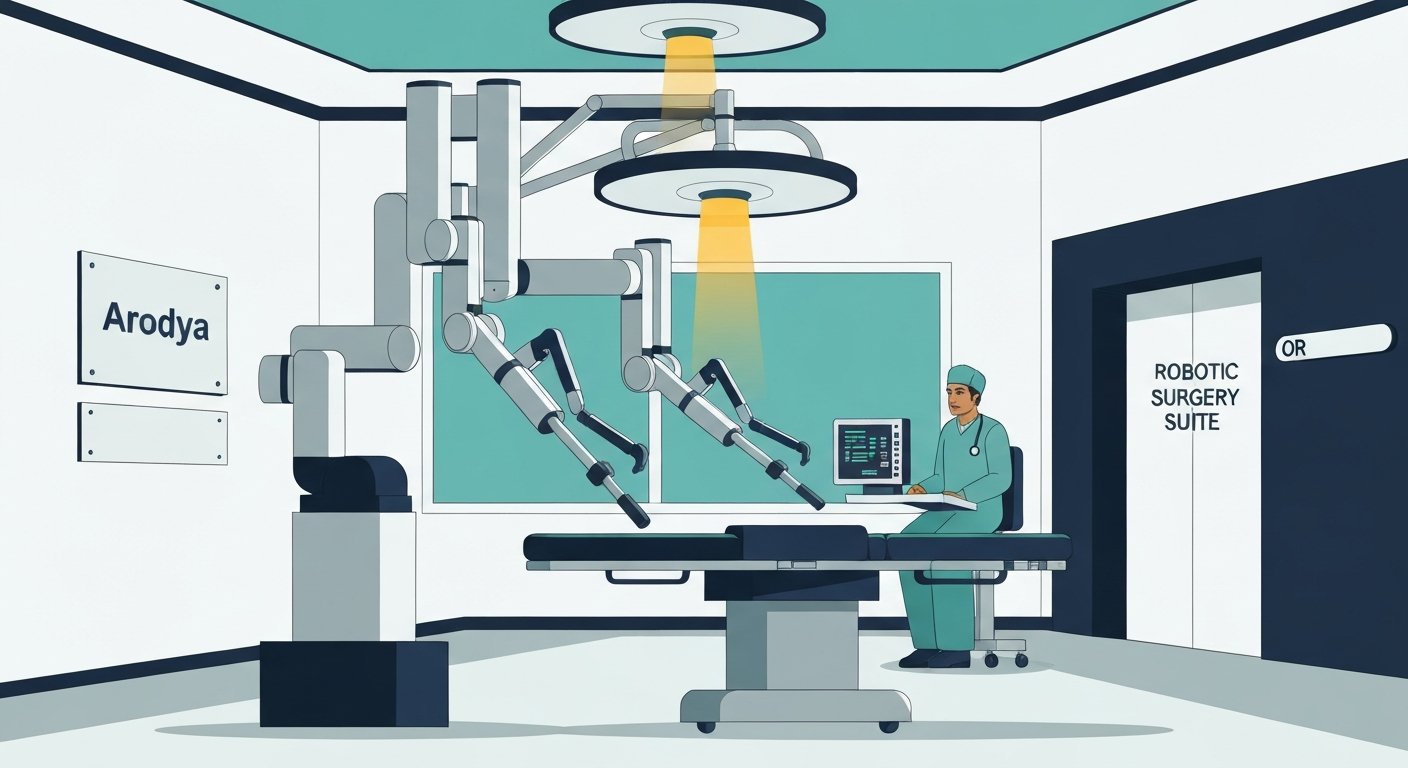
The "robot" in robotic surgery is a precision instrument system, not an autonomous machine. The da Vinci Surgical System — the dominant platform in India and globally — does not make any independent decisions. Every movement of the instrument arms is a 1:1 translation of the surgeon's hand movements, with tremor-filtering and motion scaling applied.
Here's what actually happens during a robotic procedure:
The surgeon sits at a console 2–3 meters from the operating table, viewing a 3D high-definition image magnified 10–15 times. They control two master manipulators with their hands and two foot pedals. Every finger movement translates directly into instrument movement inside the patient's body — scaled down for precision.
The robotic arms hold instruments through 3–4 small incisions (1–2 cm each). The instruments can rotate 540 degrees — a range of motion the human wrist cannot achieve in an open surgical field. This is the core clinical advantage: precise access to anatomical structures that are otherwise difficult to reach without large incisions.
According to a 2024 analysis in the Journal of Robotic Surgery, robotic-assisted surgery reduced intraoperative blood loss by 35% compared to open surgery for prostate and gynecologic procedures, and reduced hospital stay by an average of 1.8 days (Springer, 2024).
Where Robotic Surgery Delivers Real Clinical Benefit
Prostate Cancer Surgery (Radical Prostatectomy)
This is the procedure where robotic surgery has the strongest evidence base. The prostate sits deep in the male pelvis, surrounded by nerves responsible for urinary continence and sexual function. Preserving these nerve bundles during cancer removal is extremely difficult through open surgery — the deep, narrow surgical field limits visibility and precision.
Robotic prostatectomy allows surgeons to visualize and dissect around these nerve bundles with 15x magnification in a space where open surgery offers only direct fingertip feel. Studies consistently show lower rates of urinary incontinence (12–18% vs 25–35%) and better erectile function preservation (45–65% vs 25–40%) with robotic vs open approaches at experienced centers (European Urology, 2024).
India cost: $10,000–14,000 (robotic) vs $7,000–10,000 (open). The $3,000–4,000 premium is worth it for most patients.
Gynecologic Cancer Surgery
For cervical and endometrial cancer, robotic surgery allows precise lymph node dissection with significantly less blood loss and shorter recovery — particularly important for women who need to complete chemotherapy or radiation after surgery. Starting adjuvant therapy 2–3 weeks earlier due to faster surgical recovery has clinical implications for outcomes.
India cost: $9,000–13,000 (robotic) vs $6,000–9,000 (open).
Partial Nephrectomy (Kidney Tumor Removal)
When a kidney tumor can be removed while preserving the remaining kidney tissue, robotic surgery improves the surgeon's ability to achieve clean margins while maximizing kidney preservation. This matters for long-term kidney function — losing an entire kidney when a partial removal was achievable has lifetime consequences.
India cost: $7,000–10,000 (robotic) vs $4,000–6,000 (open).
Colorectal Surgery
Robotic assistance provides meaningful benefit for rectal surgery specifically, where the deep pelvis creates the same visibility challenges as prostate surgery. For sigmoid and right colon procedures, the benefit is less clear — laparoscopic surgery achieves similar results with less setup time.
Where Robotic Surgery Is Not Worth the Premium
Routine Laparoscopic Procedures
Gallbladder removal (cholecystectomy), appendicectomy, and simple hernia repair are already minimally invasive via standard laparoscopy. These procedures are well-standardized, take 30–60 minutes, and have excellent outcomes with conventional instruments. Adding robotic setup time of 20–30 minutes and $3,000–5,000 to the bill adds cost without adding clinical benefit.
A 2024 meta-analysis in Surgical Endoscopy found no significant difference in complication rates, recovery time, or outcomes between robotic and laparoscopic cholecystectomy (Springer, 2024). Don't pay the premium for these procedures.
Emergency Surgery
Speed matters more than precision in emergencies. Open surgery when urgently needed is faster to set up than robotic surgery. Emergency procedures should go through the fastest available pathway, not the most technologically advanced.
Robotic Surgery Costs in India: Procedure Comparison
| Procedure | Traditional Surgery | Robotic Surgery | Extra Cost | Worth It? |
|---|---|---|---|---|
| Radical Prostatectomy | $7,000–10,000 | $10,000–14,000 | $3,000–4,000 | Yes — clear benefit |
| Gynecologic Cancer Surgery | $6,000–9,000 | $9,000–13,000 | $3,000–4,000 | Yes — for cancer staging |
| Partial Nephrectomy | $4,000–6,000 | $7,000–10,000 | $3,000–4,000 | Yes — kidney preservation |
| Colorectal Cancer (rectal) | $8,000–11,000 | $11,000–15,000 | $3,000–4,000 | Yes for rectal, less clear for colon |
| Cardiac Bypass (selected) | $11,000–15,000 | $16,000–22,000 | $5,000–7,000 | Case-by-case |
| Cholecystectomy | $3,000–5,000 | $6,000–9,000 | $3,000–4,000 | No |
| Hernia Repair | $2,500–4,000 | $5,500–8,000 | $3,000–4,000 | No |
| Appendicectomy | $2,000–3,500 | $5,000–7,500 | $3,000–4,000 | No |
Complete Hospital Stay Comparison: Robotic vs Traditional Prostatectomy
Traditional Open Prostatectomy
| Item | Cost |
|---|---|
| Surgery | $7,500 |
| ICU (1 day) | $500 |
| Ward stay (5–6 days) | $1,500 |
| Pain medications | $300 |
| Total hospital | $9,800 |
Robotic Prostatectomy
| Item | Cost |
|---|---|
| Surgery | $11,500 |
| ICU (0 days — directly to ward) | $0 |
| Ward stay (2–3 days) | $600 |
| Pain medications | $100 |
| Total hospital | $12,200 |
Difference: +$2,400 for robotic approach. But: robotic patients typically leave India 4–7 days earlier (shorter recovery stay), saving $200–350 on accommodation. Net premium shrinks to approximately $2,000–2,200 — for meaningfully better nerve preservation and functional outcomes.
Best Hospitals for Robotic Surgery in India
Medanta — The Medicity (Gurugram, Delhi NCR)
India's most comprehensive robotic surgery program. Eight da Vinci systems across specialties, with over 1,000 robotic cases annually. Medanta's urologic oncology team has the highest robotic prostatectomy volume in North India, and volume directly predicts nerve-sparing outcomes.
Procedures: Urology, gynecology, colorectal, general surgery, cardiac
Surgeon volume: Most robotic cases in North India
Cost: Premium (highest of the four groups)
Best for: Prostate cancer, complex gynecologic cases, patients prioritizing maximum surgical expertise
Apollo Hospitals (Delhi, Mumbai, Chennai)
Apollo was among India's earliest adopters of the da Vinci system and performs 500+ robotic cases annually across its network. Their multi-specialty structure means a robotic oncology case with complex cardiac history gets simultaneous management from both teams.
Procedures: All major specialties
Surgeon volume: 500+ annually
Cost: Mid-range to premium
Best for: Patients needing multi-specialty coordination alongside robotic surgery
Max Healthcare (Delhi)
Max offers strong outcomes at the most affordable robotic price point in Delhi. Their urologic and gynecologic robotic teams have developed solid case volumes. For patients whose primary concern is robotic technique at accessible cost, Max is the right choice.
Procedures: Urology, gynecology
Surgeon volume: 300+ annually
Cost: Most affordable among Delhi robotic programs
Best for: Budget-conscious patients where robotic benefit is clear
Fortis Escorts Heart Institute (Delhi)
Fortis has a specialized robotic cardiac surgery program — one of India's strongest. For patients seeking minimally invasive beating-heart bypass surgery or robotic-assisted mitral valve repair, Fortis Escorts is a primary destination.
Procedures: Cardiac, general surgery
Surgeon volume: 100+ cardiac robotic cases annually
Cost: Mid-range to premium
Best for: Cardiac patients specifically seeking robotic approach
What to Ask Before Choosing Robotic Surgery
Before agreeing to a robotic procedure, ask your surgeon directly:
- How many robotic cases of this specific procedure have you personally performed? (Target: 100+ for complex procedures like prostatectomy)
- What is your conversion rate? (Percentage of robotic cases that require conversion to open surgery due to complications)
- What is the clinical evidence that robotic approach improves outcomes for my specific diagnosis?
- What would the difference be if we did this laparoscopically instead of robotically?
An honest surgeon will answer these questions directly. If the response is evasive or relies on general "robotic is better" language without procedure-specific evidence, push further or seek a second opinion.
How a Medical Facilitator Helps with Robotic Surgery Decisions
Matching the right surgical approach to the right surgeon is the core value a facilitator adds for robotic surgery patients. Not every hospital that owns a da Vinci robot has surgeons with sufficient case volume to deliver better outcomes than experienced traditional surgeons.
A facilitator reviews the specific procedure and diagnosis, identifies which hospitals have surgeons with the right case volume, and provides a frank comparison of robotic vs non-robotic options with their respective costs and evidence base. This is particularly important for patients who have been told by one surgeon that they "need" robotic surgery for a procedure where the evidence is mixed.
Contact Arodya with your diagnosis and surgical recommendation. We'll give you an honest assessment of whether robotic surgery is clinically indicated for your case, which surgeon in India has the strongest track record for your specific procedure, and what the complete cost difference looks like.
The Bottom Line
Robotic surgery in India is not a universal premium upgrade — it's a tool that delivers clear benefit for specific procedures and adds cost without benefit for others. The surgeons at Medanta, Apollo, Max, and Fortis who perform robotic procedures have high case volumes and strong outcomes. India's 80+ da Vinci systems make access to experienced robotic surgeons genuinely possible.
If your diagnosis is prostate cancer, gynecologic cancer, or kidney tumor removal, robotic surgery is worth the $3,000–4,000 premium. The evidence for functional outcomes is strong, and Indian robotic surgeons at high-volume centers perform these procedures at a total cost well below what traditional open surgery costs in the USA or Europe.
If your diagnosis is a hernia, gallbladder removal, or appendicitis, there's no clinical reason to pay the robotic premium. The same outcome is achievable with standard laparoscopic surgery at lower cost.
The decision is always procedure-specific. Bring your diagnosis to the conversation.