A Real Patient Journey to India for Heart Surgery: Step-by-Step Case Study 2026
This article presents a composite case study based on the types of journeys facilitated through the India medical tourism corridor. "Emeka" is a fictional name representing a composite patient. Details have been drawn from typical outcomes and processes associated with triple bypass surgery at tier-one Indian hospitals. This case study is illustrative and educational — it does not constitute a guarantee of medical outcomes, timelines, or costs for any individual patient.
Numbers and hospital comparisons tell one kind of story about medical travel to India. Cost savings, accreditation certificates, and surgeon credentials are all important — but they do not prepare you for the lived experience of actually doing this: the paperwork, the waiting, the moments of fear, the small victories, and the long flight home when it is finally over.
This is why patient case studies matter. When a prospective patient from Nigeria or Kenya reads an account of someone who has already walked this path — step by step, from diagnosis to recovery — they get something that no comparison table can provide: a realistic map of the journey ahead.
The following is the story of Emeka.
Background: Emeka's Diagnosis
Emeka is fifty-eight years old, a retired civil engineer from Port Harcourt, Nigeria. He has managed hypertension for twelve years and has been borderline diabetic for the past four. In early 2026, following several weeks of chest tightness and shortness of breath on mild exertion, his cardiologist in Lagos ordered a coronary angiogram. The results were definitive: three-vessel coronary artery disease, with significant blockages in the left anterior descending artery and two other major vessels. His cardiologist's recommendation was clear — coronary artery bypass grafting (CABG), commonly known as triple bypass surgery.
The cost of the procedure in Nigeria was quoted at between NGN 15 million and NGN 22 million (approximately USD 9,000–14,000 at prevailing exchange rates at the time of writing) at private hospitals, with long waiting times and limited availability of experienced cardiac surgery teams. His cardiologist — who had trained in India and maintained professional contacts there — mentioned that the same procedure was performed at higher volumes and arguably higher expertise at Indian hospitals, for similar or lower all-inclusive costs.
Emeka began researching India.
Step 1: The Decision
The research phase lasted approximately three weeks. Emeka and his wife, Ngozi, read extensively about Indian cardiac surgery hospitals, spoke with two friends who had visited India for unrelated medical procedures, and joined an online forum for Nigerian medical tourists. The information was often contradictory and occasionally alarming — one forum post claimed that hospitals overcharged foreigners systematically; another described a seamless experience at a hospital in Delhi.
The breakthrough came when Emeka's cardiologist provided a direct referral to a facilitator — a company that helps international patients navigate the Indian medical system. His cardiologist had worked with them before and trusted their process. Emeka made contact.
Within twenty-four hours, a case coordinator responded and asked for Emeka's medical records. Within forty-eight hours of receiving the records, the coordinator had identified two recommended hospitals — Medanta in Gurugram (near Delhi) and Narayana Health in Bengaluru — based on Emeka's specific diagnosis, his cardiologist's notes, and the volume of CABG procedures performed at each centre. For a detailed comparison of India's top cardiac hospitals, see our guide to the best cardiac surgery hospitals for international patients.
The facilitator explained the process from that point clearly: remote consultation, written cost estimate, visa application, travel, surgery, recovery, discharge. Nothing would be booked until Emeka had spoken directly to the surgeon and received a written cost estimate he was satisfied with.
Step 2: Remote Consultation
Emeka submitted his complete medical records electronically: the coronary angiogram report and images (on CD, scanned to high-resolution PDF), his echocardiogram report, three months of blood tests, his current medication list (amlodipine, atorvastatin, aspirin, metformin), and a summary letter from his Lagos cardiologist.
Seven days after submitting his records, a video consultation was arranged with a senior cardiac surgeon at Medanta — a cardiothoracic surgery veteran with more than twenty years of experience and over four thousand bypass surgeries to his record. The consultation lasted forty-five minutes. The surgeon had reviewed all of Emeka's records in advance. He explained the anatomy of the blockages in plain language using digital imaging, described the planned surgical approach, discussed the expected hospital stay and recovery period, and answered Emeka's and Ngozi's questions directly.
Three days after the consultation, the facilitator sent a written cost estimate from Medanta's international patient department. The estimate was itemised:
- Cardiac surgeon's fee: included in package
- Anaesthesia: included
- Theatre charges: included
- ICU stay (estimated five days): included
- General ward (estimated four days): included
- Standard medications: included
- Pre-operative investigations: estimated cost provided separately (ECG, echo, blood panel: approximately USD 300–400)
- All-inclusive package total: USD 8,200–9,500 (range reflecting ICU duration variability)
The estimate explicitly stated what was not included: international flights, accommodation outside hospital, personal expenses, and any medications required beyond the standard post-operative protocol. It also contained a contingency clause noting that complications requiring re-operation or significantly extended ICU stays would be billed separately.
Emeka and Ngozi reviewed the estimate over two evenings, asked three follow-up questions by email (all answered within a day), and confirmed their commitment to proceed at Medanta.
Step 3: Visa and Travel Preparation
The facilitator provided a formal invitation letter from Medanta on hospital letterhead, addressed to the Indian High Commission in Abuja. This letter is a required document for the Indian medical visa (MED category) application and explains the nature of the medical condition, the proposed treatment, the estimated duration of stay, and the hospital's guarantee to treat the patient.
Emeka's visa application required: his valid Nigerian passport (valid for at least six months beyond intended stay), completed visa application form, two passport photographs, the hospital invitation letter, a letter from his Lagos cardiologist confirming the diagnosis and need for treatment abroad, evidence of financial means (last three months of bank statements), and a copy of the written cost estimate from Medanta. For a full breakdown of the Indian medical visa process, see our India medical visa guide for international patients.
He submitted his application at the Indian High Commission in Abuja in person. Processing took eleven working days. The visa granted was a five-year multiple-entry medical visa, valid for stays of up to six months per visit.
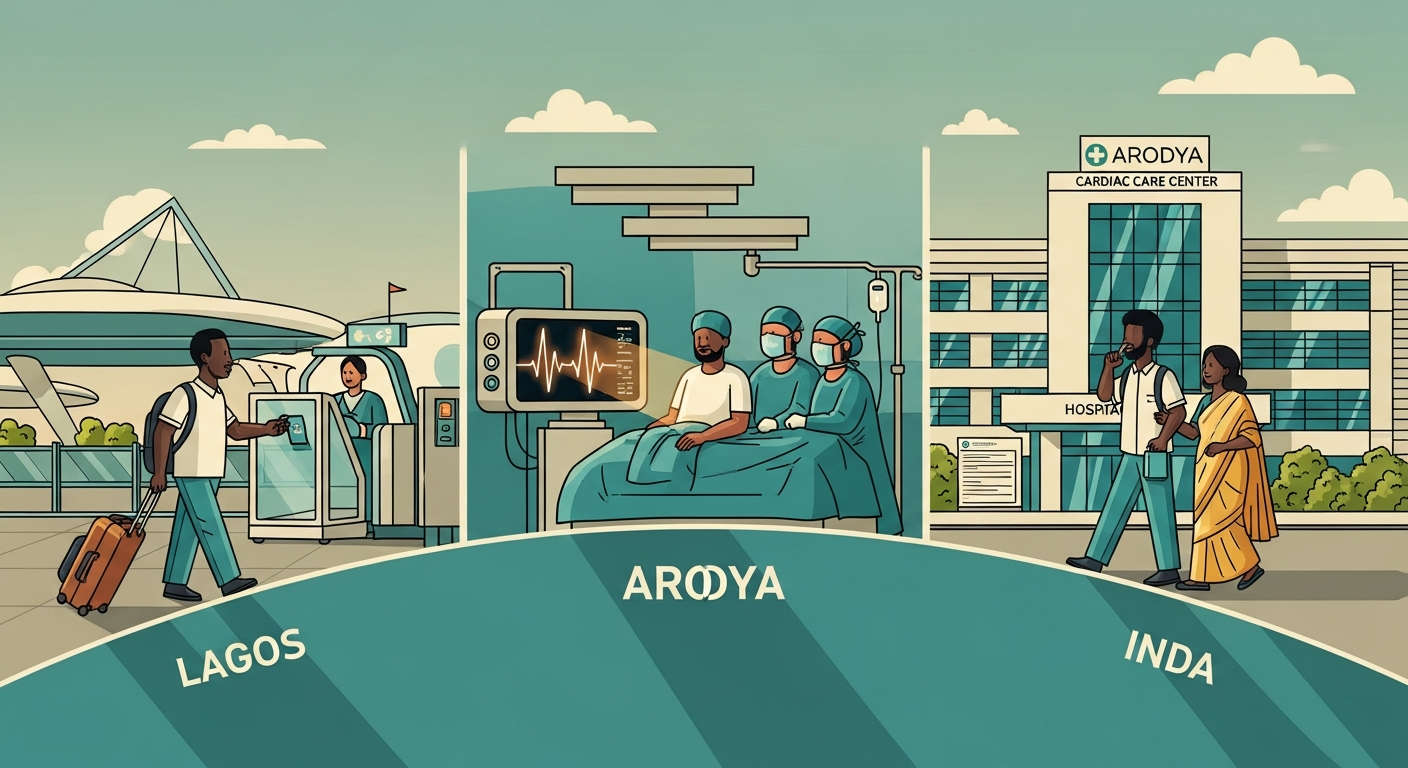
During this period, Emeka and Ngozi also arranged: travel insurance with specific medical travel coverage (including complications arising from the planned surgery), international flight bookings (Lagos to Delhi via Dubai — approximately twelve hours total travel time), and accommodation at a hospital-endorsed serviced apartment four kilometres from Medanta, booked for a thirty-day initial period with flexibility to extend.
Total pre-departure preparation time from first contact with the facilitator to arrival in Delhi: thirty-four days.
Step 4: Arrival in India
Emeka and Ngozi landed at Indira Gandhi International Airport, Delhi, at six in the morning after an overnight flight. They were met at the arrivals gate by a driver organised by the facilitator, holding a sign with Emeka's name. The drive to their serviced apartment in Gurugram took forty minutes in early morning traffic.
The apartment was a furnished two-bedroom unit with a full kitchen, washing machine, and high-speed internet. The facilitator's on-ground coordinator — a local woman named Priya who would remain their point of contact throughout the stay — met them at the apartment, helped them settle in, and provided a briefing: the hospital's contact numbers, their appointment schedule for the next two days, and the local emergency number.
Emeka's first impression of the area around Medanta: organised, urban, busy. The hospital campus was large and modern, visible from the apartment building's roof. A pharmacy, two restaurants, and a convenience store were within five minutes on foot.
Step 5: Pre-Surgery Workup
Pre-operative testing began the following morning at Medanta's international patient department. Over two days, Emeka underwent:
- Twelve-lead ECG
- Transthoracic echocardiogram (repeat, performed in Delhi to verify the Lagos imaging)
- Complete blood count, metabolic panel, coagulation screen, renal function, liver function, HbA1c, lipid panel
- Chest X-ray
- Assessment by the anaesthesia team (review of Emeka's medications, discussion of anaesthesia approach, allergy check)
- Lung function tests
- Dental clearance (important before cardiac surgery to rule out any active dental infection that could seed the bloodstream)
All results were reviewed by the cardiac surgery team. Emeka's diabetes and hypertension were both noted as managed and stable — not contraindications to surgery. The surgeon confirmed the operative plan: off-pump coronary artery bypass grafting using the left internal mammary artery and saphenous vein grafts.
Emeka was admitted to the hospital on the evening of the second day. Ngozi was shown the family waiting area and given a contact number for the nursing station.
Step 6: Surgery Day
The surgery was scheduled for six-thirty in the morning. Emeka was taken to the pre-operative area at five-thirty for final IV line placement, anaesthesia team confirmation, and consent signing.
For Ngozi, the morning in the family waiting area was the hardest part of the entire journey. The surgery lasted approximately four and a half hours. The cardiac surgery team completed three bypass grafts — left internal mammary artery to the left anterior descending artery, and saphenous vein grafts to the two other blocked vessels.
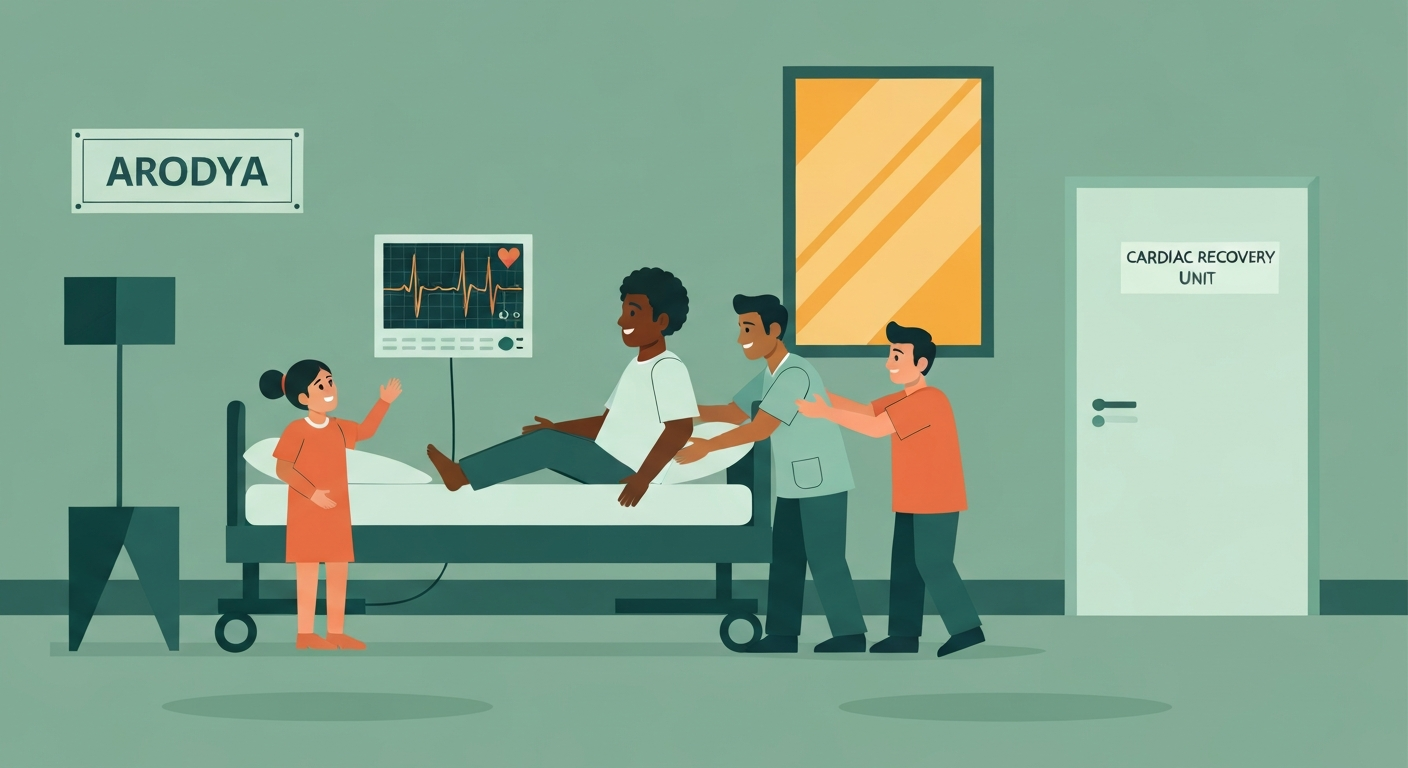
At midday, the surgical coordinator came to the waiting area and told Ngozi that the procedure had been completed successfully and Emeka was in the cardiac ICU, awake, and being monitored. She was allowed a brief ten-minute visit at two in the afternoon. Emeka was connected to a ventilator (removed the following morning), had drainage tubes from his chest, and was heavily sedated but responsive.
Step 7: ICU and Ward Recovery
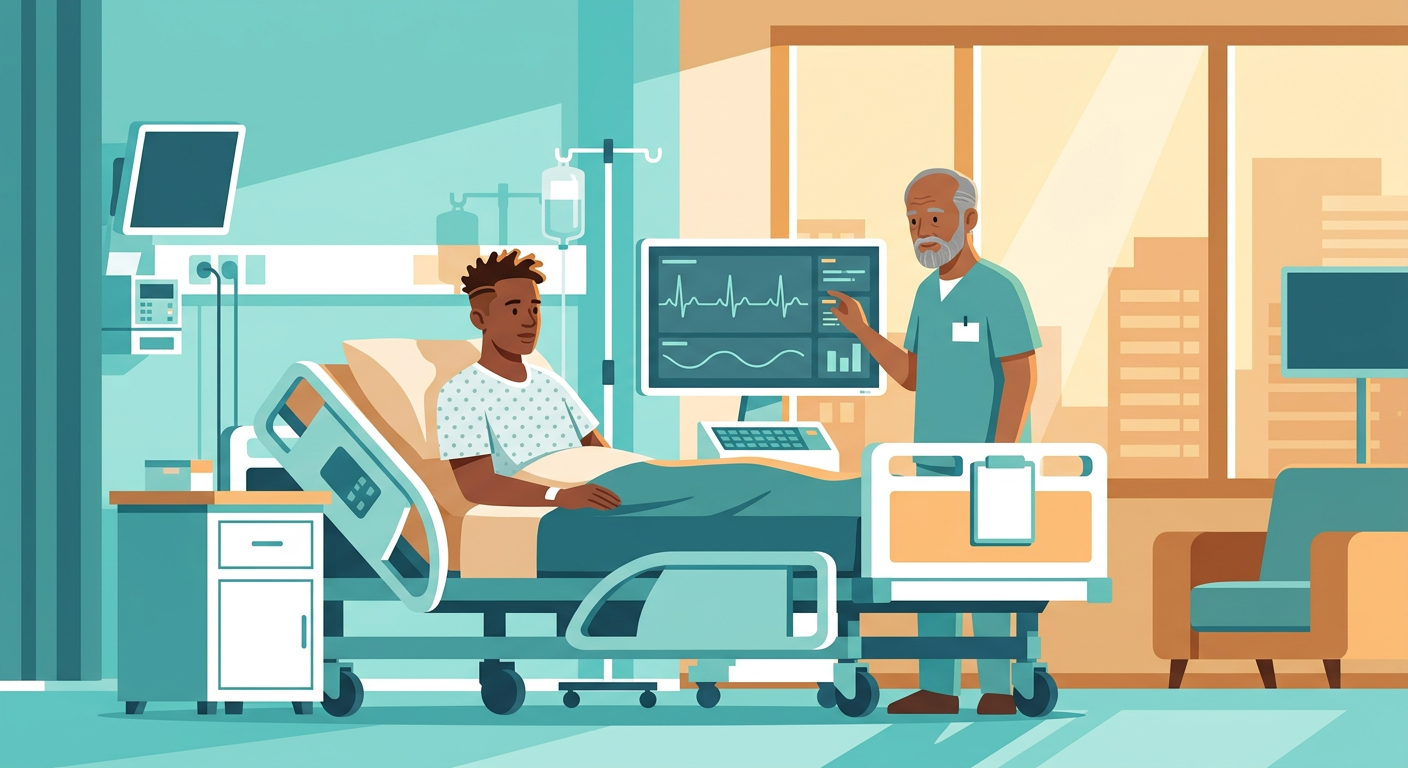
The ICU phase lasted six days — slightly longer than the estimated five, due to a period of atrial fibrillation (irregular heartbeat) that is a known and manageable complication of cardiac surgery, occurring in approximately twenty to thirty percent of bypass patients. It resolved fully with medication and did not require any additional intervention.
Milestones that Emeka and Ngozi tracked day by day:
- Day 1 post-op: Ventilator removed in the morning, able to speak. Sips of water permitted.
- Day 2: Chest drains removed. Clear liquid diet started. Sitting upright with nursing support.
- Day 3: Atrial fibrillation detected, rate-control medication commenced. Activity restricted.
- Day 4: Heart rhythm stable. Walking ten steps with physiotherapist support.
- Day 5: Breathing exercises, walking thirty steps. Soft diet tolerated.
- Day 6: Transferred to the cardiac ward (general room). Ngozi able to stay longer during the day.
- Day 7–10 (ward): Daily physiotherapy, wound assessment, medication adjustment, increasing mobility. Sutures assessed and partially removed.
On Day 10, the surgeon conducted a ward round review and told Emeka he was progressing well. Discharge was planned for Day 12, contingent on wound assessment.
Step 8: Discharge and Post-Operative Recovery in India
Emeka was discharged from Medanta on the twelfth post-operative day. He received:
- A comprehensive discharge summary (ten pages, detailing the operative report, ICU course, medication changes, and follow-up instructions)
- A complete medication kit for thirty days: aspirin, clopidogrel, beta-blocker, statin, ACE inhibitor, and proton pump inhibitor
- A wound care protocol with specific instructions for cleaning and monitoring the sternal incision and leg (where the saphenous vein was harvested)
- Dates for two follow-up clinic appointments: Day 21 and Day 28 post-surgery, both at Medanta
- A written sternal precautions sheet: no lifting over two kilograms, no pushing or pulling with the arms, no driving for six weeks
The ten days in the serviced apartment before the first follow-up were manageable. Ngozi had settled into a routine: cooking simple meals (boiled rice, dal, steamed vegetables, eggs — the hospital dietitian had provided a dietary sheet), monitoring Emeka's wound twice daily, and accompanying him for thirty-minute slow walks each morning and evening around the apartment complex. The facilitator's coordinator, Priya, checked in by phone every two days and attended the Day 21 follow-up clinic visit with them.
At the Day 21 follow-up, the surgeon confirmed: sternal wound healing well, no signs of infection, lung sounds clear, blood pressure well-controlled, heart rhythm stable. Remaining sutures were removed. Emeka was cleared for a follow-up in seven days prior to potential discharge to fly.
At the Day 28 visit, the surgeon confirmed that Emeka was clinically stable and could be cleared to fly home after the thirty-day mark. He was provided with a fit-to-fly medical certificate, a copy of his operative report for his home cardiologist, and a telemedicine follow-up schedule (video calls with the Medanta cardiac team at six weeks, three months, and six months post-surgery).
Step 9: Flying Home
Emeka and Ngozi flew home on Day 32 post-surgery — two days after the official clearance. The return flight was the same routing: Delhi to Dubai to Lagos, twelve hours total.
Precautions for the flight: compression stockings worn throughout, aisle seat booked, both anticoagulant medication (aspirin and clopidogrel) taken as scheduled, one walk up and down the aisle every ninety minutes, no alcohol, three litres of water during the journey. Emeka carried a small medical kit in his hand luggage containing his complete medication list, his discharge summary (in case of any in-flight or airport medical event), and the Medanta emergency contact number.
The flight was uneventful.
Step 10: Follow-Up Care Back Home
Within three days of returning to Port Harcourt, Emeka visited his original cardiologist in Lagos, taking the full Medanta discharge documentation. His cardiologist reviewed the operative report and medication protocol and confirmed he would manage Emeka's ongoing care using the Indian team's protocol as the baseline. He ordered local blood tests and an ECG.
At six weeks post-surgery, Emeka attended a telemedicine consultation with his Medanta cardiac surgeon — a twenty-minute video call in which the surgeon reviewed the Lagos cardiologist's most recent reports and confirmed that recovery was progressing as expected. Sternal bone healing on track. Medications to continue unchanged.
At three months, Emeka's local cardiologist conducted a stress echocardiogram confirming excellent graft patency. He was given clearance to begin a supervised exercise programme.
Total Cost Breakdown
The following figures are illustrative based on Emeka's composite case and typical costs for triple bypass surgery at a tier-one Indian hospital in 2026. Individual costs will vary based on specific hospital, room category, duration of ICU stay, complications, and personal expenses.
| Item | Approximate Cost (USD) |
|---|---|
| Triple bypass surgery package (Medanta) | 9,100 |
| Pre-operative investigations | 380 |
| Medications during hospital stay (included) | — |
| Post-discharge medications (30-day supply) | 210 |
| Return flights (Lagos–Dubai–Delhi, two adults) | 1,800 |
| Accommodation (32 nights, serviced apartment) | 1,280 |
| Airport transfers and local transport | 190 |
| Meals and groceries | 420 |
| Travel and medical insurance (both persons) | 380 |
| Facilitator coordination fee | 600 |
| Miscellaneous (pharmacy, phone, communication) | 220 |
| Total | 14,580 |
For comparison: the same procedure at a private hospital in the United Kingdom costs approximately USD 40,000–60,000. In the United States, comparable all-inclusive CABG costs range from USD 70,000 to over USD 100,000. Emeka's total all-in expenditure — including two people's flights, thirty-two nights of accommodation, meals, insurance, and facilitator fees — was approximately USD 14,580. The surgery itself was a fraction of what it would have cost in a Western country. For a deeper dive into pricing, see our heart bypass surgery cost guide for India in 2026.
What Emeka Wishes He Had Known
When asked, several months after returning home, what he would tell someone else considering this journey, Emeka's answers were consistent:
"I wish I had started the process a week earlier. The visa took longer than I expected and we felt rushed at the end." — This is the most common piece of advice from experienced medical tourists: start your visa application the moment you have a hospital letter.
"I wish I had brought more of my home food preferences written down for the hospital dietitian. I didn't know I could ask for modifications." — International patient departments at major Indian hospitals are genuinely flexible about dietary requests. They simply need to know in advance.
"I was more scared of the journey than the surgery. The journey turned out to be the easier part." — Fear of the logistics — the distance, the unfamiliarity, the language — is common. In practice, with a good facilitator, the logistics are managed. The surgery is managed by world-class surgeons. What requires the most from the patient is patience during recovery.
"I should have talked to my Lagos cardiologist sooner. He was the one who gave me the referral. I wasted three weeks trying to figure it out by myself first." — A referral or professional connection dramatically shortens the research and selection phase. Your home doctor's professional network is a resource worth using.
If you or someone in your family is facing a major cardiac procedure and considering India as a destination, the Arodya team can walk you through every step of the journey — from reviewing your medical records and identifying the right hospital and surgeon for your specific case, to supporting your visa application, arranging accommodation, and staying with you through follow-up after you return home. Submit your case to us and we will help you build a clear, personalised plan before you commit to anything.