Cricket & Football Sports Injuries in India: IPL Season Orthopaedics Guide 2026

Cricket & Football Sports Injuries in India: IPL Season Orthopaedics Guide 2026
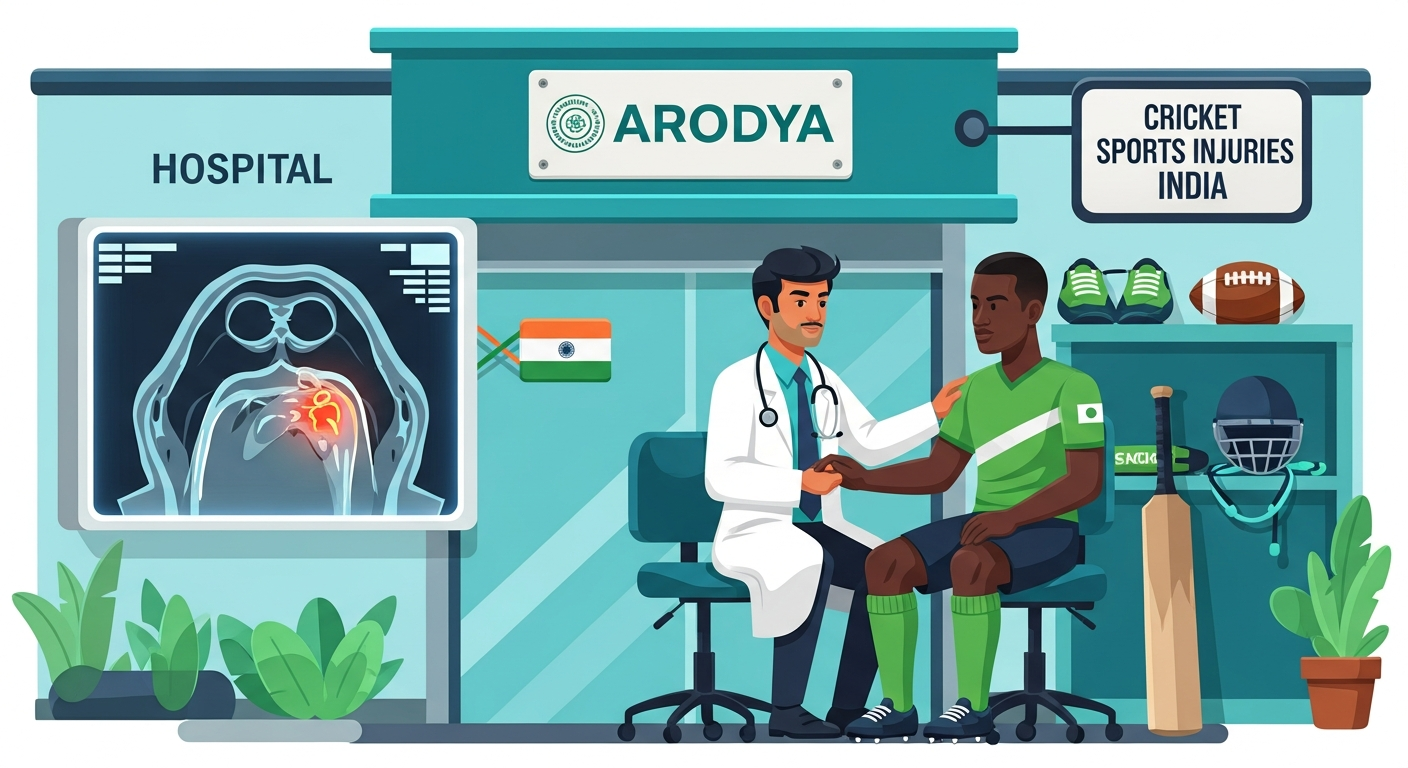
Every April and May, India's Indian Premier League (IPL) draws the world's attention to one of sport's most demanding competitions. Cricketers from across the globe — including players from Zimbabwe, South Africa, Kenya, Nigeria, and other African nations — put their bodies through extraordinary physical stress: explosive bowling actions, diving fielding efforts, aggressive batting, and the cumulative load of playing every two to three days across a two-month season.
The sports medicine infrastructure that supports IPL teams — at centres like Kokilaben Hospital in Mumbai, official medical partner of the Mumbai Indians, and at the Sports Injury Centre in Delhi — is among the best in the world. And critically, these same world-class facilities are available to international patients, including African athletes and sports enthusiasts seeking treatment for injuries that their local facilities cannot address.
This guide covers the most common cricket and football sports injuries, the treatment options available in India, costs, and how to access India's sports medicine excellence.
India's Sports Medicine Credentials
India's sports medicine capabilities have been built and tested by the demands of cricket — one of the world's most physically demanding sports at elite level. Key credentials:
IPL team medical partnerships: Every IPL franchise has formal medical partnerships with leading hospitals. These partnerships have driven investment in sports medicine infrastructure, MRI technology, arthroscopic surgery suites, and rehabilitation gyms to world standards.
International exposure: Indian sports medicine doctors regularly attend ISAKOS (International Society of Arthroscopy, Knee Surgery and Orthopaedic Sports Medicine) and other international sports medicine conferences. Many hold fellowships from the USA, UK, or Australia.
Volume and experience: India's population of 1.4 billion includes hundreds of millions of cricket and football players. Indian sports surgeons accumulate enormous case volumes.
Affordable excellence: The same quality available in London or New York is available in Delhi or Mumbai at 65–75% lower cost.
Common Cricket Injuries Treated in India
Rotator Cuff Tears (Shoulder)
The rotator cuff — a group of four muscles and their tendons that stabilise the shoulder joint — is among the most commonly injured structures in cricketers. Fast bowlers place extraordinary loads on the bowling shoulder with every delivery, and fielders can suffer acute rotator cuff tears diving or throwing.
Types: Partial-thickness tear (conservative management or arthroscopic repair), full-thickness tear (requires surgical repair).
Treatment in India: Arthroscopic rotator cuff repair — a keyhole procedure under general anaesthesia where the surgeon repairs the torn tendon to the bone using suture anchors. Hospital stay one to two days.
Costs:
- Arthroscopic rotator cuff repair: $5,000–9,000 (India) vs $25,000–40,000 (USA)
- MRI shoulder: $100–200 (India) vs $1,500–3,000 (USA)
Recovery: Four to six months for return to bowling or throwing.
Stress Fractures of the Lumbar Spine (Spondylolysis)
Young fast bowlers are particularly susceptible to lumbar stress fractures (spondylolysis of the pars interarticularis) due to the repetitive hyperextension and rotation of the bowling action. These present as persistent low back pain aggravated by bowling.
Diagnosis: MRI and CT scan of the lumbar spine.
Treatment: Conservative (rest, physiotherapy, spinal bracing) for most cases. Surgical repair (pars repair with screws) for high-level athletes who fail conservative management after three to six months.
Costs: Spinal bracing plus physiotherapy: $500–1,500. Pars repair surgery: $7,000–12,000.
Side Strain (Oblique Muscle Tear)
Side strains — tears of the internal oblique muscle where it attaches to the lower ribs — are a classic cricket fast bowler injury. They cause sudden sharp pain in the flank during delivery.
Treatment: Conservative — rest, physiotherapy, graded return to bowling. In severe tears, platelet-rich plasma (PRP) injection accelerates healing.
Costs: PRP injection: $300–500 (India) vs $1,000–2,000 (USA).
Hamstring Strains
Explosive running — whether sprinting between wickets, chasing balls in the outfield, or the fast bowler's run-up — makes hamstring injuries extremely common in cricket.
Treatment: Grade 1–2 strains managed with physiotherapy, eccentric strengthening (Nordic hamstring exercises), and often PRP injection for faster return to play. Grade 3 (complete rupture) occasionally requires surgical repair.
Costs: PRP injection for hamstring: $300–500 (India). Physiotherapy package (ten to fifteen sessions): $200–400 (India).
Common Football (Soccer) Injuries Treated in India
African football is producing increasingly elite players — the Africa Cup of Nations fields world-class squads — and the physical demands on African footballers, from Premier League players to national league professionals, are enormous.
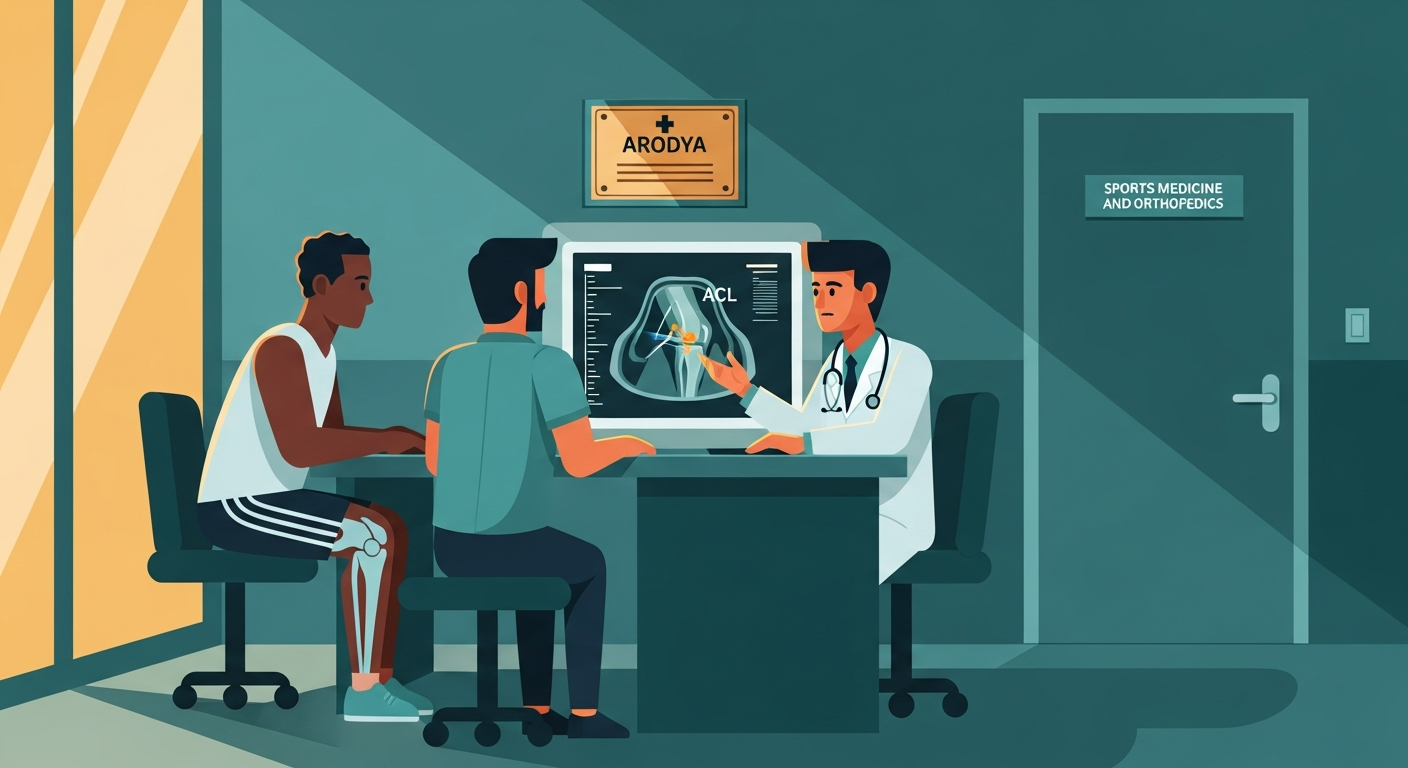
ACL (Anterior Cruciate Ligament) Reconstruction
ACL tears are among the most feared injuries in football, typically occurring during pivoting or landing movements. They require surgical reconstruction and six to nine months of rehabilitation.
India's approach: Arthroscopic ACL reconstruction using autograft (hamstring tendon or patellar tendon from the patient's own knee) or allograft (cadaver tendon). India's orthopaedic sports surgery teams are highly experienced in ACL reconstruction.
Costs:
- ACL reconstruction with hamstring autograft: $4,000–7,000 (India) vs $20,000–35,000 (USA)
- Rehabilitation programme (in India, first four to six weeks): $400–800
Recovery: Six to nine months for return to competitive football.
Ankle Ligament Reconstruction (Chronic Ankle Instability)
Repeated ankle sprains — common on uneven African pitches — can cause chronic ankle ligament laxity. Arthroscopic or open Brostrom-Gould ligament reconstruction restores stability for athletes who have failed physiotherapy-based management.
Costs: Ankle ligament reconstruction: $4,000–6,500 (India) vs $15,000–25,000 (USA).
Meniscus Repair (Knee)
Twisting knee injuries can tear the meniscus — the C-shaped cartilage cushion in the knee. Arthroscopic meniscus repair (for repairable tears) or partial meniscectomy (for irreparable tears) is performed as a day procedure.
Costs: Arthroscopic knee surgery: $3,000–5,500 (India) vs $15,000–25,000 (USA).
PRP Therapy: Biological Healing for Sports Injuries
Platelet-rich plasma (PRP) therapy has become central to sports injury management for conditions where tissue healing is slow. PRP uses the patient's own growth factors — concentrated from their blood — to stimulate repair.
Applications in sports injuries:
- Partial rotator cuff tears
- Tennis elbow / golfer's elbow
- Patellar tendinopathy (jumper's knee)
- Achilles tendinopathy
- Hamstring tendon injuries
- Plantar fasciitis
Procedure: 30 minutes outpatient. Blood is drawn, centrifuged to concentrate platelets, then injected under ultrasound guidance into the injured tissue.
Costs in India: $300–600 per injection session vs $1,000–2,500 in the USA.
Multiple sessions (two to three) are often required for optimal results, spaced four to six weeks apart.
Rehabilitation After Sports Surgery in India
India's major sports medicine centres have fully equipped physiotherapy departments with sports-specific rehabilitation protocols. A typical two to three week stay in India post-surgery includes:
- In-hospital physiotherapy from day one post-operation
- Progressive range-of-motion and strengthening programmes
- Hydrotherapy where available
- A detailed home exercise programme for continuation on return to Africa
Arodya can also arrange telemedicine physiotherapy supervision so your rehabilitation is monitored by the Indian sports physio even after you return home.
The Role of Sports Nutrition in Recovery
Elite sports medicine centres in India understand that recovery is not just about physiotherapy — nutrition plays an equally critical role. Sports medicine dietitians at major centres can design personalised recovery nutrition plans covering:
- Protein timing: Adequate protein intake (1.6–2.2g/kg body weight per day) supports muscle repair after surgery or injury
- Anti-inflammatory nutrition: Foods rich in omega-3 fatty acids (fish, flaxseed), antioxidants (berries, leafy vegetables), and curcumin (turmeric — a traditional Indian ingredient with well-documented anti-inflammatory properties) support recovery
- Creatine supplementation: Evidence supports creatine use during rehabilitation to preserve muscle mass during immobilisation
- Micronutrient optimisation: Vitamin D, zinc, and collagen precursors (vitamin C + glycine) support tendon and ligament healing
A nutrition plan from an Indian sports dietitian can be continued on your return to Africa with locally available foods — this extends the benefit of your India treatment journey long after you fly home.
Preventing Re-injury: Return to Sport Criteria
One of the most important roles of India's sports medicine teams is ensuring that athletes do not return to sport too early after injury — one of the most common causes of re-injury. Criteria for safe return to sport after ACL reconstruction include:
- Quadriceps strength symmetry index >90% compared to the uninjured leg (tested by isokinetic dynamometry)
- Hop test symmetry >90%
- Psychological readiness (assessed by the ACL-RSI questionnaire)
- Completion of at least six months of progressive rehabilitation
These objective criteria — not just the calendar date — should guide return to competitive play.
Planning Your Sports Medicine Trip to India
Documentation to bring: MRI scans (on CD or digitally), any previous physiotherapy assessment reports, details of the injury mechanism and timeline, list of current medications.
Ideal timing: For elective sports injuries, the off-season or between major competitions. For acute injuries (recent ACL tear, acute tendon rupture), the sooner surgery is performed, the better the outcome.
Length of stay: Day procedures (PRP, arthroscopic débridement) may require only three to five days in India. Major reconstruction surgery (ACL, rotator cuff) typically requires two to three weeks for surgery and early rehabilitation.
To discuss your sports injury with Arodya's coordination team and receive a referral to an appropriate Indian sports medicine specialist, start your enquiry with Arodya. We match athletes with surgeons who understand the specific demands of their sport.
For information on recovery accommodation near Indian hospitals, see our budget medical trip guide. India's IPL-grade sports medicine is available to you — not just to professional cricketers.