India's $30B Healthcare Investment 2026: What It Means for International Patients
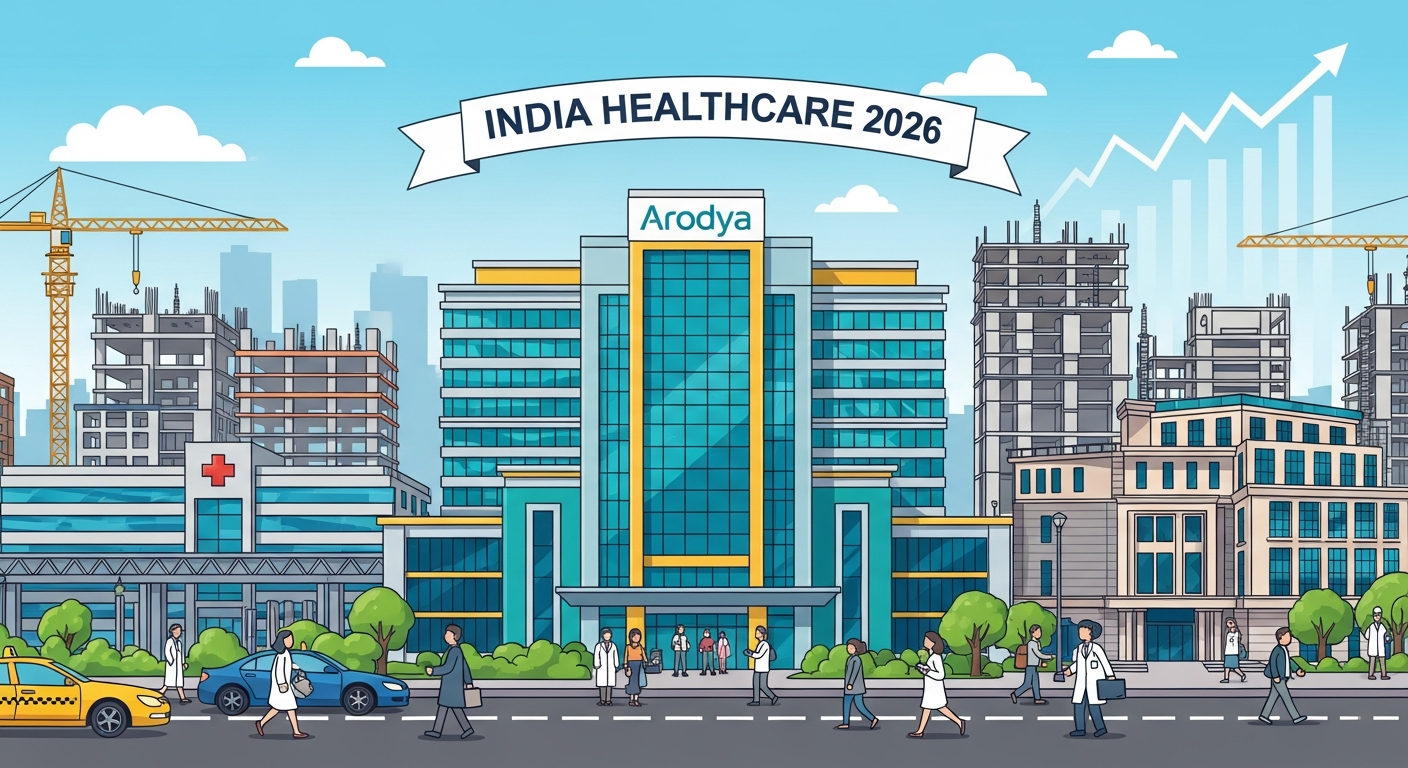

India's healthcare sector has undergone a transformation in the past five years that is only now becoming fully visible to international patients. A confluence of government policy, private capital, technology investment, and medical device manufacturing incentives has produced the largest expansion of healthcare infrastructure in India's history. For African patients considering India for treatment, this investment translates into shorter waiting times, newer equipment, more specialists, and quality standards that now rival the best in the world.
TL;DR: India's healthcare sector attracted over USD 30 billion in investment between 2023 and 2026. New hospitals, AI-assisted diagnostics, medical device manufacturing, and expanded JCI accreditation are directly benefiting international patients. More capacity means better access and competitive pricing.
The Scale of India's Healthcare Investment
Government Programmes
Ayushman Bharat — Pradhan Mantri Jan Arogya Yojana (PM-JAY): India's flagship universal health coverage programme covers 500 million citizens. Its expansion has driven hospital infrastructure investment in tier-2 and tier-3 cities, creating a broader network of quality hospitals.
National Digital Health Mission (NDHM): India's digital health ID system now links patient records across hospitals and states. International patients using empanelled hospitals benefit from standardised digital records accessible across the care system.
Production Linked Incentive (PLI) for Medical Devices: This scheme incentivised domestic manufacturing of medical devices including imaging equipment, implants, and diagnostics. The result is lower equipment costs, reduced dependence on imports, and more competitive procedure pricing.
Private Hospital Expansion
India's major hospital chains expanded aggressively during 2023–2026:
| Hospital Group | New Beds (2023–2026) | New Cities Entered |
|---|---|---|
| Apollo Hospitals | 8,000+ | 12 |
| Fortis Healthcare | 4,500+ | 8 |
| Max Healthcare | 3,500+ | 6 |
| Medanta | 2,000+ | 5 |
| Narayana Health | 5,000+ | 15 |
This expansion has added over 500,000 new hospital beds nationally. International patient departments have been established at many new facilities, with English-speaking coordinators, translation services, and telemedicine infrastructure from day one.
Technology Adoption: What This Means for Patients
AI-Assisted Diagnostics
India's healthcare AI sector attracted over USD 2 billion in investment in 2025 alone. Key developments for international patients:
Radiology AI: AI-assisted chest X-ray and CT analysis is deployed at major hospital chains, flagging abnormalities with higher sensitivity than standalone human reading. TB screening, lung nodule detection, and fracture identification are enhanced.
Pathology AI: Digital pathology with AI-assisted tumour grading is available at leading cancer centres in India. This reduces pathology turnaround time and ensures consistency across slides.
Genomics: Next-generation sequencing for cancer biomarker testing (EGFR, ALK, BRCA, MSI) is available at accredited Indian cancer centres for USD 300–800 — compared to USD 3,000–5,000 in Western markets. This enables precision oncology treatment matching.
Robotic Surgery
The number of robotic surgery platforms in Indian hospitals tripled between 2022 and 2026. The Da Vinci Surgical System is now present at over 80 Indian hospitals. SSI Mantra, India's domestically manufactured surgical robot, has been deployed at multiple government and private hospitals from 2025. Robotic surgery availability means minimally invasive options for prostatectomy, hysterectomy, nephrectomy, cardiac, and thoracic surgery are accessible to international patients.
Telemedicine Infrastructure
India's telemedicine regulatory framework (Telemedicine Practice Guidelines 2020, updated 2024) formalised what many hospitals were already doing. International patients can now conduct pre-consultation, mid-treatment, and post-discharge consultations via regulated telemedicine channels. This enables Arodya's model of care coordination across borders — Indian specialists remain accessible to patients after they return home.
Medical Device Manufacturing: Cost Implications
India's PLI scheme for medical devices has produced tangible cost reductions:
- Orthopaedic implants: Indian-manufactured hip and knee implant systems now compete directly with imported brands at 30–40% lower cost, with equivalent clinical performance data
- Coronary stents: India has been manufacturing world-class coronary stents domestically since 2019. Drug-eluting stents cost USD 200–400 in India versus USD 2,500–4,000 in the USA
- Cardiac valves: Indian-manufactured tissue valves are now available, reducing prosthetic heart valve costs
- Imaging equipment: Domestic CT and MRI manufacturing reduces scanner acquisition costs, enabling more facilities to offer high-quality imaging
New JCI Accreditations and Quality Uplift
JCI accreditation in India has expanded significantly. As of 2026, over 40 Indian hospitals hold JCI accreditation, up from 28 in 2022. The pipeline of hospitals pursuing accreditation is over 80. This means international patients have more vetted, quality-verified options across more Indian cities.
NABH accreditation has expanded to over 800 hospitals nationally. For international patients, NABH Gold accreditation is the minimum quality benchmark Arodya recommends.
What This Means for Your Treatment Decision
The implications for international patients considering India in 2026:
More choice: Expanded hospital networks mean more options in preferred cities, competitive pricing between hospitals, and availability of specialists who might previously have been at a single centre.
Better technology: AI diagnostics, genomics, robotic surgery — tools that cost prohibitively in Western healthcare systems are accessible at Indian pricing.
Shorter waits: Increased capacity means less competition for theatre time and specialist consultation slots. Emergency cases can often be admitted within 24 hours.
Improved standards: More JCI/NABH accreditations mean quality verification is more accessible. Arodya recommends only accredited institutions from its hospital network.
Competitive pricing: With domestic device manufacturing and increased competition between hospital chains, procedure costs have remained stable or decreased slightly in real terms despite general inflation.
For detailed guidance on selecting between India's hospital chains, see our Apollo, Fortis, Max, and Medanta comparison guide. To understand which Indian city best suits your treatment needs, read our best cities for medical treatment guide.
Ready to take advantage of India's world-class healthcare investment? Start your case assessment with Arodya and we will match you to the most appropriate hospital and specialist for your condition.